Procter & Gamble is aiming for as much as $10 billion in productivity savings, a cost-cutting push that could help the household-products giant protect profits as raw materials, energy and freight remain stubbornly expensive.
Procter & Gamble Targets $10 Billion in Savings

That matters because P&G’s business is built on scale, steady demand and pricing power, but even those advantages can be blunted when input costs rise faster than consumers’ willingness to pay. For long-term investors, the real story is not just austerity — it is whether one of the world’s most reliable consumer staples companies can use technology and operational discipline to widen its moat.
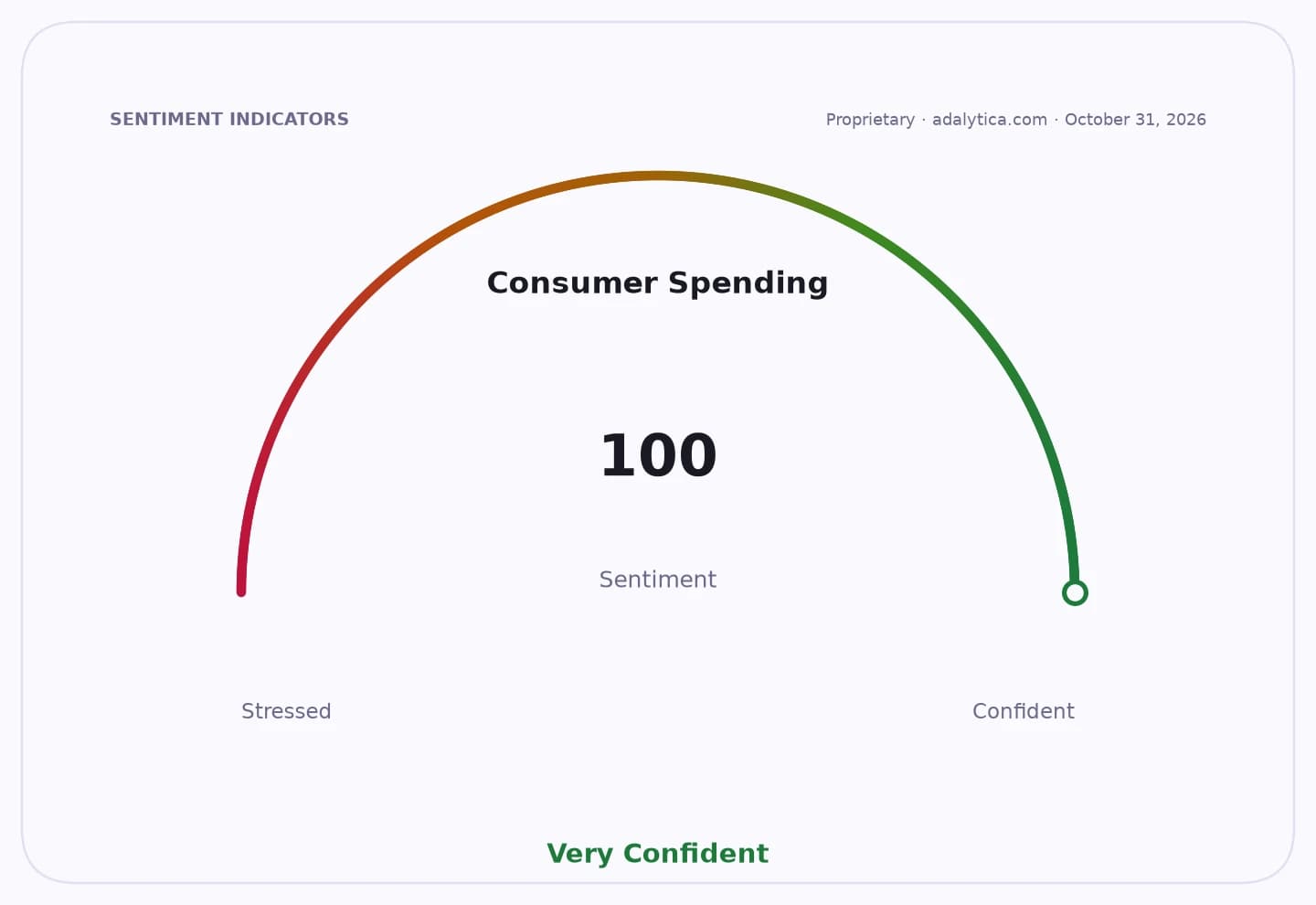
Sentiment Indicators
Chief Financial Officer Andre Schulten said the savings include up to $1.8 billion a year in costs of goods sold, a meaningful lever in a business where small margin gains can add up to substantial earnings growth. The company has also been warning that higher input costs would take a bigger bite out of annual profit, even as resilient demand for its beauty and home-care brands supported first-quarter sales.
P&G is not treating this as a one-off efficiency drive. Chief Executive Shailesh Jejurikar described the company as the “consumer packaged goods company of the future,” pointing to a database of 10 million consumer profiles and a growing use of artificial intelligence to speed up decision-making and day-to-day processes. In other words, management is trying to turn data and automation into a structural advantage, not just a temporary boost.
The savings plan also comes with real workforce pain. Chief Product Supply Officer Luc Reynaert said P&G remains committed to a 20% to 30% reduction in its product supply workforce, including contractors, by 2030. That tells investors the company believes the next phase of consumer-staples competition will be won by leaner operations, faster systems and more automation across the supply chain.
The market has already been rewarding that discipline. P&G shares have held up well, and the stock has been trading above both its 50-day and 200-day moving averages, a sign of durable investor confidence despite recent volatility in the broader market. The bigger question for shareholders is whether productivity gains can keep stacking on top of the company’s dividend, brand strength and global reach.
There are risks, of course. Cost savings are easier to promise than to deliver, especially in a business with a huge global footprint and complex manufacturing and distribution networks. And cutting too deeply can eventually hurt service levels or innovation. But if P&G can hit even part of this target, it strengthens the case for holding the stock through inflationary cycles rather than trying to time the next quarter.
For investors, the takeaway is straightforward: P&G is trying to convert scale into sharper earnings power, and that is exactly the kind of slow, compounding advantage that rewards patient owners over years, not months.
| Entity | Gains | Losses |
|---|---|---|
| P&G shareholders | ▲Higher margins, steadier earnings | ▼Near-term restructuring friction |
| P&G management | ▲Greater operating leverage | ▼Execution risk |
| Suppliers/contractors | ▲Continued business, but under pressure | ▼Lower volumes, fewer jobs |
| Competitors | ▲Industry discipline may hold prices up | ▼Must match efficiency gains |