The Reserve Bank of India’s latest research suggests the pandemic did not leave a permanent hole in India’s inflation record — and that matters because clean price data is the backbone of monetary policy, wage negotiations and bond-market expectations.
RBI study reconstructs missing India inflation data
A working paper by Purnima Shaw and R K Sinha says state-level retail inflation for April and May 2020, when Covid restrictions disrupted price collection, can be reconstructed using household inflation expectations and the CPI data that remained available. The same method was also used to refine missing state-wise readings for April and May 2021, offering policymakers a fuller picture of how prices moved through the most chaotic period of the pandemic.
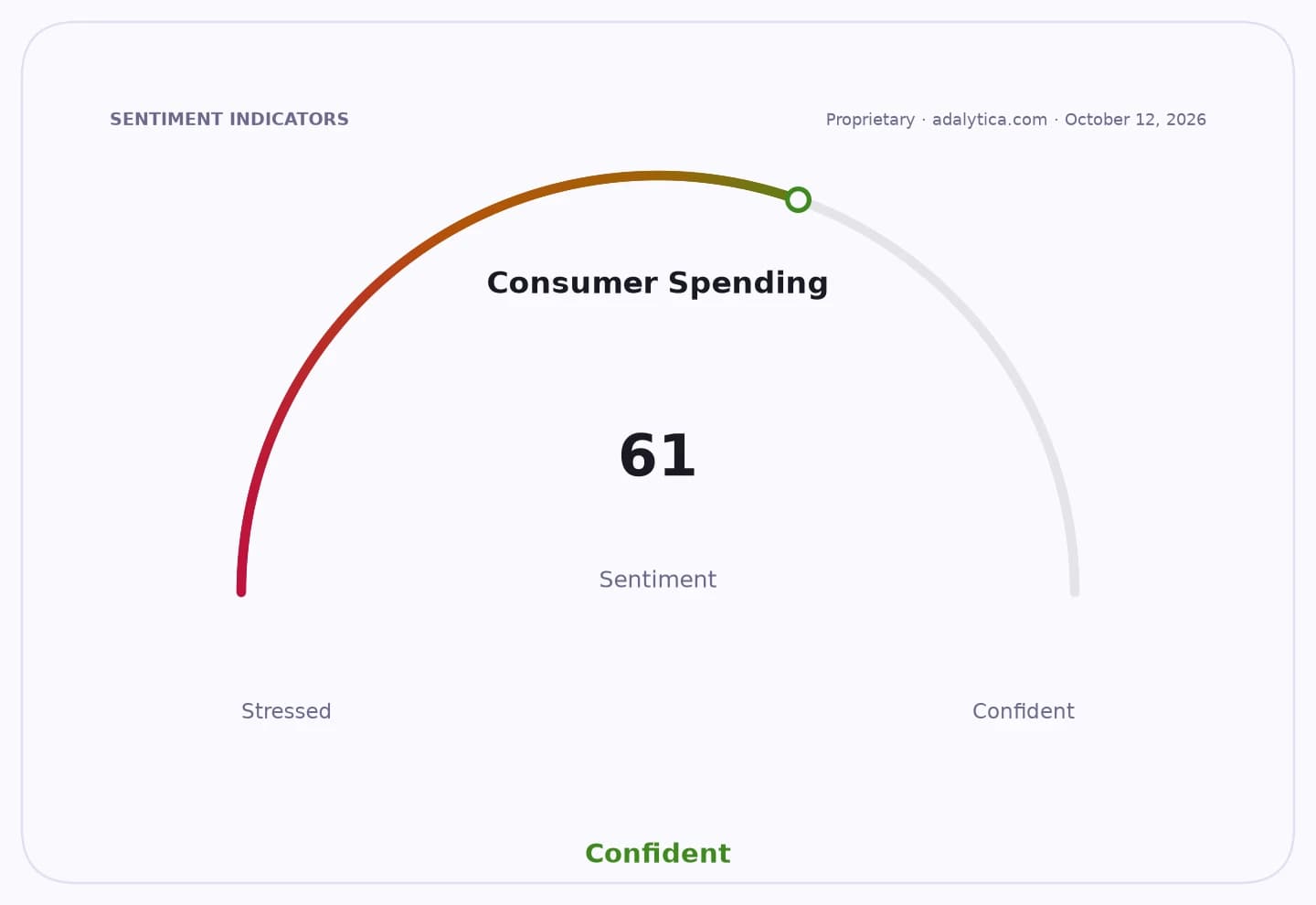
Sentiment IndicatorsⓘProprietary · adalytica.com · October 12, 2026
This is a snapshot — live sentiment, awareness and momentum for 130+ markets update continuously in the dashboard.Open AlphaPulse
That may sound like a technical exercise, but it goes to the heart of how central banks set rates and how investors price inflation risk. When data are missing, the signal from regional inflation pressures gets blurred, making it harder to judge whether price gains are broad-based or concentrated in a few states. For a country as large and heterogeneous as India, that matters for everything from repo-rate decisions to bond yields and currency expectations.
The paper’s reconstructed estimates closely tracked the official all-India CPI series. Aggregated urban state-wise inflation for April 2020 came in at 7.11%, versus the official 7.33%; May 2020 was estimated at 6.57% versus 6.43%. For April 2021, the estimate was 4.87% compared with 4.71%, and for May 2021 it was 5.77% against 5.91%. In other words, the RBI’s own research argues that missing state-level data can be backfilled with enough accuracy to preserve the integrity of the inflation story.
That is important now because India’s inflation debate has returned to center stage. The RBI raised its benchmark rate by 25 basis points to 5.5% on Oct. 7, its first hike in nearly four years, as it responded to inflation risks aggravated by geopolitical tensions and supply-side shocks. Better reconstruction of past price data strengthens the central bank’s ability to study how shocks spread across states, how durable inflation proved during the pandemic, and how aggressively policy needs to respond when the next shock hits.
The paper also underscores a larger point investors should not miss: data quality is policy quality. In emerging markets, where market reactions often hinge on a handful of monthly prints, even temporary gaps can distort the inflation curve, the yield outlook and currency positioning. That is especially relevant for rupee assets after the RBI’s shift back toward tightening and as markets assess whether higher rates will be needed to restrain prices without derailing growth.
The authors also tested a survey-based forecasting approach for the post-Covid period and said it correctly predicted the direction of inflation about 65% of the time, better than the RBI’s Survey of Professional Forecasters at about 39%. It was less accurate on other error measures, but the result still points to a practical use case: household expectations can serve as a useful stopgap when hard data are interrupted by extraordinary events.
For investors, the takeaway is less about the pandemic itself than about what the RBI is building for the next shock. A central bank that can reconstruct missing inflation data more reliably has a better chance of staying ahead of policy errors, which supports the case for being selective in Indian bonds, disciplined on duration and alert to any renewed pressure on the rupee if inflation surprises to the upside again.
| Entity | Gains | Losses |
|---|---|---|
| RBI | ▲Better inflation visibility | ▼Less uncertainty |
| Bond investors | ▲Clearer policy signals | ▼Data gaps |
| Rupee bulls | ▲More credible policy response | ▼Inflation shocks |
| Rate-sensitive borrowers | ▲None | ▼Higher borrowing costs |