Shoppers are being urged to check their homes after a Costco- and Amazon-sold product was urgently recalled over fire fears, a reminder that a single defective item can ripple from household safety to retailer reputations and investor confidence.
Recall Warns on Retail Trust Risk

For consumers, the most important issue is simple: stop using the product and see whether you own one of the affected units. Fire risk recalls tend to move fast because the downside is severe. Even if the number of faulty items is limited, the cost of delay can be measured in property damage, injuries and brand trust that takes years to rebuild.
Sentiment IndicatorsⓘProprietary · adalytica.com · July 21, 2026
This is a snapshot — live sentiment, awareness and momentum for 130+ markets update continuously in the dashboard.Open AlphaPulse
For Costco and Amazon, the episode is a reputational test rather than a balance-sheet threat. Neither retailer is necessarily the manufacturer, but both sit closest to the customer when a product fails. That matters because shoppers tend to remember where they bought an unsafe item, even when the root cause lies elsewhere. In a world where e-commerce and membership retail depend on repeat purchases and trust, product safety failures can dent the premium valuation investors are willing to pay.
The market backdrop makes the timing more sensitive. Costco shares have been volatile and recently slipped toward the $936 area after a sharp summer run, with the stock now sitting below its 50-day moving average. Technical indicators such as RSI and MACD point to a more neutral-to-weak short-term setup, even as the shares remain well above the 200-day moving average. Amazon, meanwhile, has steadied near $250 after a powerful move earlier in the year, with its shares still close to their 50-day average and above long-term trend support. In other words, neither stock is dealing with a business crisis, but both are trading in a market that is quick to punish any sign of consumer trust erosion.

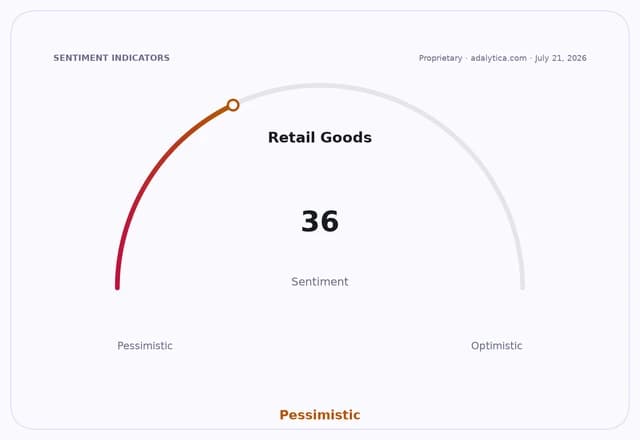
That is why the broader consumer-spending picture matters. Adalytica’s Consumer Spending Sentiment remains in “Extreme Greed,” suggesting households are still willing to spend. Retail Goods Spending Sentiment, however, has slid into neutral territory with extreme fear in awareness, hinting that shoppers are becoming more cautious about retail purchases and product quality. For investors, that combination is important: demand may still be there, but the margin for error is shrinking.
This is the kind of event long-term investors should watch through a compounding lens. A recall is usually not thesis-breaking for a company like Costco or Amazon, both of which have enormous scale, powerful logistics networks and strong customer loyalty. But recurring safety issues can slowly chip away at one of the most valuable assets in retail: trust. That is especially true for companies selling across broad product categories, where one headline can create discomfort in unrelated parts of the assortment.
The bigger lesson is that retail leaders win not just by moving goods quickly, but by proving they can protect the customer when something goes wrong. If Costco and Amazon handle the recall cleanly, the long-term damage should be limited. If the episode expands or exposes deeper quality-control issues, investors could begin to demand a little less perfection and a little more caution. For now, the stock market view is straightforward: this is worth watching, but not a reason to abandon either name for investors focused on the next three to 10 years.
| Entity | Gains | Losses |
|---|---|---|
| Shoppers who check their homes | ▲Avoid fire risk | ▼Face recall hassle |
| Costco and Amazon | ▲Show recall response | ▼Suffer trust hit |
| Long-term investors | ▲Buy quality on dips | ▼See near-term volatility |
| Product maker/supplier | ▲Control damage if swift | ▼Face liability and scrutiny |