Republicans are heading into the 2026 midterms increasingly divided over whether Donald Trump is an asset or a liability, a split that could decide control of Congress if the president’s falling popularity continues to drag down party candidates in competitive districts.
Republicans Split Over Trump Ahead of 2026 Midterms
The political stakes are unusually high because Republicans are defending narrow margins in both chambers. Democrats need only three seats to flip the House and four to take the Senate, leaving little room for candidates in swing states and marginal districts to absorb a drag from the White House.
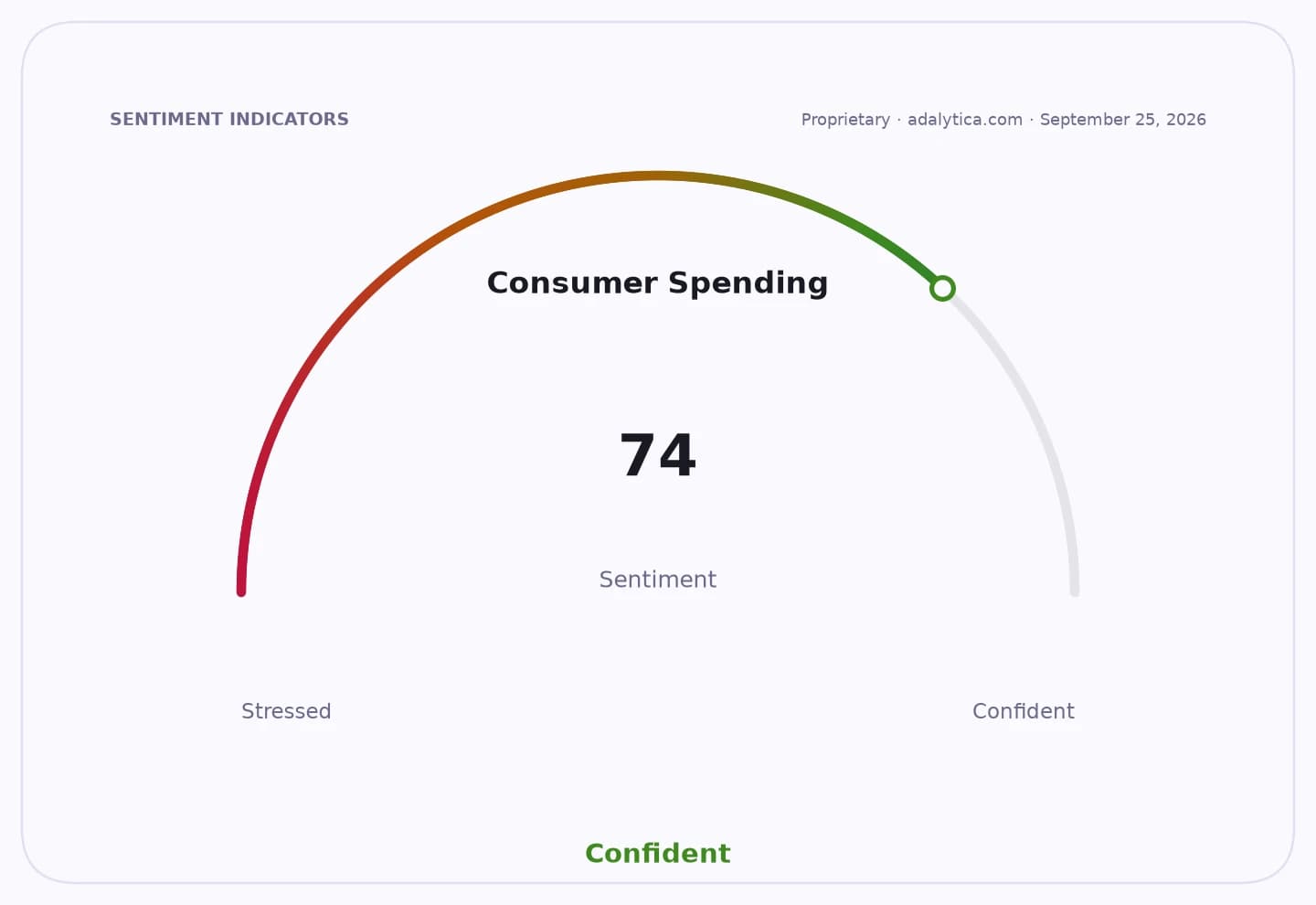
Sentiment IndicatorsⓘProprietary · adalytica.com · September 5, 2026
This is a snapshot — live sentiment, awareness and momentum for 130+ markets update continuously in the dashboard.Open AlphaPulse
The concern inside the GOP is not just that Trump remains polarizing, but that the issues defining the race are no longer the ones most favorable to him. Party strategists and lawmakers say voters are focused on the cost of living, gasoline prices, trade policy and the Iran conflict, while Trump’s own political theater and recurring feuds are increasingly seen as distractions. That has created a familiar but sharper dilemma for Republican candidates: stay loyal and risk alienating moderates, or distance themselves and risk a backlash from Trump’s core supporters.
That tension is already surfacing publicly. Republican congressman Don Bacon said some of Trump’s actions look like “chaos” and “destructive,” while Rep. Stephanie Bice warned that some Republican voters could simply stay home if the only alternative is voting Democratic. Those warnings matter because midterm outcomes often turn less on base enthusiasm than on whether swing voters and low-propensity conservatives remain engaged.
The market-style read on the political backdrop is straightforward: the GOP’s brand is becoming more dependent on Trump’s personal turnout power at exactly the moment his national appeal appears weaker. That raises the odds of split-ticket behavior, weaker Republican performance in suburban and economically sensitive districts, and a harder path to preserving congressional control. Trump’s looming Dallas rally may energize loyalists, but it also underscores the party’s broader dependence on a figure many of its own lawmakers now see as a liability.
For investors, the implications are less about ideology than policy path. A weaker Republican showing would raise the odds of a Democratic congressional comeback, which could reshape tax, spending, regulatory and trade expectations heading into the next cycle. For now, the key risk for markets is not immediate policy change but an increasingly unstable political coalition, with Republicans trying to balance Trump’s fundraising and base mobilization against the possibility that his continued dominance costs them the House or Senate.
| Entity | Gains | Losses |
|---|---|---|
| Trump loyalists | ▲Base mobilization | ▼Moderate suburban voters |
| GOP leadership | ▲Short-term fundraising | ▼Message discipline |
| Democratic Party | ▲Midterm pickup odds | ▼Momentum if GOP unifies |
| Investors | ▲Policy clarity if Congress flips | ▼Stability under split GOP |