Rice prices are likely to stay elevated through the current quarter and into early 2027 as El Niño threatens production across South and South-East Asia, keeping a key global food staple under pressure and complicating inflation outlooks for importers.
Rice prices stay elevated on El Niño supply risks

The Agricultural Market Information System, run by the UN Food and Agriculture Organisation, said rice is among the crops most negatively affected by El Niño because much of the world’s output is concentrated in regions that typically see reduced rainfall during the weather pattern. BMI, a Fitch Solutions unit, said it has raised its 2026 average forecast for CBOT-listed second-month rice futures to $14 per hundredweight from $12.9 after stronger-than-expected gains in the third quarter.
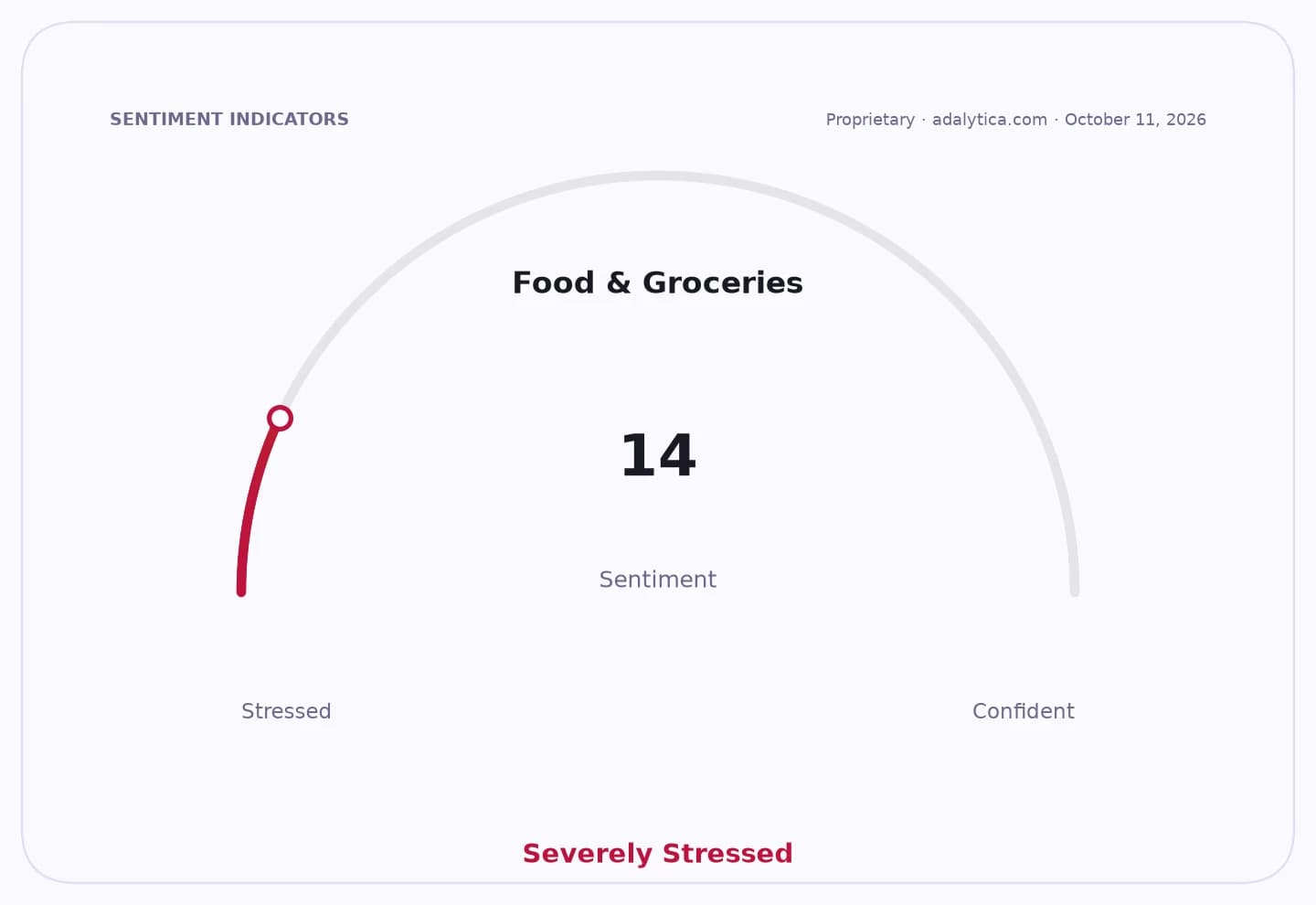
Sentiment Indicators
The research firm now sees prices averaging $17.5 in the fourth quarter of 2026 before easing to $7.2 in the first quarter of 2027, with futures recently trading above $17.6 and hitting a 29-month high of $17.8 in October. It said the run-up reflects El Niño risk sentiment and tighter U.S. supply conditions, though it does not see the move as evidence of a comparable deterioration in physical market conditions.
That distinction matters for investors because futures pricing has raced ahead of spot export indicators, creating the possibility of a sharp correction if the Asian monsoon crop comes in better than feared and U.S. harvests advance as expected. BMI said speculative net long positions in rice futures have climbed since mid-July, topping 2,000 contracts in October as bullish positioning accelerated.
The broader economic risk is inflation. Rice is a basic staple in much of Asia and Africa, so sustained strength feeds directly into food costs and government subsidy bills, particularly for import-dependent countries. Traders are also watching for shipping disruptions, with higher freight and insurance costs adding to import pressure and flooding in Thailand disrupting transportation and planting.
AMIS projected global rice production in the 2026-27 season will fall 2.4% to 552.47 million tonnes, with El Niño already affecting crops in India, Pakistan, Thailand, Indonesia, Vietnam, the Philippines and Malaysia. The USDA has cut its estimate for Indian production to 147 million tonnes, down 4.6% from a year earlier, while Thai output is seen slipping 1.9% to 20.3 million tonnes.
Historical patterns suggest the weather shock can be material: AMIS said El Niño years have been associated with an average shortfall of about 9.6 million tonnes of paddy, or roughly 1.2% of expected global output. Still, BMI said harvesting is now underway or approaching in the main monsoon crops, meaning exposure to further weather-related disruption should gradually fade into early 2027.
For investors, the immediate focus is whether rice futures keep outrunning physical supply fundamentals or revert as harvest data improves. The next catalyst is the Asian monsoon crop outcome through the rest of the quarter and U.S. harvest progress, which will determine whether the market’s weather premium sticks.
| Entity | Gains | Losses |
|---|---|---|
| Rice exporters | ▲Higher selling prices | ▼Demand destruction risk |
| Importing countries | ▲None | ▼Higher food inflation |
| Rice futures bulls | ▲Momentum trade | ▼Sharp correction risk |
| Consumers / food processors | ▲None | ▼Higher staple costs |