The ringgit opened firmer against the US dollar on Friday, helped by a broadly steady start in Asian currencies even as rising US Treasury yields kept the greenback supported.
Ringgit Opens Firmer as US Yields Rise
US Dollar
At 8 a.m., the local note rose to 4.0810/0865 per dollar from 4.0840/0880 at Thursday’s close. It also gained against most major peers, including the euro, pound and yen, as traders weighed softer near-term pressure on the currency against a still-firm backdrop for the dollar.
Sentiment Indicators
The move matters because Malaysia’s currency is trading in a market still driven by US rate expectations and geopolitical risk, not just domestic fundamentals. Bank Muamalat Malaysia chief economist Mohd Afzanizam Abdul Rashid said the jump in the 30-year US Treasury yield to 5.48%, an eight-basis-point rise and the highest in two decades, pointed to a building inflation risk premium as West Asia tensions threaten crude oil prices.
That backdrop helped push the US Dollar Index up 0.19% to 101.285, reflecting expectations that the Federal Reserve will stay restrictive for longer. For investors, that means the ringgit’s gains are likely to be tactical rather than decisive unless US yields retreat or risk appetite improves more broadly.
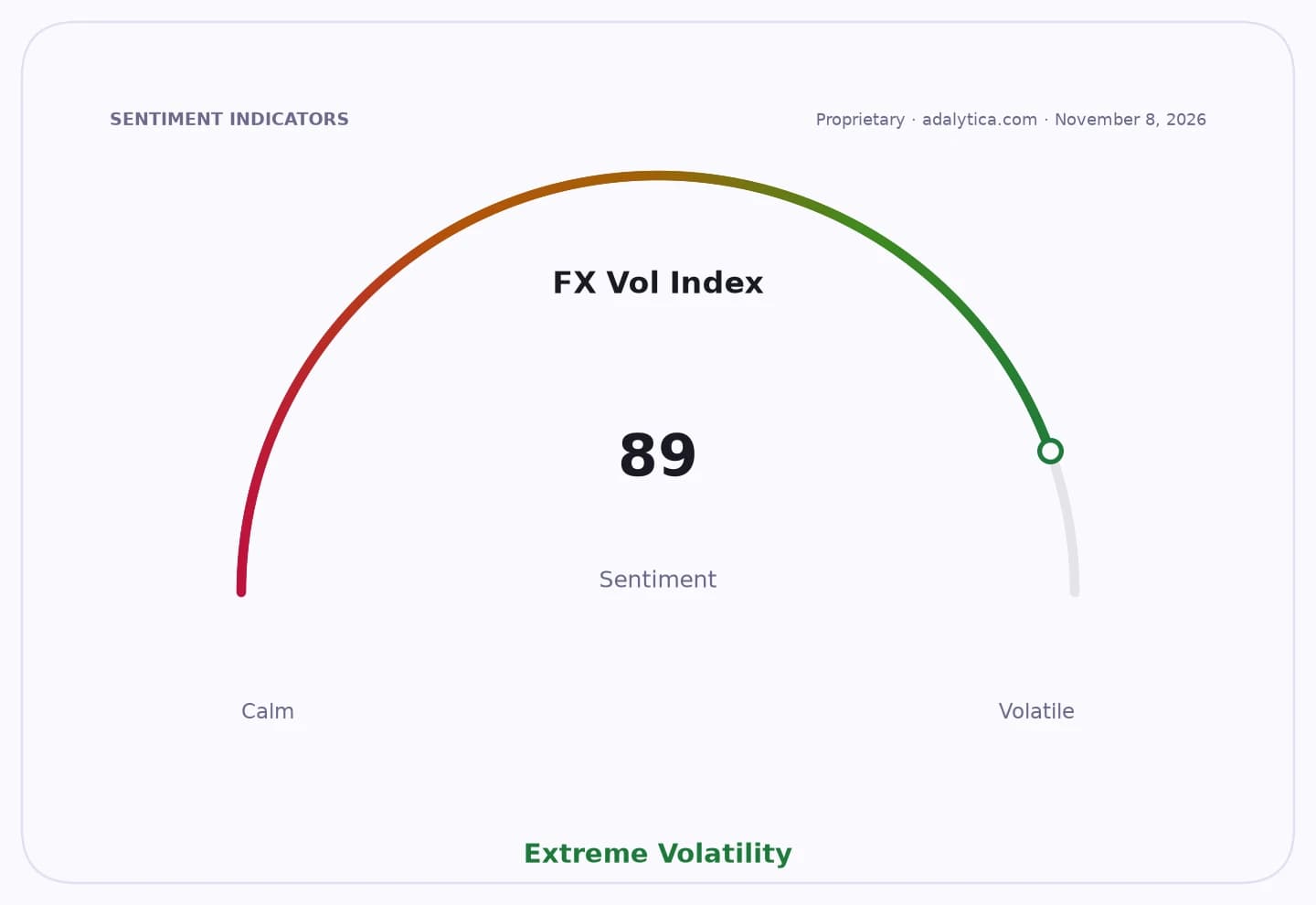
The currency’s latest strength also comes after a volatile stretch in which USDMYR has hovered near the 4.08 level, with conventional technical indicators showing the pair close to its 50-day moving average and well below earlier highs above 4.10. Adalytica’s US dollar trade snapshot also points to sharply weaker dollar positioning, with sentiment marked “Extreme Fear,” reinforcing the idea that the market is vulnerable to sharper two-way moves.
Against that backdrop, the ringgit’s current range estimate of 4.08 to 4.10 suggests traders are waiting for the next macro trigger, whether that comes from US inflation data, Fed guidance or another move in oil and bond yields. Malaysia’s currency is likely to remain sensitive to any renewed rise in US borrowing costs, which would tend to support the dollar and cap further gains in the ringgit.
| Entity | Gains | Losses |
|---|---|---|
| Ringgit | ▲Firmer opening | ▼Exporters collecting dollars |
| US Dollar | ▲Backed by high yields | ▼Dollar shorts |
| Malaysian importers | ▲Lower FX cost pressure | ▼Less benefit from weaker ringgit |
| US bondholders | ▲Higher long-end yields | ▼Rate-sensitive borrowers |