The foreign-exchange market is struggling to find a new driver after major policymakers held rates steady, leaving traders to lean on technical levels, yield differentials and fresh inflation data to decide whether the dollar’s latest advance has further to run.
Dollar Holds Support as FXE and FXY Stay Weak
That waiting game matters because currency markets have become tightly linked to the path of real rates and growth rather than central-bank headlines alone. With the Federal Reserve’s policy rate at 3.75% and the 10-year Treasury yield around 5.23%, the U.S. still offers a meaningful carry advantage over the euro area, where FXE has slipped to $103.37 and sits below both its 50-day and 200-day moving averages. The euro’s weakness reflects more than just a single day’s move: it also shows how quickly the market punishes currencies when investors see fewer near-term reasons for a policy pivot.
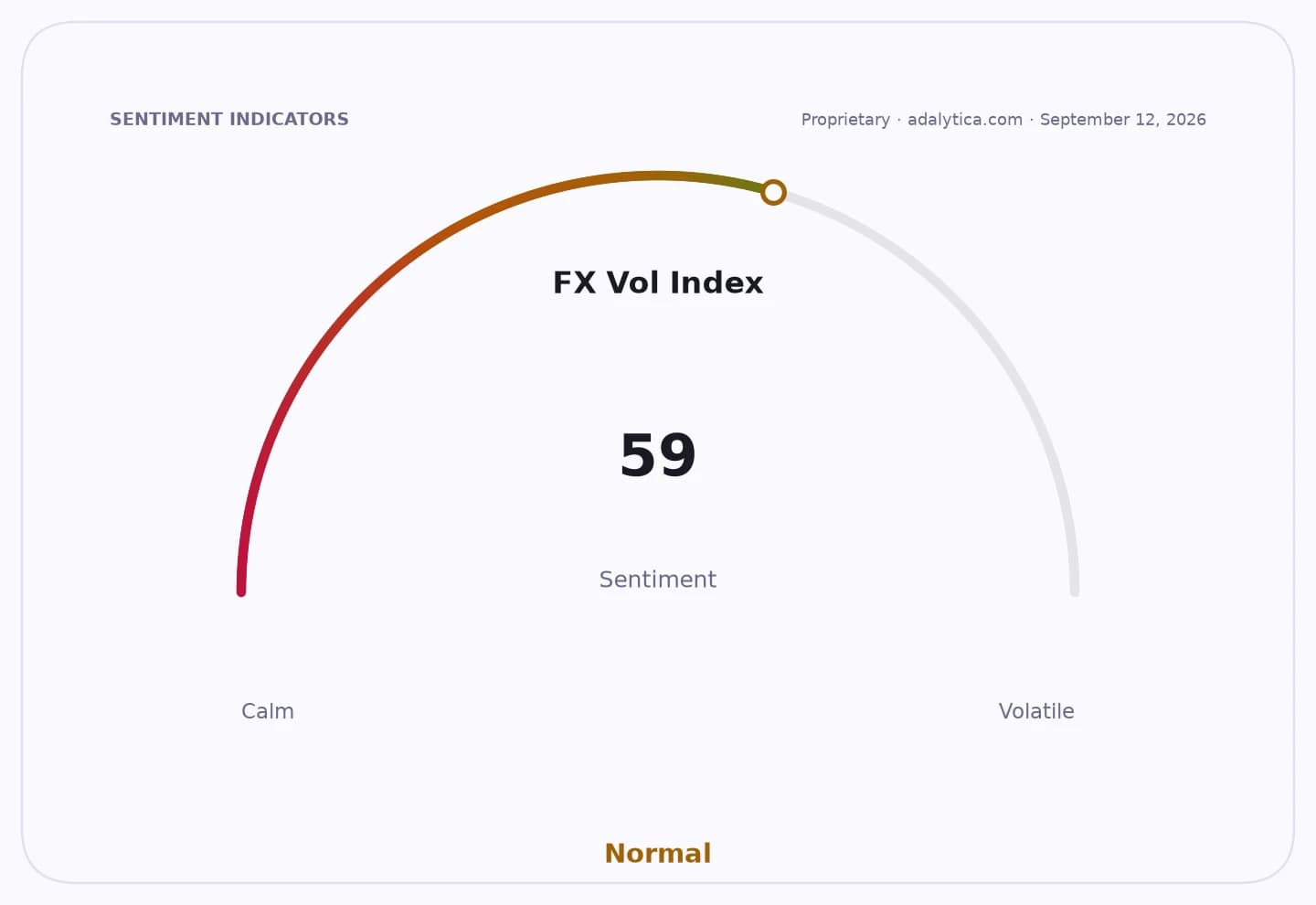
Sentiment IndicatorsⓘProprietary · adalytica.com · October 11, 2026
This is a snapshot — live sentiment, awareness and momentum for 130+ markets update continuously in the dashboard.Open AlphaPulse

The broader message is that the dollar retains support as long as U.S. yields stay elevated and the Fed stays cautious. That has kept pressure on the euro and, by extension, on rate-sensitive and trade-sensitive currencies elsewhere. FXE’s relative strength index around 20 suggests the pair is deeply oversold, but oversold conditions have not been enough to trigger a sustained reversal. The ETF’s MACD remains negative, reinforcing the view that the market has yet to settle on a clean trend change.
Yen traders face a similar problem, though from a different starting point. FXY has held near $57.90, with the 50-day average roughly in line with the 200-day, a sign of consolidation rather than conviction. Japan’s policy normalization remains gradual, and unless domestic yields rise more decisively or U.S. yields retreat, the yen is unlikely to recover enough ground to force a broader rethink in carry trades. For investors, that leaves the yen vulnerable whenever risk appetite fades and U.S. rate expectations turn even slightly more hawkish.
FX Vol Index — 30-day sentimentadalytica.com
Explore this data interactively — full history, time series and cross-market comparisons.Open AlphaPulse

The result is an FX market that looks directionless on the surface but is actually being shaped by a clear hierarchy: dollar strength first, euro weakness second, and yen stability third. Adalytica’s FX volatility signals point to only neutral sentiment, but the sharp drop in awareness suggests traders are not positioned for a breakout and may be underestimating how quickly a fresh inflation surprise or policy shift could reprice currencies. Until then, the market is likely to remain range-bound, with the next leg driven less by speeches from central bankers than by whether incoming data shifts the yield story.
For investors, the key risk is that complacency around “no change” policy decisions masks how fragile cross-asset pricing has become. A sustained move in the 10-year yield above 5% would tend to keep the dollar bid and pressure the euro and yen further, while any drop in U.S. yields could trigger a sharp short-covering rebound in both. In the near term, FX is less about what policymakers just did and more about what traders now believe they will be forced to do next.
| Entity | Gains | Losses |
|---|---|---|
| U.S. dollar | ▲Higher yield support | ▼Risk if yields fall |
| Euro / FXE | ▲Oversold rebound potential | ▼Carry pressure, policy drag |
| Yen / FXY | ▲Safe-haven bid in stress | ▼Weak carry, policy lag |
| Importers in Europe/Japan | ▲Cheaper foreign pricing | ▼Exporters facing currency headwinds |