The dollar’s 2026 rally is being driven less by fear and more by a still-overlooked flood of capital into the U.S. economy, where AI spending, resilient growth and higher-for-longer rates are overpowering the consensus call for a weaker greenback.
U.S. Dollar Gains on Growth, AI Spending and Yields
That is the key reason the dollar has defied forecasts. The U.S. Dollar Index has climbed 4% this year to its highest level since Donald Trump launched the trade war in April last year, while the euro has slid from $1.17 to $1.12 as investors digest fiscal and political strain in Europe. At the same time, U.S. growth has beaten expectations, with GDP expanding 2.5% in the first quarter and 2.2% in the second, helped by household demand and corporate investment in AI infrastructure.
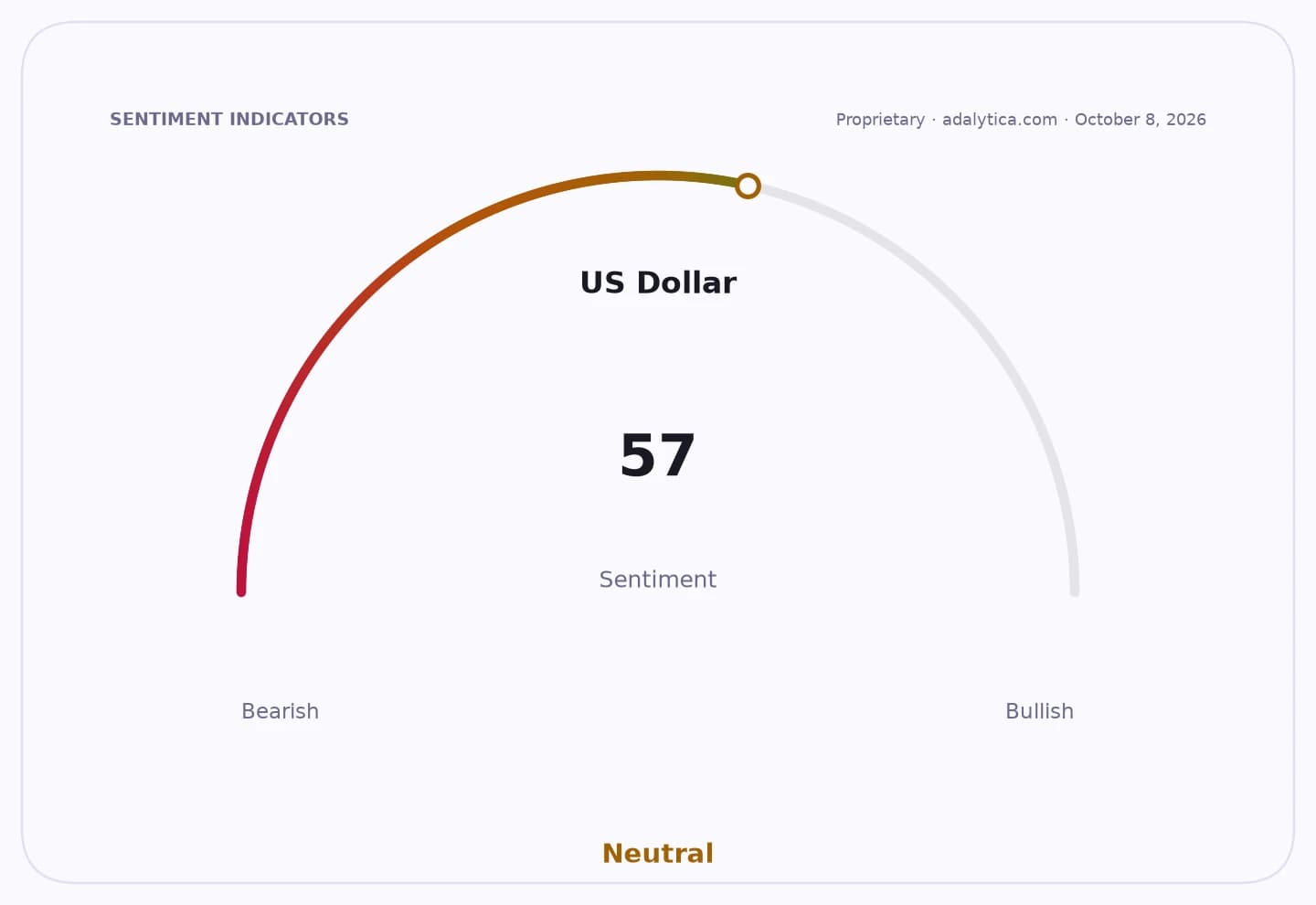
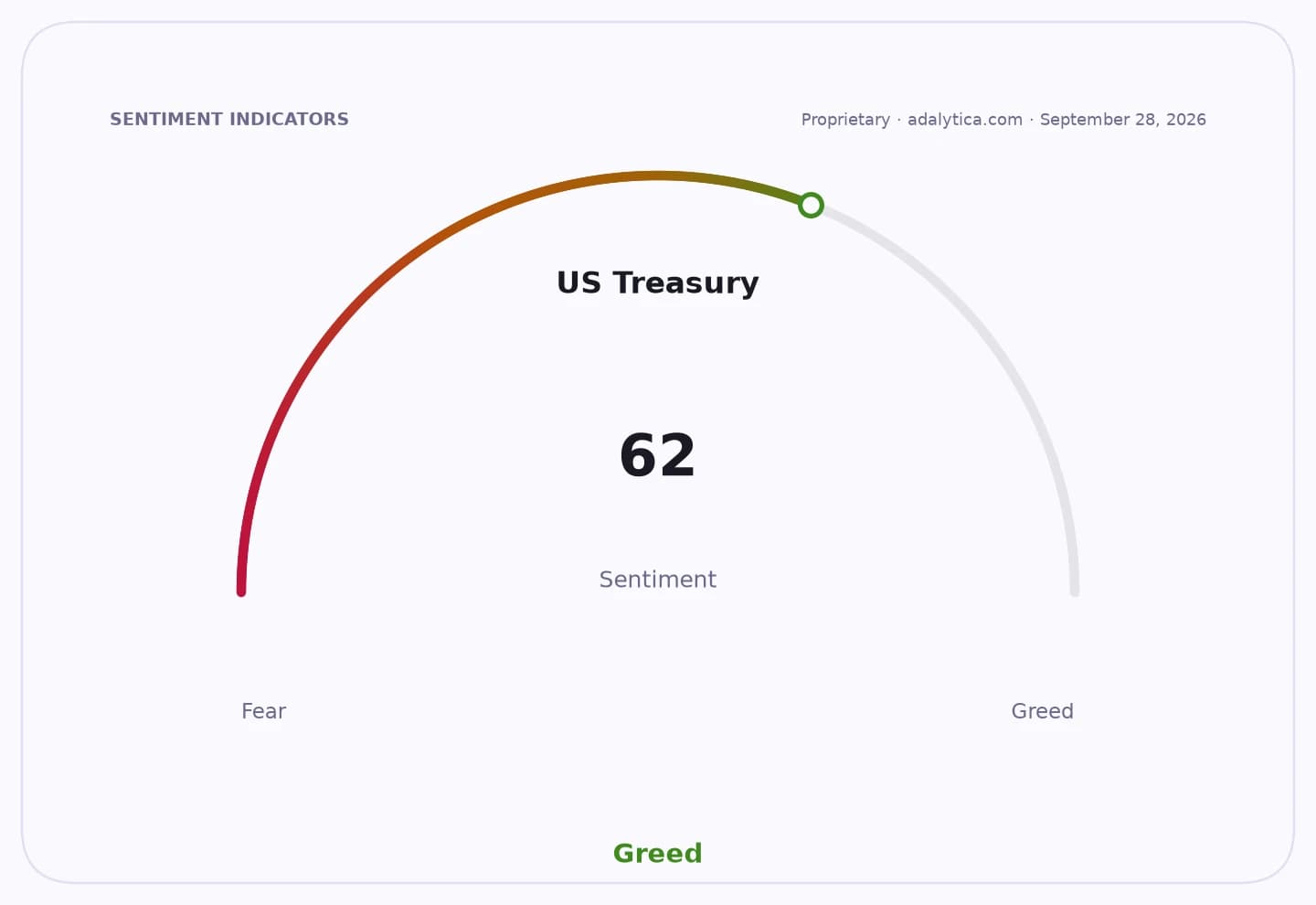
Sentiment IndicatorsⓘProprietary · adalytica.com · October 8, 2026
This is a snapshot — live sentiment, awareness and momentum for 130+ markets update continuously in the dashboard.Open AlphaPulse
For investors, the more important message is that the dollar is not rising on a single defensive bid. It is being pulled higher by America’s relative economic outperformance, and by the global hunt for yield and growth assets denominated in dollars. Foreign investors bought about $450 billion of U.S. corporate debt in the 12 months through July, the biggest annual haul in nearly two decades even after inflation adjustment, while purchases of U.S. equities and funds reached about $900 billion, also a record. That is the real engine behind the move: capital still wants exposure to the U.S. story, and it needs dollars to get it.
Oil is adding another layer to the rally. The price shock from the U.S.-Iran conflict is no longer acting like the old-school drag on the greenback, because the U.S. is now a net energy exporter. Higher gasoline and diesel prices may be a political headache for the Trump administration, but they are mechanically supportive of the dollar in a way they were not before the shale boom.
US Dollar — 30-day sentimentadalytica.com
Explore this data interactively — full history, time series and cross-market comparisons.Open AlphaPulse
The rate backdrop matters too. Fed funds are projected around 3.726% for October, while 10-year Treasury yields have pushed to 5.287%, the highest level in the data provided. That keeps the dollar attractive versus low-yielding alternatives, especially when Europe looks shaky and the euro is losing its safe-haven appeal. On a technical basis, UUP — the dollar ETF — is above its 50-day and 200-day moving averages, and its RSI is elevated, showing a strong trend that has not yet broken.
The market’s mistake is assuming the dollar must fall because the consensus said so. In reality, the “dollar smile” still exists, but it has become lopsided: the currency is being supported not just by crisis demand, but by America’s dominance in growth sectors, especially AI, and by foreign inflows chasing U.S. assets. That creates an asymmetric opportunity for dollar bulls and for investors positioned in U.S. winners that benefit from global capital rotation.
I believe the real trade here is not simply long the dollar, but long the ecosystem that keeps drawing money into the United States: mega-cap AI infrastructure, U.S. banks, Treasury-linked income trades, and dollar-centric ETFs such as UUP. If U.S. growth stays hot and the Fed stays restrictive, the dollar can keep outperforming even without a classic panic bid. The bigger risk is the opposite scenario: if the AI capex boom cracks or risk appetite collapses, the same capital flows that lifted the dollar could reverse just as fast. For now, the path of least resistance remains higher.
| Entity | Gains | Losses |
|---|---|---|
| U.S. dollar / UUP | ▲Higher relative yields | ▼Consensus shorts |
| U.S. AI and capex leaders | ▲Foreign inflows | ▼Non-U.S. rivals |
| Treasury and dollar assets | ▲Yield support | ▼Low-yield currencies |
| Euro / European assets | ▲— | ▼Capital outflows |