Rio de Janeiro has won a 60-day reprieve from Brazil’s Supreme Court to negotiate its debt with the federal government, easing immediate collection pressure on a state that says loan payments are squeezing its cash flow and complicating a broader restructuring effort.
Rio de Janeiro Wins 60-Day Debt Reprieve
The ruling by Justice Dias Toffoli does not forgive any obligations, but it temporarily suspends federal counter-guarantee enforcement and related fiscal sanctions while Rio and the Union seek a deal. That matters because the state is trying to replace expensive loans, secure better terms under the new debt-relief framework known as Propag and avoid a return to the kind of short-term fiscal stress that has repeatedly forced Brasília to intervene.
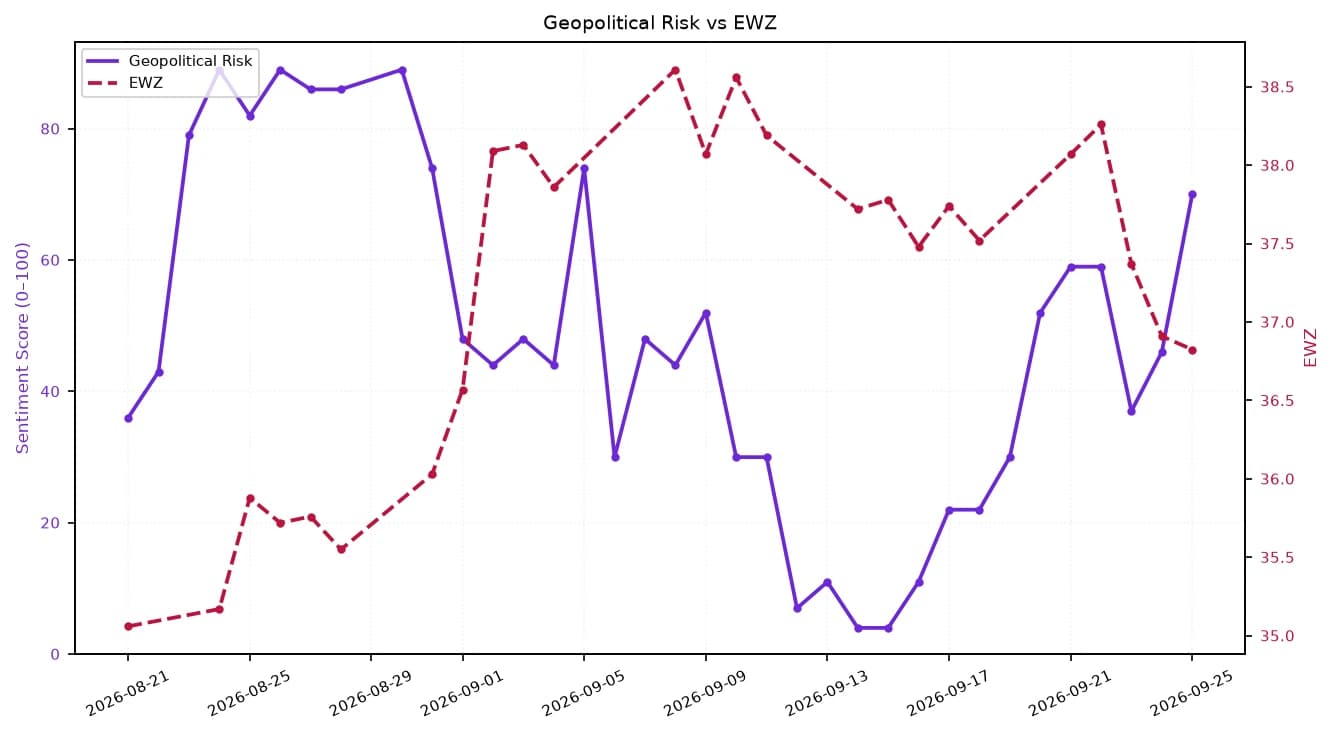
Sentiment IndicatorsⓘProprietary · adalytica.com · September 30, 2026
This is a snapshot — live sentiment, awareness and momentum for 130+ markets update continuously in the dashboard.Open AlphaPulse
Rio said the payments on guaranteed debt are disproportionately heavy, particularly two U.S.-dollar loans contracted with Banco do Brasil and backed by the Union. According to the state treasury, those loans account for about 35% of the guaranteed-debt payments due in the second half of 2026 and 24% of the outstanding balance. Rio wants to refinance them with a World Bank loan through the International Bank for Reconstruction and Development, arguing that better pricing and longer maturities could cut the present value of costs by R$748.8 million.
The state is also in talks with the Inter-American Development Bank over a separate reworking of external credit lines totaling as much as R$5 billion, or about 14% of the guaranteed-debt payments scheduled for the second half of this year. Those talks are not approved financings, but they show Rio is trying to build a full refinancing package rather than rely on a temporary court shield.
For investors, the significance is twofold. First, the decision lowers near-term default and enforcement risk for Rio, which matters for holders of state-linked debt and for lenders exposed through guaranteed operations. Second, it reinforces how Brazil’s public-finance stress is increasingly being handled through negotiated restructurings rather than hard fiscal adjustments, a pattern that can stabilize liquidity in the short run but also keeps sovereign and sub-sovereign credit risk in focus.
The federal government opposed Rio’s request, arguing there is no legal basis for relaxing the rules on guaranteed loans and that doing so could undermine equal treatment across states. Toffoli sided with negotiation for now, noting areas of convergence and leaving technical and legal requirements intact. That preserves federal safeguards while giving both sides room to reach an administrative settlement.
The case also highlights the stakes of Propag, which Rio joined in June after leaving the fiscal recovery regime it had been under since 2022. Under the program, states can seek cheaper debt terms, including, in some cases, a reduction of real interest rates to 0% if they meet amortization and other conditions. Rio has asked for an extra 30 days to present additional assets to the Union as collateral or partial amortization, a move aimed at improving its bargaining position.
For markets, the immediate read is that Rio avoids a sharper liquidity squeeze, but the broader message is that Brazil’s sub-sovereign debt overhang is still being managed through legal and political negotiation. That may keep stress contained for now, yet it also leaves open the risk that other states with similar funding pressures follow the same path, prolonging uncertainty for federal accounts and state credit quality.
The next catalyst is whether Rio can convert the court-ordered pause into a concrete refinancing package with the World Bank and IDB and secure federal acceptance of assets under Propag. A durable deal would reduce refinancing risk and improve budget visibility; failure would push the dispute back into the courts and likely keep pressure on the state’s finances and borrowing costs.
| Entity | Gains | Losses |
|---|---|---|
| Rio de Janeiro state | ▲Liquidity relief; refinancing window | ▼Immediate enforcement pressure eases only temporarily |
| Brazilian federal government | ▲Time to negotiate; legal safeguards preserved | ▼Continues to carry counter-guarantee risk |
| Rio bondholders / lenders | ▲Lower near-term default risk | ▼Less clarity on final repayment terms |
| Other Brazilian states | ▲Possible template for negotiated relief | ▼Risk of uneven treatment and weaker fiscal discipline |