Romania’s education ministry has approved a new optional high school subject on artificial intelligence and digital citizenship for the 2027-2028 school year, a policy shift that puts AI literacy and online safety at the center of secondary education.
Romania approves AI and digital citizenship class

That matters because the class is not just about coding or technology theory. It is designed to teach students how AI systems work, when they fail, how to spot misinformation and deepfakes, and how to protect personal data and intellectual property. In other words, Romania is treating AI as a basic civic skill, not a niche technical one, which is exactly where the global education market is heading.
Sentiment Indicators
The curriculum will be available to students in all high school tracks and can be taken in grades 9 through 12, at one hour a week for one school year. The ministry says the course is optional and part of the national offer chosen by students and schools, but the scope is broad: it covers how algorithms produce results, when human oversight is required, how biased systems can discriminate, and why users should verify AI-generated answers before sharing them.
For investors, the significance goes beyond one national curriculum. Education systems are starting to formalize demand for AI tools, teacher training, cloud services, digital content filtering and cybersecurity. That creates a long runway for the companies that supply the infrastructure and software layer behind classroom AI, while also raising the bar for platforms that must prove they can handle minors’ data safely and transparently.
The timing also fits a larger regulatory and commercial trend. Governments are moving to define what responsible AI use looks like in schools, just as tech companies face rising scrutiny over privacy, copyrighted material and misinformation. Romania’s syllabus explicitly addresses those issues, including the dangers of hallucinated chatbot answers, altered audio and video, and the rules around AI-assisted schoolwork. That is a clear sign that policymakers are no longer asking whether AI belongs in classrooms, but how to govern it.
Microsoft, Nvidia and Alphabet are all exposed to that shift in different ways. Microsoft stands to benefit as schools adopt institutional AI accounts and productivity tools, while Nvidia remains the picks-and-shovels winner if AI usage expands across education and public-sector computing. Alphabet, meanwhile, faces the twin opportunity and risk of broader AI adoption in search and learning products, alongside tougher scrutiny over data handling for minors.
The market has also been giving these stocks conflicting signals. Microsoft’s shares have slipped to $507.12 from a recent high above $530, even as its technical backdrop remains intact above the 200-day moving average. Nvidia has fallen to $202.06, with its 50-day average at $221.44, reflecting short-term pressure despite the longer-term AI buildout story. Alphabet has dropped to $278.99, well below both its 50-day and 200-day averages, suggesting investors are punishing the name even as AI education and digital services create fresh usage paths.
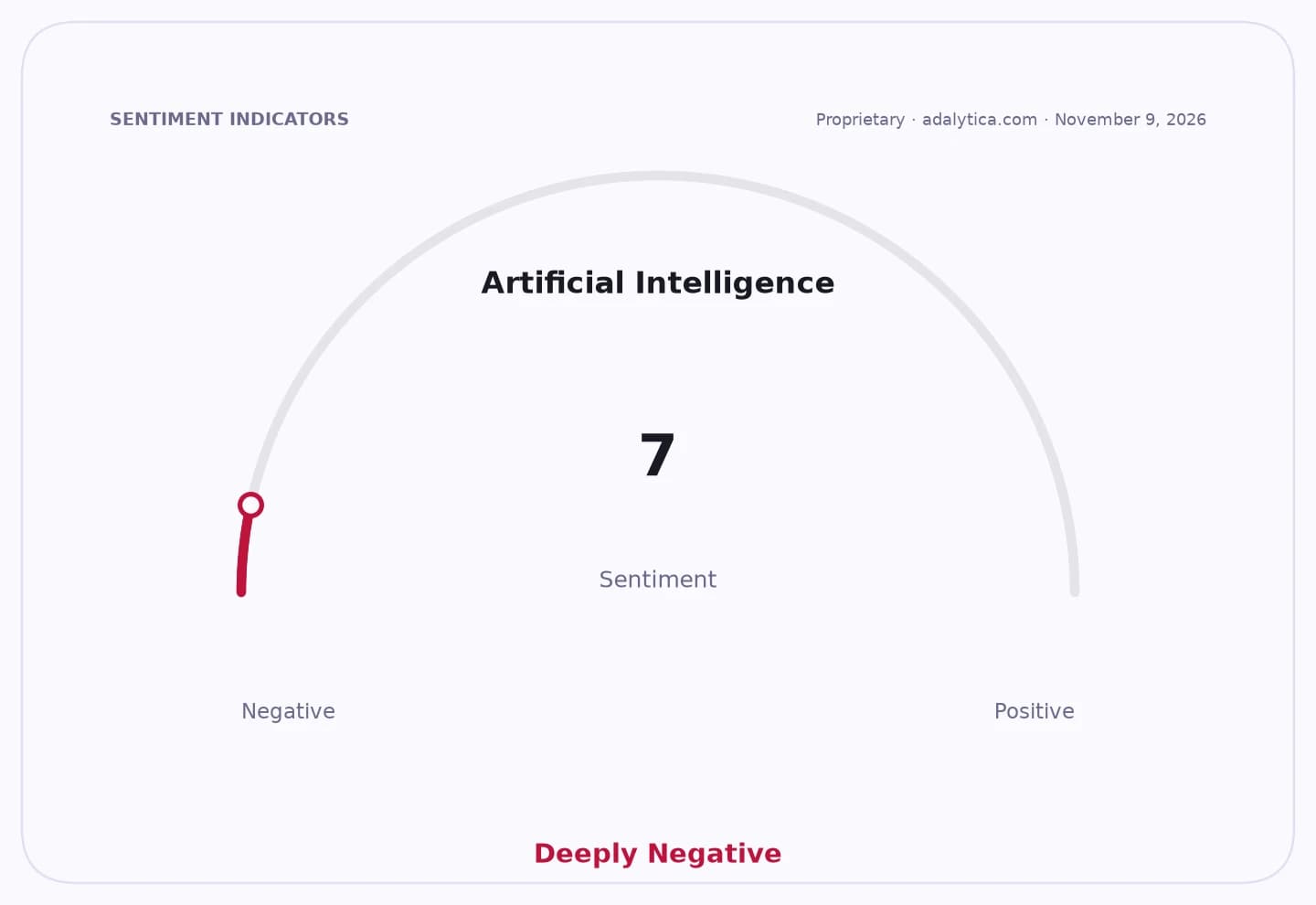
Adalytica’s AI sentiment gauge shows extreme fear around the sector even as policy adoption widens. That disconnect is important. When governments normalize AI literacy and embed it into school systems, the demand curve tends to broaden in ways the market often underestimates. This is how secular adoption starts: first in policy, then in institutions, then in budgets.
The investable takeaway is straightforward: the market is still pricing AI as a narrow enterprise theme, but education policy is helping turn it into a mass-market operating layer. For long-term investors, that argues for staying positioned in the AI infrastructure leaders, the cloud platforms that can embed compliant classroom tools, and the cybersecurity and digital identity names that will benefit as schools manage data, authentication and content safety at scale.
| Entity | Gains | Losses |
|---|---|---|
| Microsoft | ▲School AI adoption | ▼Privacy and compliance scrutiny |
| Nvidia | ▲More AI compute demand | ▼Short-term sector volatility |
| Alphabet | ▲Classroom search and AI use cases | ▼Fresh data-minor protections |
| Schools and students | ▲AI literacy and safer use | ▼Extra training and oversight costs |