Romania’s finance ministry raised 1.7 billion lei from the domestic market this week at borrowing costs of roughly 7%, a sign that investor demand for government debt has improved as the market looks for political stability and a more predictable fiscal path.
Romania Treasury raises 1.7 billion lei in bond auctions

The stronger take-up matters because Romania has been financing a widening budget gap in a higher-rate environment that has made debt more expensive across markets. A successful sale allows the Treasury to meet funding needs at relatively manageable levels and reduces the risk that it will need to rely more heavily on shorter-term or costlier financing later in the year.
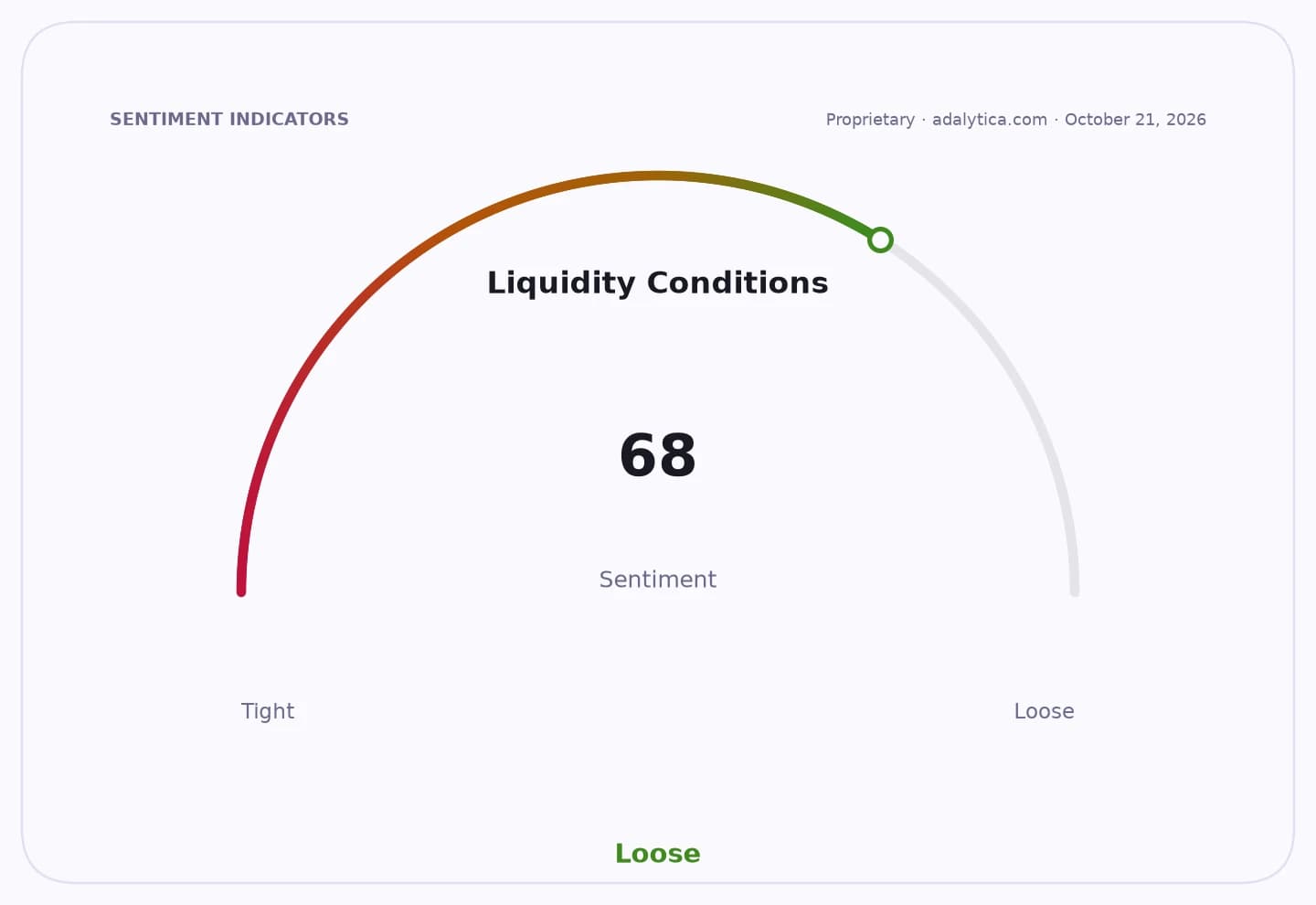
Sentiment IndicatorsⓘProprietary · adalytica.com · October 22, 2026
This is a snapshot — live sentiment, awareness and momentum for 130+ markets update continuously in the dashboard.Open AlphaPulse
The ministry borrowed 695 million lei on Monday, above the 500 million lei planned, at an average yield of 7.14%, then returned on Thursday for another auction that brought in 972 million lei, twice the amount offered, after demand reached five times the amount on sale. That was the best auction result of the year, according to the source report, and Minister Alexandru Nazare said the oversubscription showed investors were regaining confidence in Romania as prospects improved for a new government.
For investors, the message is twofold. First, domestic banks and other buyers are still willing to absorb sovereign supply, suggesting Romanian paper remains placeable despite high yields. Second, the level of demand will be watched as a test of whether fiscal concerns are easing or merely being postponed. If the government can keep auctions well covered, it would support bond market stability and help limit pressure on local funding costs. If demand weakens again, borrowing could become more expensive quickly.
The auction results also fit a broader global pattern of governments paying up for funding as bond markets digest higher interest rates and large debt loads. Romania’s roughly 7% borrowing cost is elevated by historical standards, but the immediate concern for policymakers is not just the rate level — it is whether the state can continue to roll over debt smoothly without unsettling banks, bondholders or the currency.
The next signals will come from whether the new government delivers a credible fiscal plan and whether the Treasury can sustain the recent improvement in coverage ratios. A continued rebound in demand would reduce near-term financing risk; a reversal would suggest investors are still demanding a premium for Romania’s political and budget uncertainty.
| Entity | Gains | Losses |
|---|---|---|
| Romania’s Treasury | ▲Easier funding | ▼Higher interest bill |
| Domestic banks | ▲Yield on sovereign paper | ▼Balance-sheet concentration |
| Investors in lei bonds | ▲Better auction liquidity | ▼Exposure to fiscal risk |
| Romanian taxpayers | ▲Lower refinancing stress if demand holds | ▼Cost of elevated borrowing |