The rupiah weakened to Rp17,948 per dollar on Thursday morning, extending pressure on Indonesia’s currency as investors weighed a potential MSCI downgrade and a fragile regional FX backdrop.
Rupiah Weakens to 17,948 per Dollar
The move, which marked a 0.25% decline from the previous close of Rp17,903, matters because a weaker rupiah feeds directly into imported inflation, debt-servicing costs and portfolio flows at a time when Indonesia is trying to defend market confidence. The currency has been volatile in recent sessions and remained under strain even as oil prices firmed and the US dollar softened intermittently, suggesting domestic risk sentiment is doing more damage than external support is helping.
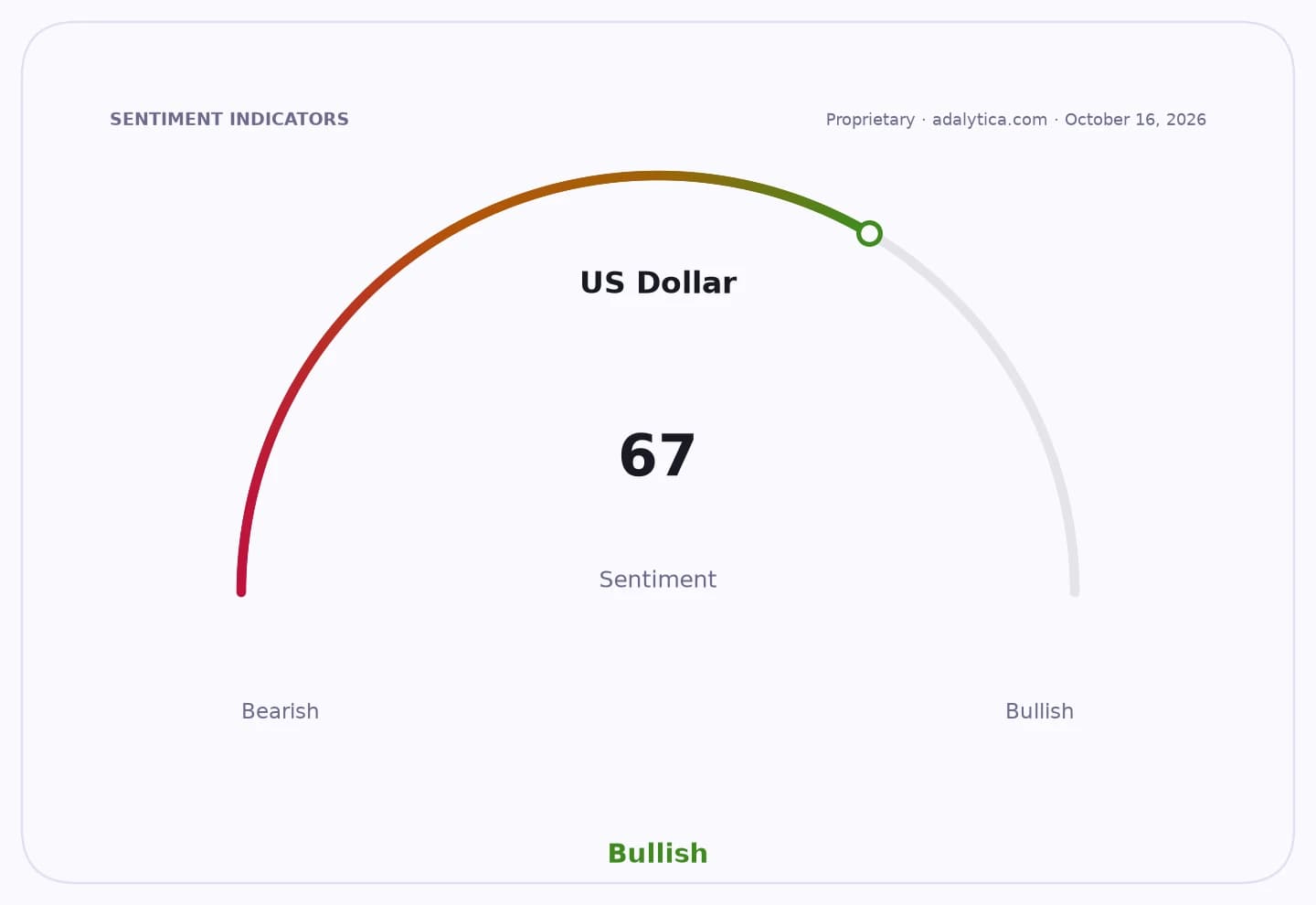
Sentiment IndicatorsⓘProprietary · adalytica.com · October 16, 2026
This is a snapshot — live sentiment, awareness and momentum for 130+ markets update continuously in the dashboard.Open AlphaPulse
The latest price action shows how close the rupiah is to the edge of a broader technical breakdown. On the most recent trading data, USD/IDR closed at 17,943 after touching an intraday high of 18,035, with the pair well above its 50-day moving average of 17,777.65 and its 200-day average of 17,464.92. The move keeps the exchange rate near the upper end of its recent Bollinger Band range, while the relative strength index has slipped from overbought territory to 48.3, indicating momentum is no longer one-way but still tilted toward caution.
For investors, the problem is not just the level of the rupiah but the reason behind the weakness. Coordinating Minister Airlangga Hartarto has said the MSCI announcement was a major driver of the currency’s decline alongside pressure on the Jakarta Composite Index, underscoring how index-related fears can transmit quickly from equities into FX. If foreign funds slow or reverse allocations, Indonesia risks tighter financing conditions, more pressure on local assets and a less supportive backdrop for banks, property and domestic consumption plays.
Bank Indonesia’s role is therefore central. Officials are already monitoring the market closely, and any sign that depreciation becomes disorderly could force a stronger policy response through intervention or tighter liquidity conditions. That would help stabilize the rupiah in the near term, but it could also keep domestic funding costs elevated and weigh on risk assets if sustained.
The bull case is that much of the pressure is sentiment-driven and could ease if the MSCI risk does not materialize or if global dollar strength fades. The bear case is that the rupiah remains vulnerable to follow-on selling if foreign investors continue to cut exposure to Indonesian equities and local bonds. For now, the market is treating Rp17,948 not as a stand-alone move, but as part of a broader test of confidence in Indonesia’s financial stability.
| Entity | Gains | Losses |
|---|---|---|
| US dollar | ▲Safe-haven demand | ▼— |
| Indonesian importers | ▲— | ▼Higher input costs |
| Foreign equity holders | ▲Potential exit liquidity | ▼Mark-to-market losses |
| Bank Indonesia | ▲Stronger case for intervention | ▼FX reserves / policy room |