Deposit holders in Russia are losing the edge over prices just as borrowing costs are expected to decline, making cash savings less attractive for households and more vulnerable to inflation eroding their real value.
Russia deposit rates fall as inflation risk rises

At current average deposit rates of about 11% to 12% and official inflation near 6%, savers are still earning a positive real return on paper. But the gap can disappear quickly for households whose own spending baskets are rising faster than the national average. If a family’s regular purchases are climbing 10% to 11% a year, the real return on a bank deposit shrinks to just 1% to 2%, according to the expert cited in the Russian-language source.
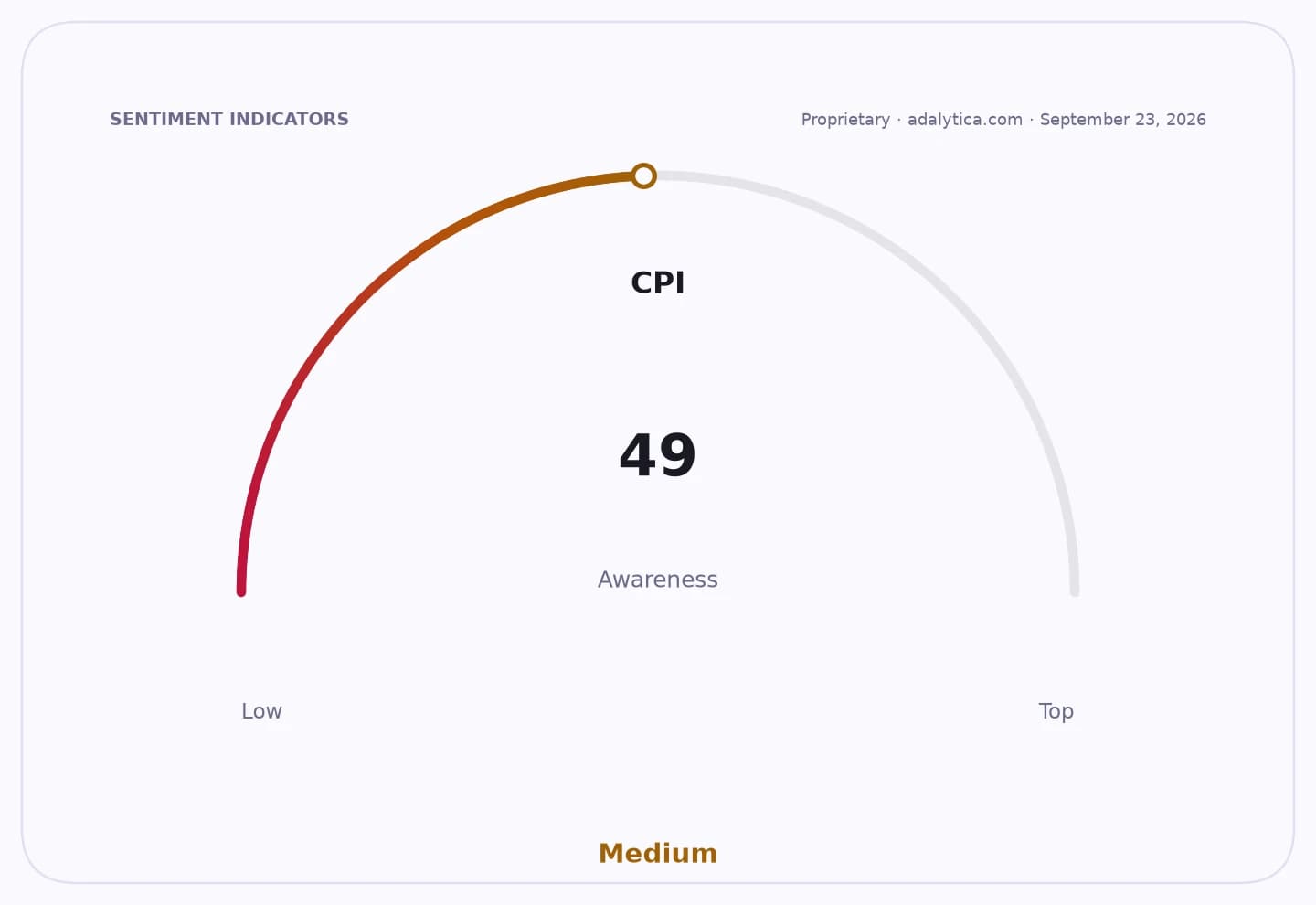
Sentiment IndicatorsⓘProprietary · adalytica.com · September 13, 2026
This is a snapshot — live sentiment, awareness and momentum for 130+ markets update continuously in the dashboard.Open AlphaPulse

That matters because inflation is not experienced as a headline index, but through rent, food, transport, fuel and other recurring costs. For depositors, the key question is whether interest income keeps pace with the prices they actually face. Once that spread turns thin, bank deposits stop functioning as a reliable store of value and become little more than a low-risk parking place for cash.
The risk is set to intensify if the central bank moves to cut rates further. Lower policy rates usually feed through to deposit yields with a lag, reducing the income savers receive even if inflation stabilizes. In Russia’s case, the source also points to a weaker ruble and higher prices for basic goods, including fuel, as additional forces that could compress real returns. That combination leaves households exposed to a classic loss of purchasing power: nominal balances may rise, but what those balances can buy falls.

For investors, the implication is that money-market and bank deposit instruments are no longer a sufficient one-stop answer for preserving wealth. The expert’s advice to diversify away from ruble-only deposits reflects that reality. When real rates narrow, demand tends to shift toward assets that can hedge inflation or currency weakness, including foreign-currency exposure, hard assets and longer-duration financial instruments. The trade-off is higher volatility, but the alternative is slow erosion of capital in real terms.
The broader market message is also clear. If deposit rates fall while inflation expectations remain sticky, household savings behavior may change, with more money flowing out of banks and into consumption or alternative assets. That would matter for liquidity, credit growth and the transmission of monetary policy. It would also reinforce the divergence between the official inflation rate and the personal inflation felt by consumers, which is often what drives saver behavior long before macro data do.
For now, the central issue for investors and households alike is not whether deposits still pay nominal interest, but whether that income can outrun the prices that matter most. If it cannot, cash ceases to be a defense and becomes a drag.
| Entity | Gains | Losses |
|---|---|---|
| Bank depositors with broad spending baskets | ▲Higher returns if inflation stays contained | ▼Real income if personal inflation accelerates |
| Banks | ▲Lower funding costs if rates fall | ▼Deposit stickiness if savers chase alternatives |
| Ruble hedges and hard assets | ▲More demand as savings diversify | ▼Limited appeal if rates stay high |
| Households relying on cash savings | ▲Temporary protection from nominal yields | ▼Purchasing power as food, fuel and FX-linked prices rise |