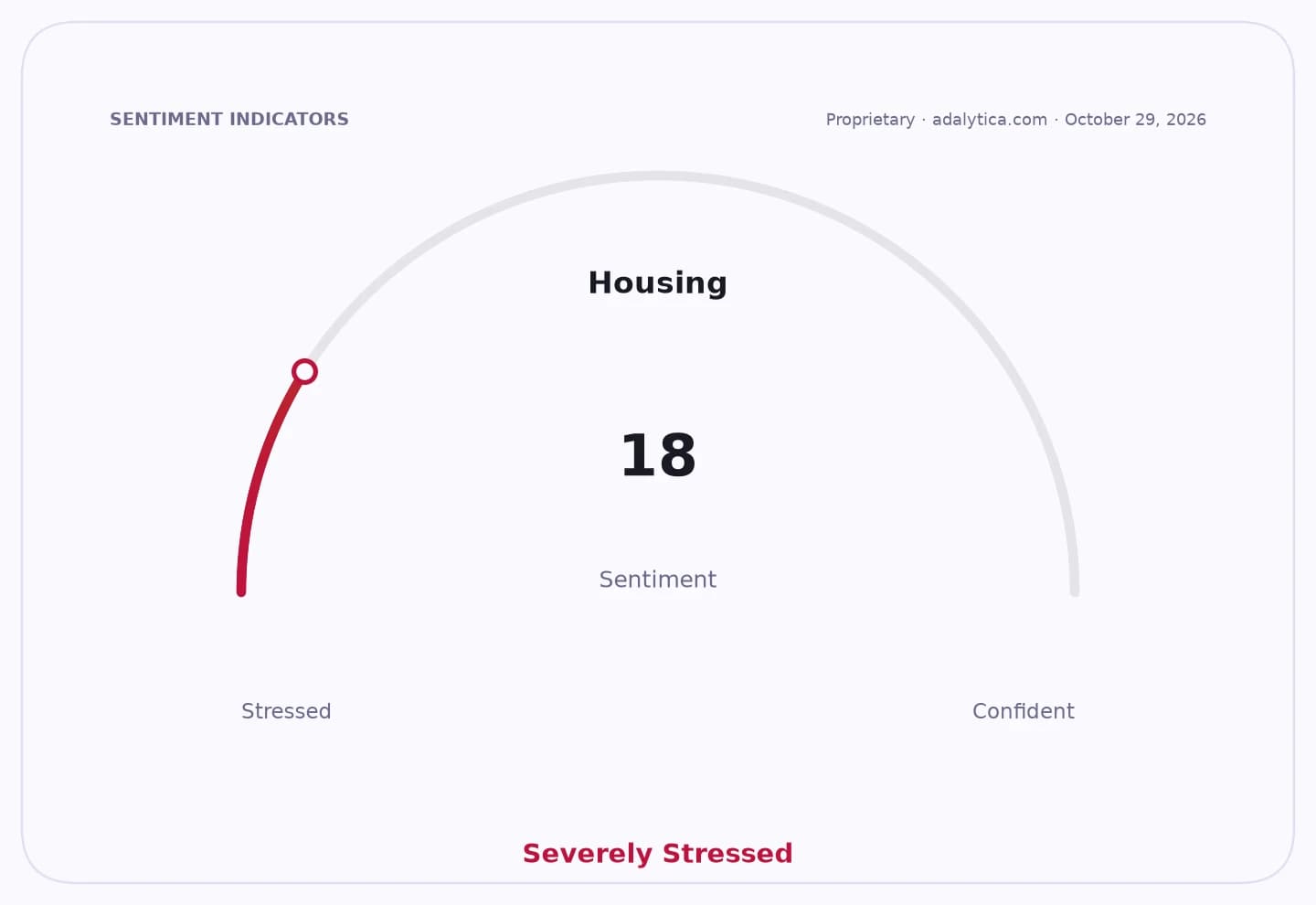
Russia’s plan to shut its subsidized IT mortgage program as early as December 2026 would remove one of the clearest state-backed supports for housing demand and signal that budget discipline is starting to outweigh efforts to retain skilled tech workers.
Russia IT mortgage subsidy may end in 2026
Housing
The move, still under discussion and not yet final, matters because the program has been one of the few tailored incentives aimed at keeping software engineers and other IT specialists in the country while cushioning housing affordability. The government is weighing the change as part of the 2027 budget process, with the digital ministry saying financing is being worked out “under conditions of limited budget resources.” Existing borrowers would keep their current rates for the life of their loans, limiting immediate credit stress but not the medium-term hit to new demand.
Sentiment Indicators
The subsidy currently allows eligible employees at accredited IT companies to borrow at rates of up to 6%, with loans as large as 9 million rubles, and the program is officially slated to run until end-2030. Ending it years early would mark a notable policy shift in a market that has relied heavily on preferential mortgages to support purchases, especially among younger and higher-earning households. That support has already narrowed elsewhere: family mortgage rules were tightened from Oct. 1, making rates and loan limits depend on the number of children and the region.
For the housing market, the implications are straightforward. If one of the most attractive niche mortgage programs disappears, demand from a relatively affluent buyer pool should weaken, adding pressure to sales volumes and affordability at a time when conventional borrowing remains expensive. Market participants cited by local media expect apartment demand to fall sharply, underscoring how dependent parts of the market remain on subsidized credit rather than underlying purchasing power.
The broader economic significance is that Moscow appears increasingly willing to trade off industrial policy goals against fiscal restraint. Keeping the IT subsidy would support tech-sector retention and home buying; cancelling it would conserve budget spending but raise the cost of attracting and holding skilled labor. For investors, the issue is less about a single mortgage line item than about the direction of Russian housing demand, consumer credit growth and the state’s willingness to keep underwriting property purchases through targeted programs.
Banks and developers would likely see the biggest second-order effects. Lenders tied to subsidized mortgage origination could lose volume, while builders in regions that benefited from IT demand may face softer absorption. The policy also reinforces a wider tightening in mortgage access, suggesting that any recovery in housing transactions will depend more on falling market rates than on state support.
For now, the key catalyst is whether the government formalizes an early end in the 2027 budget. If it does, the next leg of the housing cycle is likely to be driven less by subsidies and more by borrowing costs, which remain elevated by Russian standards.
| Entity | Gains | Losses |
|---|---|---|
| Russian government | ▲Lower budget outlays | ▼Less housing support |
| Existing IT borrowers | ▲Locked-in subsidized rates | ▼None |
| IT workers seeking new mortgages | ▲— | ▼Higher borrowing costs |
| Banks and developers | ▲— | ▼Fewer subsidized loans |