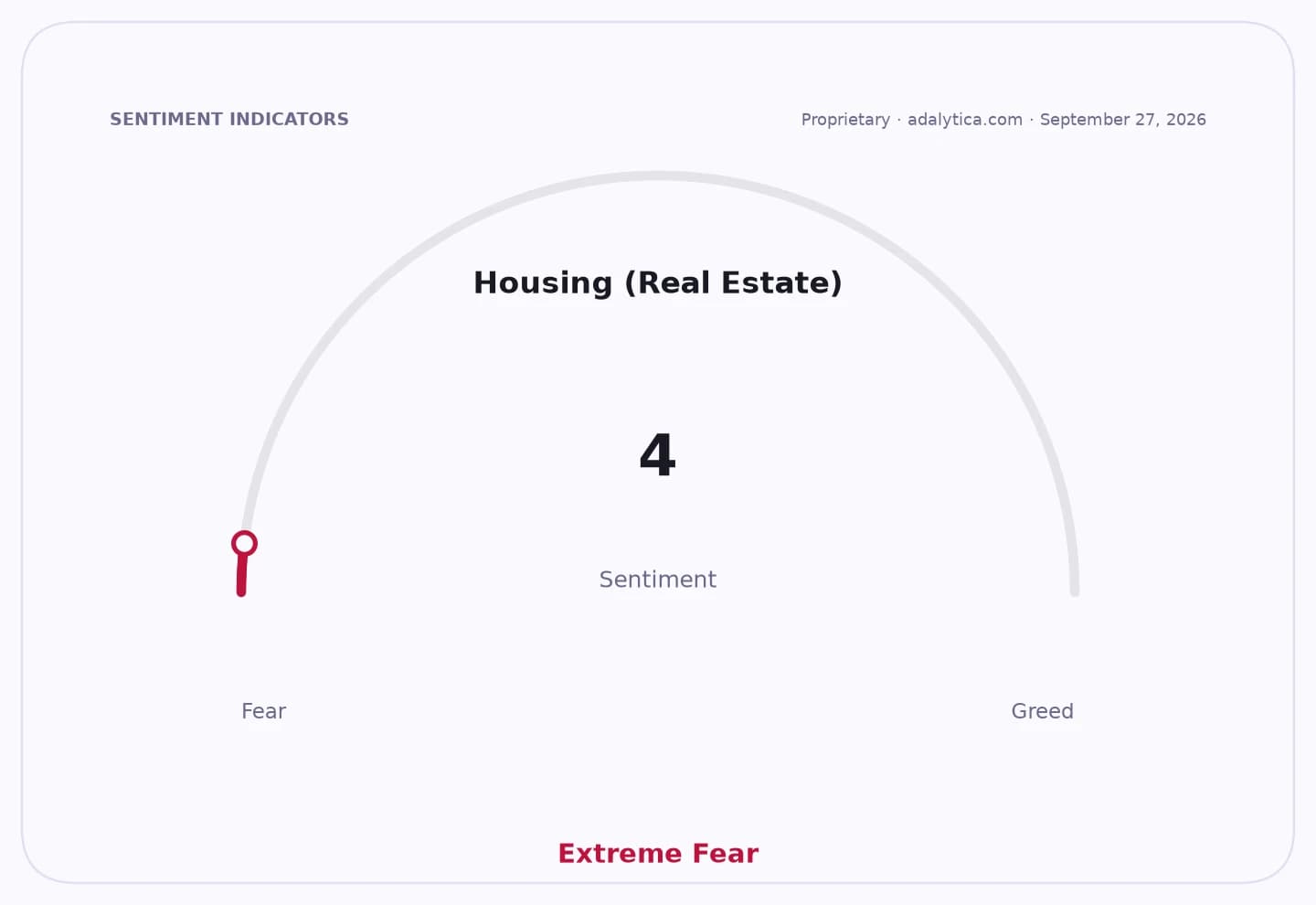
A growing share of home loans is now pushing borrowers past working age, and that matters because it turns housing from a wealth-building asset into a long-duration debt burden just as incomes often peak and then fall.
Russia Mortgage Terms Extend Beyond Retirement
In Russia, about 62% of mortgage borrowers in early 2025 were on schedules that would end after age 60, according to the data in the brief. Roughly half of all mortgages are being issued for 25 to 30 years, but at today’s elevated rates, stretching the term does almost nothing to lower the monthly payment while sharply increasing the lifetime cost of the loan.
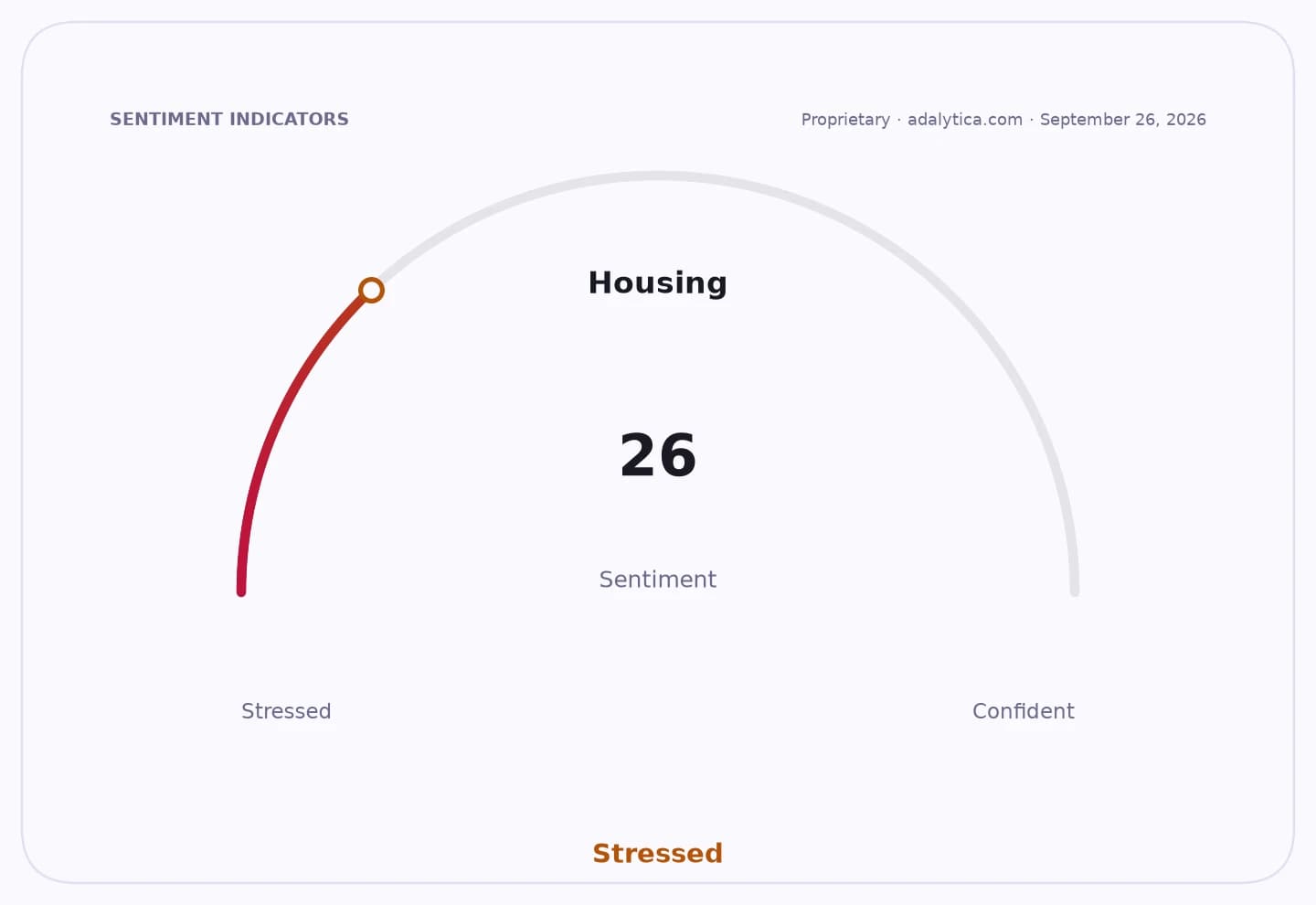
Sentiment IndicatorsⓘProprietary · adalytica.com · September 26, 2026
This is a snapshot — live sentiment, awareness and momentum for 130+ markets update continuously in the dashboard.Open AlphaPulse
That is the real economic problem for households: a longer mortgage no longer buys much breathing room. On a 5 million-ruble loan at 17.8%, the monthly payment falls only slightly from about 76,000 rubles on a 20-year term to roughly 75,000 rubles on a 30-year term, while the extra decade adds about 8.5 million rubles in total payments. In other words, borrowers are paying far more for the privilege of staying in debt longer.
For investors, the story is not just about families. It speaks to a housing market being sustained by duration, not affordability. When rates are high, borrowers spend years mostly servicing interest because the balance declines slowly at the start of an amortizing loan. That makes new home purchases less accessible, raises default risk later in life and can eventually slow housing turnover as older owners cling to mortgages well into retirement.
The broader backdrop is familiar across markets: expensive housing, stubborn borrowing costs and inadequate retirement savings are colliding. When mortgage payments keep running after retirement begins, households may be forced to draw down pension savings, delay retirement, or sell assets. That can weigh on consumer spending and increase pressure on public safety nets over time.
The implications are clear. If rates stay elevated, long-dated mortgages will remain a pain point rather than a solution, and any meaningful fix will likely require either lower borrowing costs, larger down payments or better retirement planning. For long-term investors, that makes the housing affordability problem worth watching closely, especially in lenders, insurers and other financial firms tied to household leverage.
| Entity | Gains | Losses |
|---|---|---|
| Lenders | ▲More interest income | ▼Higher credit risk |
| Homebuyers | ▲Smaller upfront hurdle | ▼Much bigger lifetime cost |
| Retirees | ▲Home access without immediate cash outlay | ▼Pension and savings strain |
| Housing market | ▲Continued transaction flow | ▼Slower affordability recovery |