Russian buyers spent almost 3.5 trillion rubles on used cars, underscoring how high prices, tighter household budgets and limited affordability are pushing demand deeper into the secondhand market.
Russia's Used-Car Market Gains on Affordability Pressure
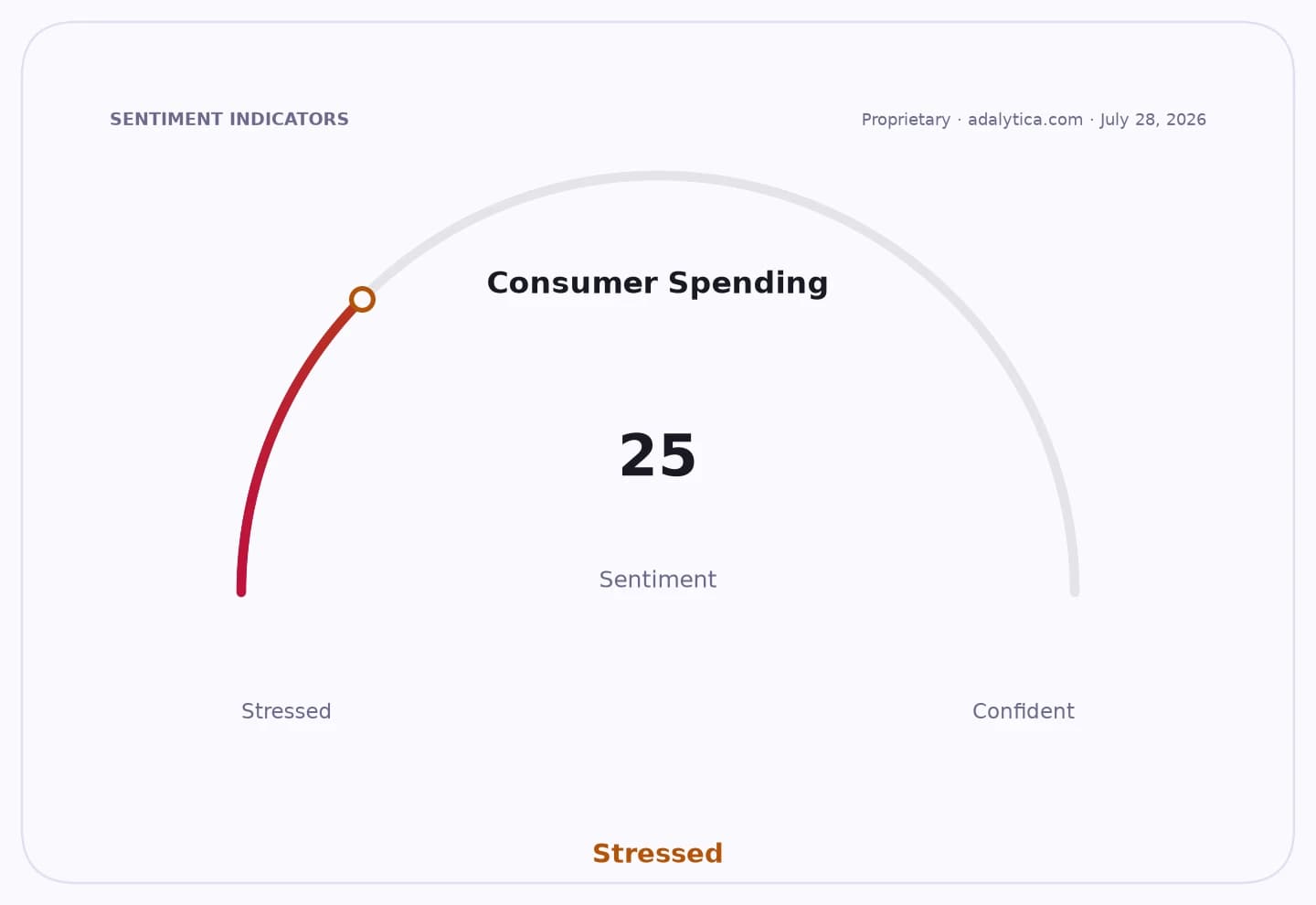
The figure matters because used cars have become the main pressure valve for consumers who cannot stretch to new vehicles, making the market a more important barometer of spending power than headline auto sales. In a country where household cash flow is under strain, the size of the used-car market points to durable demand for cheaper transport even as consumers remain cautious elsewhere.
Sentiment IndicatorsⓘProprietary · adalytica.com · July 28, 2026
This is a snapshot — live sentiment, awareness and momentum for 130+ markets update continuously in the dashboard.Open AlphaPulse
That shift has implications across the auto chain. Dealers, online marketplaces and financing providers can benefit from higher turnover in used inventory, while manufacturers and new-car distributors face a more constrained buyer base. A stronger used-car market also tends to keep price competition intense, which can squeeze margins for sellers even as it supports volumes.
The broader backdrop is a global auto market moving toward greater transparency and faster pricing adjustments, including through AI-driven tools that are making secondhand vehicles easier to price and trade. In Russia, that dynamic is colliding with affordability concerns and keeping demand anchored in the lower-cost segment.
For investors, the key question is whether used-car spending in Russia remains a defensive substitute or starts to broaden into a more stable source of consumption. The next readout on auto sales and consumer demand will show whether the shift toward the secondary market is deepening or just reflecting short-term pressure on new-car affordability.
| Entity | Gains | Losses |
|---|---|---|
| Used-car dealers | ▲Higher turnover | ▼Lower unit margins |
| Consumers | ▲Cheaper mobility | ▼Fewer new-car choices |
| New-car automakers | ▲Inventory discipline | ▼Slower showroom demand |
| Finance providers | ▲More lending volume | ▼Higher credit risk |