Russian workers are heading toward a year of thinner pay rises and fewer bonuses, even as the government prepares to lift the minimum wage in 2027, a sign that the country’s long-running wage boom is losing steam.
Russia wage growth slows as bonuses and pay rise
That matters because wages have been one of the main ways Russia has kept households spending through war, sanctions and labor shortages. If companies stop chasing workers with bigger pay packets, consumption will cool, profit margins will come under pressure, and the economy will have a harder time converting nominal growth into real purchasing power.
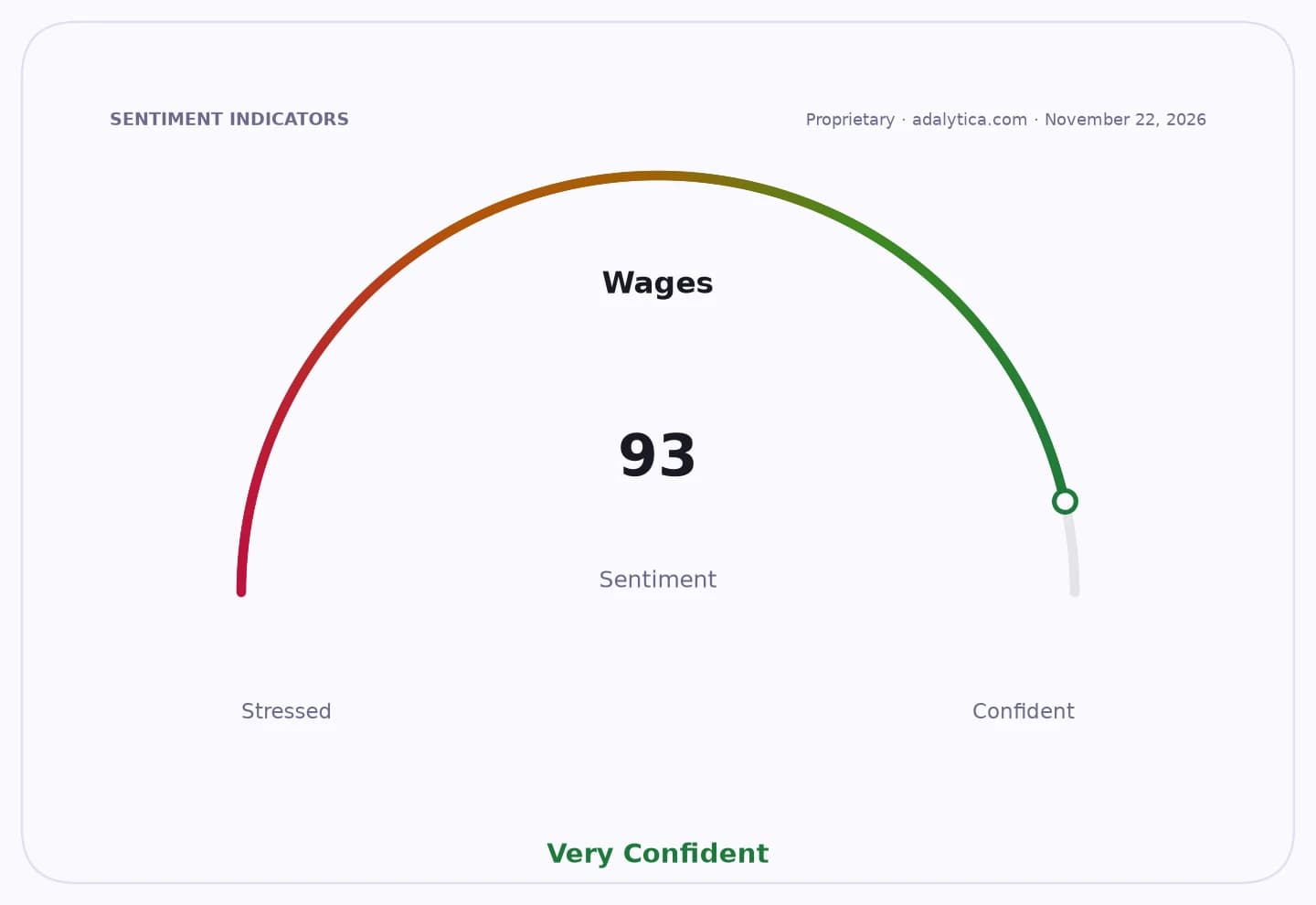
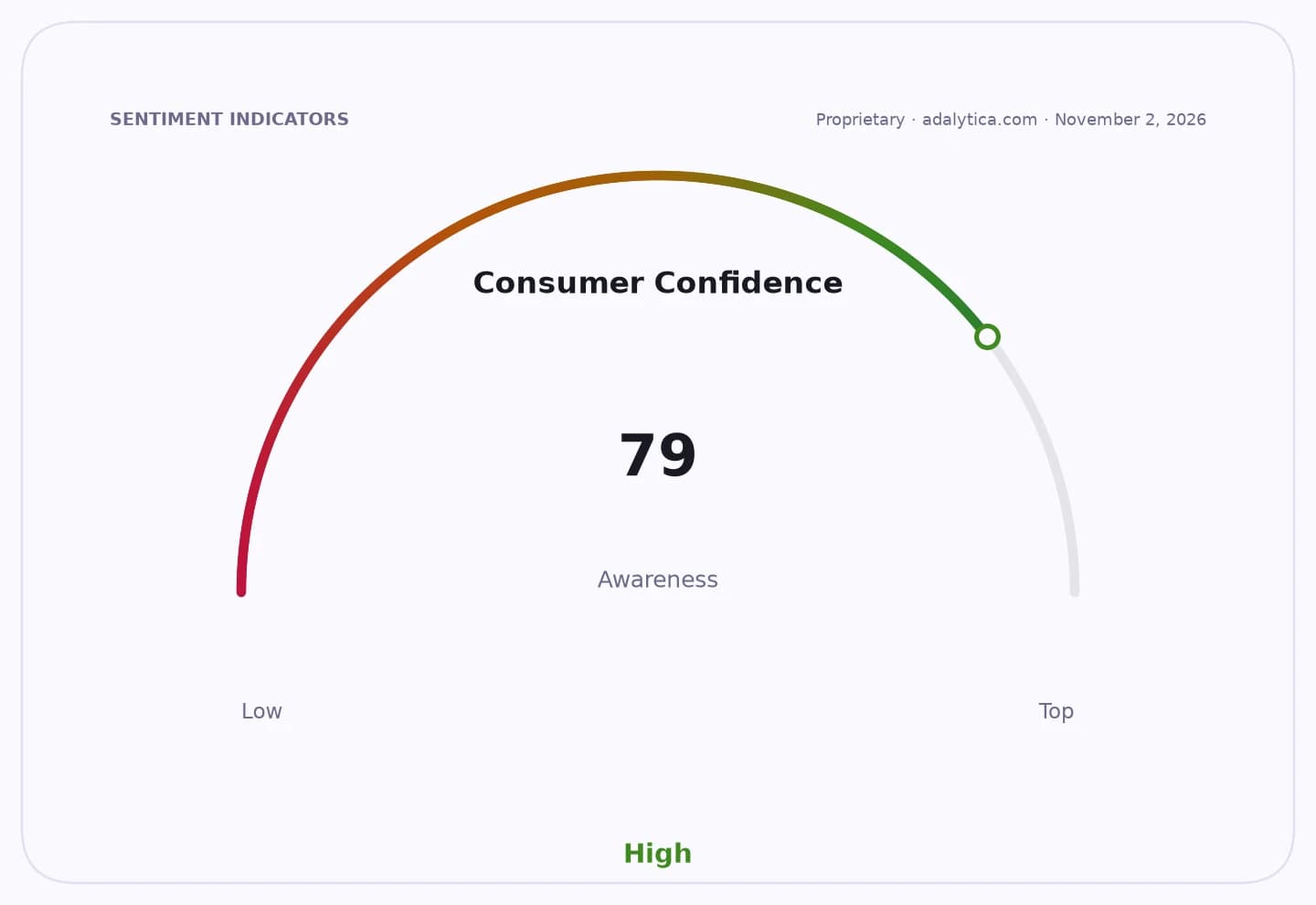
Sentiment Indicators
The clearest warning is coming from employers themselves. The Russian Union of Industrialists and Entrepreneurs says the share of companies planning to cut personnel costs jumped to 56% from 25% in just six months. SuperJob says about a third of Russian companies do not plan to pay a 13th salary this year, a common year-end bonus that often helps household budgets around New Year.
For investors, the key point is not whether wages rise a little more in nominal terms — they probably will. The risk is that inflation eats most of it. The government’s conservative forecast for 2027 calls for real disposable incomes to rise just 0.5% and real wages only 0.9%, essentially flat in household-spending terms. That is a very different backdrop from the last couple of years, when firms used salary hikes and bonuses to retain staff in an exceptionally tight labor market.
There is a simple economic reason for the shift: pay has run ahead of productivity. One labor expert quoted in the local media said real wages rose about 10% to 11% in 2026, while productivity climbed only 11.5%. That may sound close, but for companies facing sanctions, higher borrowing costs and weaker demand, it means labor has become expensive without generating enough offsetting output. The result is a push to freeze salaries, reduce bonuses, shorten workweeks and, in some cases, send staff into downtime.
The government still has to manage the political optics of wage restraint. President Vladimir Putin has repeatedly pointed to low unemployment as evidence of labor-market strength, and lawmakers have already approved a 6.8% increase in the minimum wage to 28,935 rubles from Jan. 1, 2027. But minimum-wage hikes do not tell the full story when broader pay growth is slowing and companies are looking for savings wherever they can find them.
For long-term investors, the narrative here is less about one bonus season than about the next phase of the Russian economy. The easy fix of bidding up labor to solve shortages is fading. The companies that survive will be the ones that automate, improve productivity and protect margins. Firms that cannot do that may see profits squeezed, hiring frozen and market share lost.
Households, meanwhile, are likely to feel the pinch first through weaker discretionary spending. That makes the wage slowdown important well beyond labor statistics: it is a signal that consumer demand, company pricing power and economic resilience are all moving into a more fragile phase. For anyone tracking Russia’s domestic economy, the smarter question is not whether wages are still rising, but how quickly the era of broad-based pay growth is ending — and which businesses can still grow when it does.
| Entity | Gains | Losses |
|---|---|---|
| Employers | ▲Lower labor costs | ▼Employee retention leverage |
| Workers | ▲Minimum wage floor | ▼Bonuses and real income growth |
| Automated firms | ▲Better margins | ▼Labor-intensive rivals |
| Consumers | ▲Slight nominal pay gains | ▼Purchasing power |