Russia’s minimum wage is rising at more than twice the pace of inflation, a move that may support household spending but also deepen pressure on employers already coping with tight labor markets and elevated costs.
Russia minimum wage rises faster than inflation
The increase matters because the minimum wage is no longer just a social-policy lever in Russia’s war economy — it is becoming a macroeconomic one. Faster wage growth can cushion real incomes and help shore up consumer demand, but it also risks squeezing margins in labor-intensive industries, especially where companies cannot easily pass on higher payroll costs. For the state, the policy can bolster living standards and preserve social stability, yet it also raises the risk that wage growth runs ahead of productivity at a time when inflation remains a key policy concern.
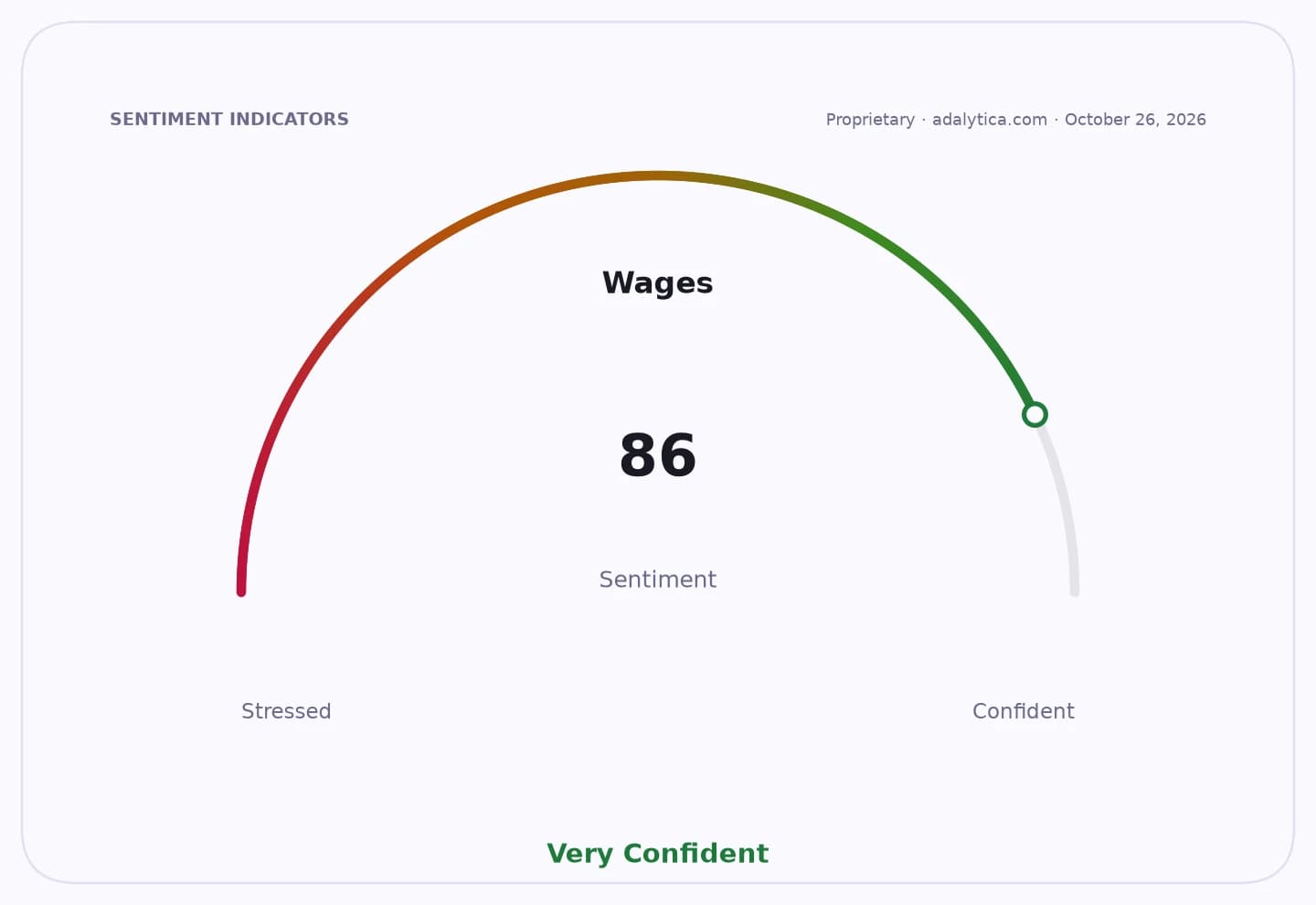
Sentiment Indicators
That tension is exactly why investors should care. In any economy where wages are climbing faster than consumer prices, the immediate beneficiaries are workers and retailers tied to domestic spending. The losers are employers, particularly small and mid-sized businesses, construction firms, logistics operators and services companies with limited pricing power. The shift also reinforces the view that Russia’s labor shortage is structural, not temporary, and that wage pressure is likely to persist even if economic growth slows.
The story fits a broader pattern in Russia’s economy: tight labor supply, state-directed support for incomes and an inflation backdrop that leaves policymakers with fewer good options. If wage growth stays above inflation, it can keep consumption resilient in the near term, but it also makes disinflation harder and leaves the central bank with less room to ease. That is a mix that tends to favor firms with hard assets, pricing power or exposure to state spending, while punishing businesses dependent on cheap labor.
For investors, the takeaway is straightforward: Russia’s wage policy is signaling a more persistent cost-push environment. Any company or sector reliant on low wage inflation is exposed, while consumer-facing names and state-backed beneficiaries may be better insulated. The market underestimates how quickly a wage floor rising faster than prices can reshape margins, inflation expectations and capital allocation in a sanctions-hit economy.
| Entity | Gains | Losses |
|---|---|---|
| Russian workers | ▲Higher real incomes | ▼— |
| Consumer-facing retailers | ▲Better household demand | ▼Higher wage bills |
| Labor-intensive employers | ▲— | ▼Margin compression |
| Central bank / policymakers | ▲Social stability | ▼Harder inflation fight |