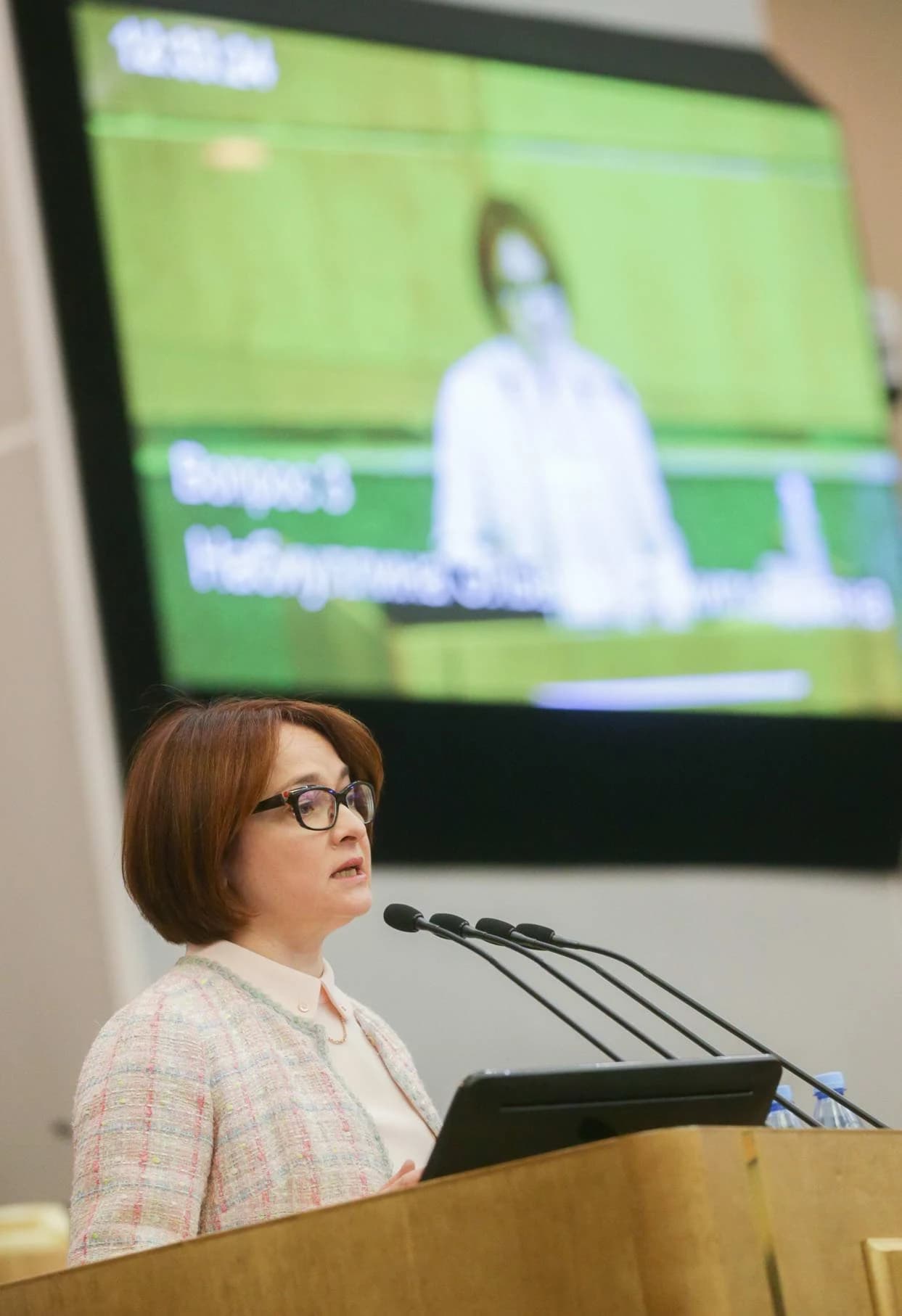
Russia’s Finance Ministry said the central bank’s elevated key rate is being kept high to help rein in inflation, reinforcing the government’s support for tight monetary policy even as borrowing costs stay elevated for households and companies.
Russia finance ministry backs high key rate
Deputy Finance Minister Ivan Chebeskov said at the Verona Eurasian Economic Forum that the policy rate remains at a raised level so the Central Bank can control prices. The message matters because it confirms that Moscow is prioritizing disinflation over near-term growth, even after a long stretch of restrictive policy that raises debt-service costs and slows credit demand.
Sentiment Indicators
Chebeskov also said the finance ministry plans to hold the budget deficit at 2% of gross domestic product, a level he described as hard to achieve for many countries. Russia’s public debt is currently below 20% of GDP, and the ministry expects to keep it under 25% over the next three years.
The comments line up with remarks from Central Bank Deputy Governor Alexei Zabotkin, who said on Oct. 12 that a planned reduction in the federal deficit is needed to make monetary policy easier and allow rate cuts in 2027. He said state spending affects overall demand and is therefore part of the central bank’s rate-setting calculus, alongside household and business activity.
Zabotkin also said on Oct. 5 that stabilizing inflation at a low target would require an average key rate of 10.5% to 12.5% over a year, while the central bank sees a neutral rate at 7.5% to 8.5%. That keeps pressure on domestic borrowers and supports carry trades in ruble assets, but it also raises the hurdle for any broad-based rebound in credit-sensitive sectors.
For investors, the key takeaway is that both fiscal and monetary authorities are signaling a coordinated effort to preserve price stability rather than chase faster growth. That tends to support government bond discipline and the currency, while leaving banks, consumer lenders and rate-sensitive sectors exposed to a longer period of expensive funding.
In markets, long-duration bond proxies have already reflected a more dovish global backdrop, with the U.S. TLT ETF recently trading around $81.49 after a sharp rebound, while the dollar index held near 80.13 in the latest data. Russia-specific assets were not directly quoted, but the policy message points to a continued premium for inflation protection and caution on domestic demand plays.
The next focus will be whether inflation data and budget execution allow the central bank to begin easing in 2027 as officials expect, or whether stubborn price pressures keep the key rate elevated for longer.
| Entity | Gains | Losses |
|---|---|---|
| Central Bank of Russia | ▲Inflation control credibility | ▼Growth-sensitive borrowers |
| Finance Ministry | ▲Fiscal discipline reputation | ▼Easier deficit financing |
| Savers and ruble holders | ▲Higher real returns | ▼Consumers facing high rates |
| Banks and lenders | ▲Wider lending spreads | ▼Loan demand and credit growth |