Saudi consumer spending through point-of-sale terminals reached 16 billion riyals in a week, underscoring that domestic demand remains a key support for the non-oil economy even as broader sentiment across consumers turns more mixed.
Saudi consumer spending reaches 16 billion riyals
The spending total, captured across more than 273 million electronic transactions, matters because point-of-sale data is one of the clearest near-real-time gauges of household activity in Saudi Arabia. It points to resilient retail turnover, but also to the economy’s growing reliance on consumption rather than oil-linked flows alone as the kingdom pushes diversification. With 2027 budget plans already pointing to a deficit of 3.6% of GDP and consumer spending expected to rise 3.5%, the weekly data reinforces the view that private consumption will remain central to growth.
Sentiment IndicatorsⓘProprietary · adalytica.com · October 7, 2026
This is a snapshot — live sentiment, awareness and momentum for 130+ markets update continuously in the dashboard.Open AlphaPulse
For investors, the print is supportive for retailers, payment networks, banks and leisure-linked businesses that benefit from stronger transaction volumes. It also suggests that consumption-led sectors such as hospitality, recreation and discretionary retail can continue to absorb the effects of fiscal tightening better than more cyclical or oil-sensitive parts of the economy. The data can also matter for rates and policy expectations: sustained household spending argues against an abrupt loss of momentum in the domestic economy.
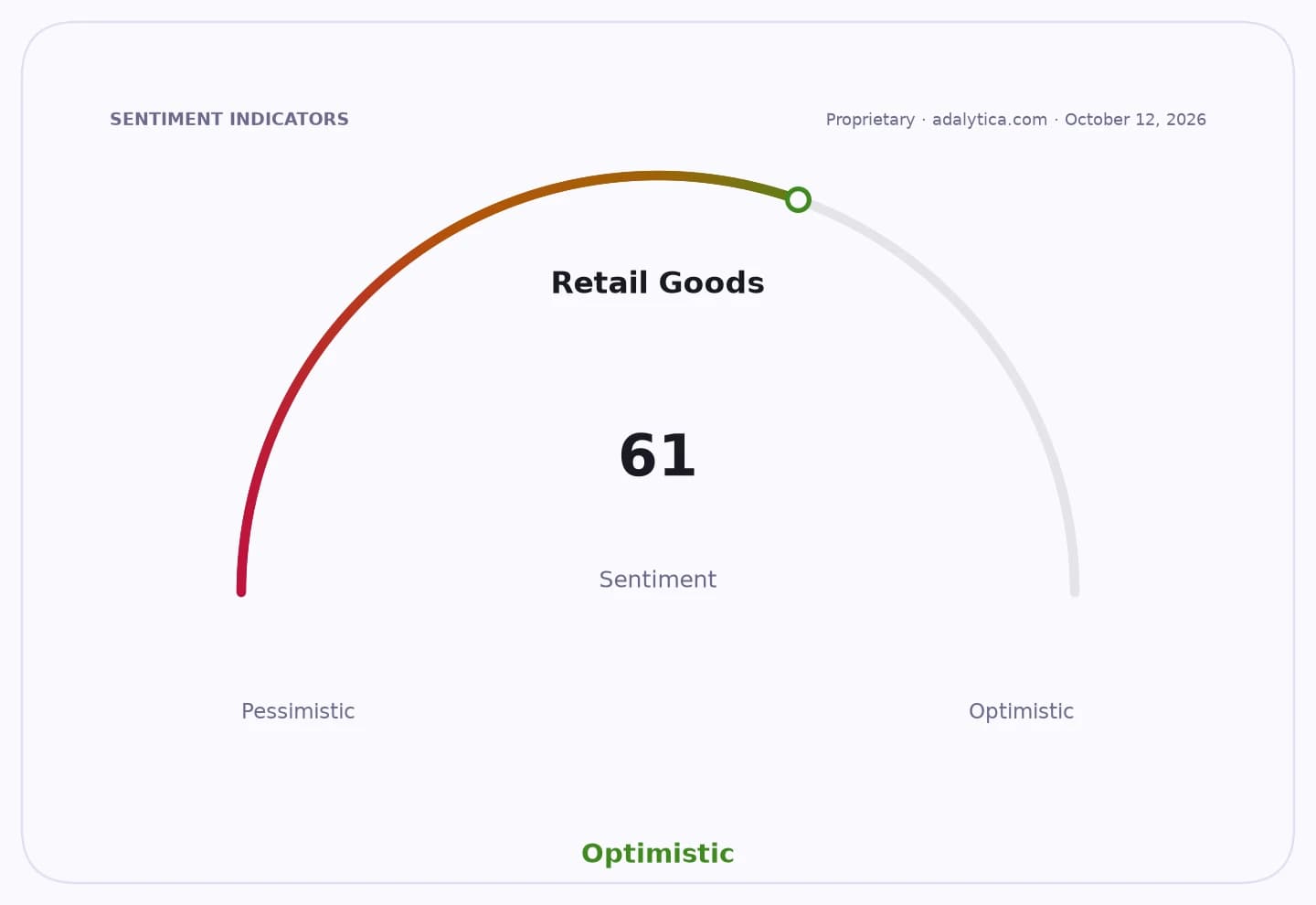
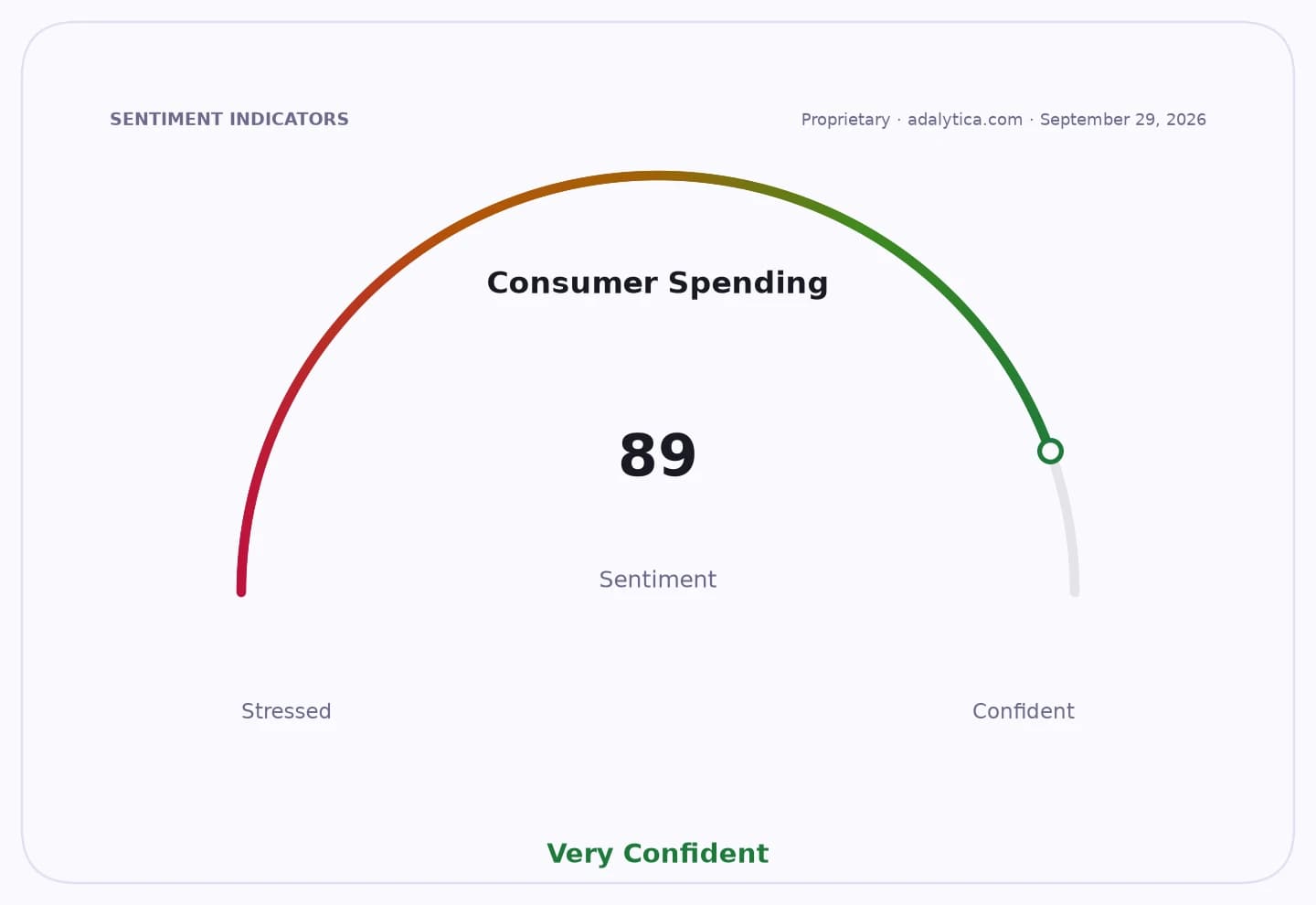
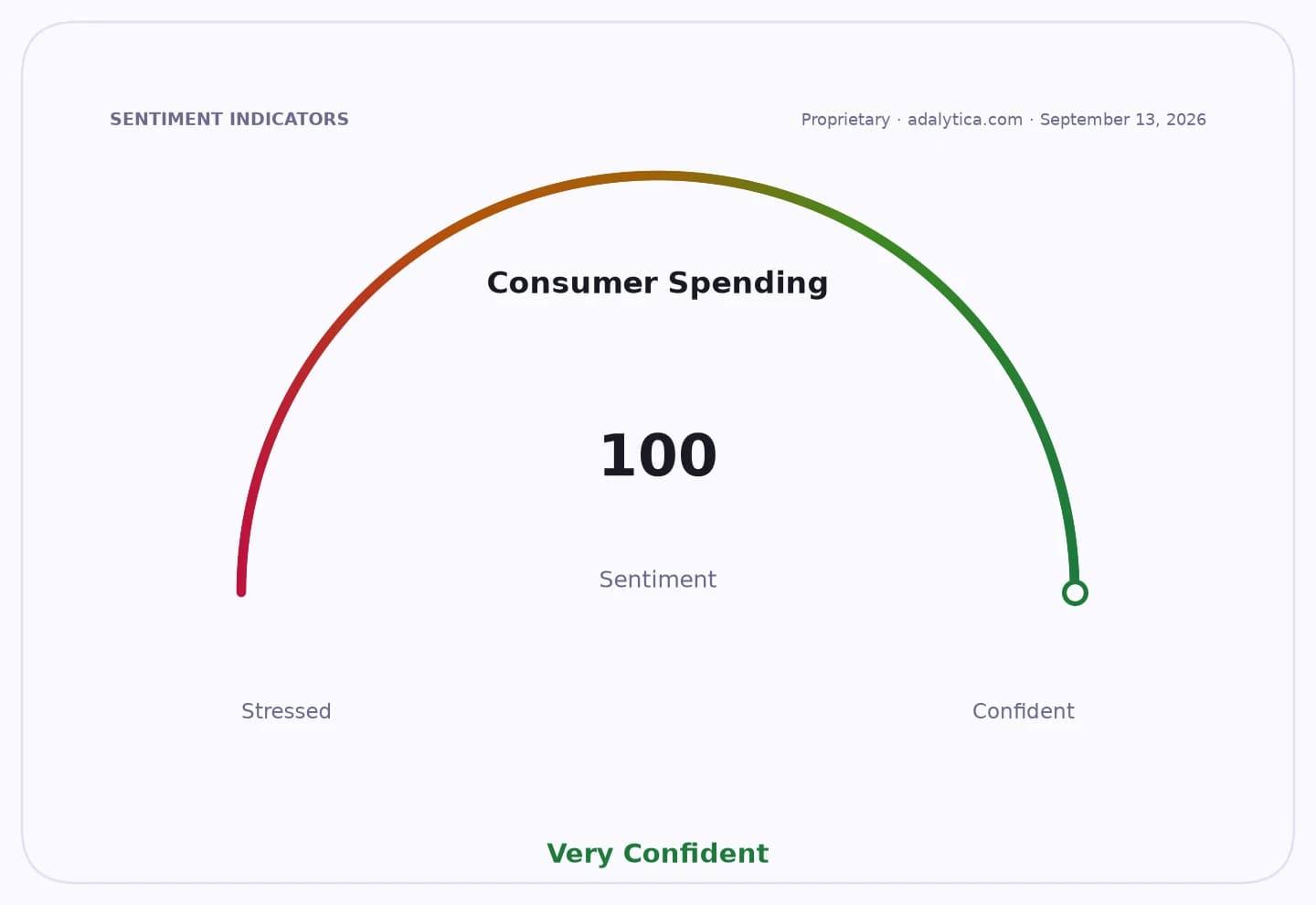
At the same time, the readout does not point to a straight-line acceleration. Adalytica’s consumer spending sentiment gauge is neutral at 36, while retail goods spending sentiment sits at 50, also neutral, indicating that spending is being sustained more by actual activity than by upbeat consumer psychology. That divergence is important: households are still transacting, but confidence remains uneven, which can cap the durability of discretionary outperformance.
The narrative fits with Saudi Arabia’s broader economic transition. As the kingdom works to diversify away from hydrocarbons and manage a wider fiscal adjustment, weekly card-spending data is becoming a more important barometer of domestic momentum. The near-term question for markets is whether this pace of spending can hold through the next quarters without needing stronger credit growth, bigger wage support or a renewed lift from tourism and entertainment.
| Entity | Gains | Losses |
|---|---|---|
| Saudi retailers | ▲Higher sales volumes | ▼Margin pressure if demand softens |
| Payment networks | ▲More POS transactions | ▼Slower growth if spending cools |
| Consumers | ▲Wider access to goods and services | ▼Tighter household budgets |
| Oil-linked revenue reliance | ▲Diversification progress | ▼Less centrality to growth narrative |