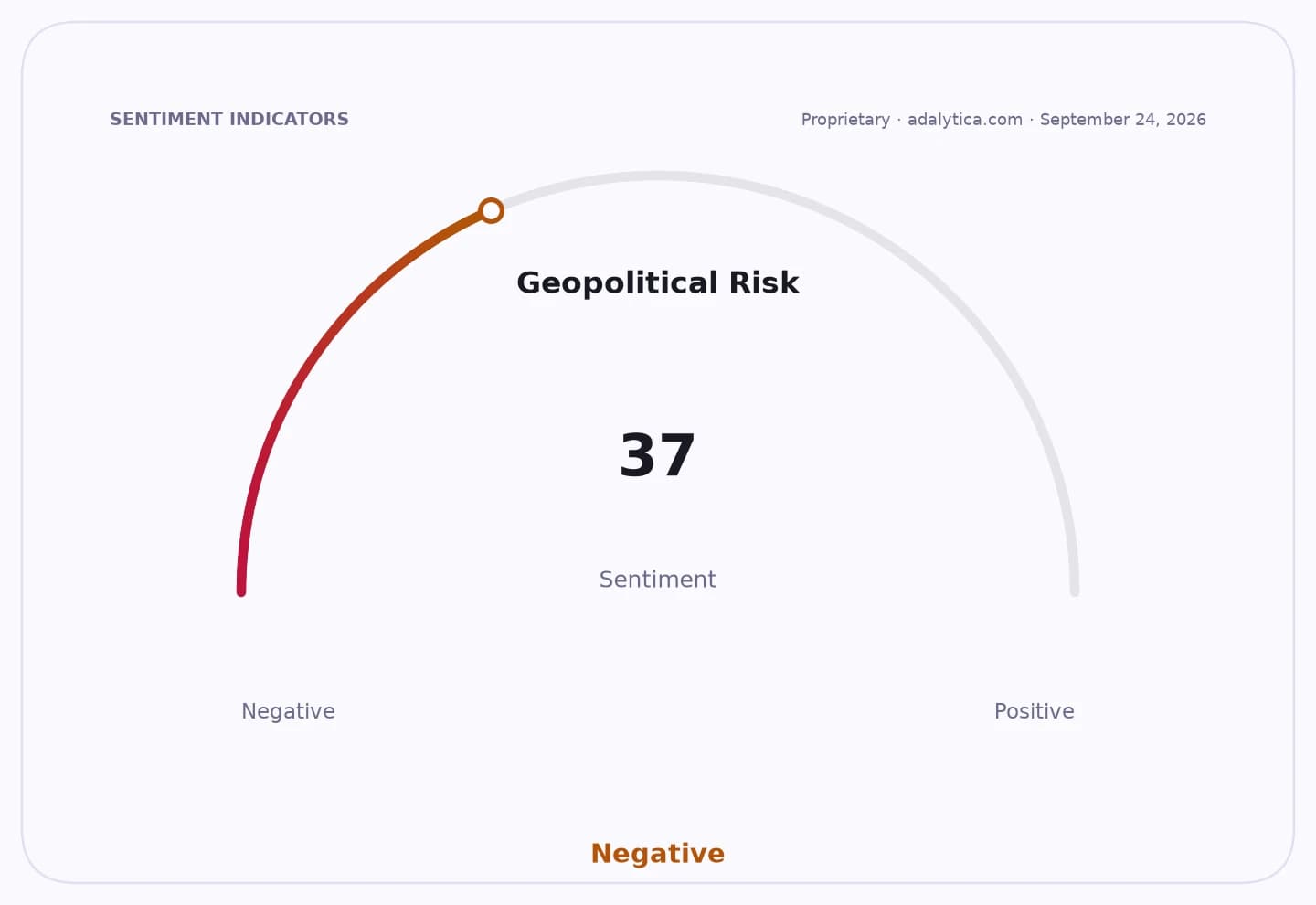
Voters in Saxony-Anhalt are casting ballots in a state election that could hand the far-right Alternative for Germany its strongest governing opportunity yet and further rattle Germany’s political mainstream.
Saxony-Anhalt votes as AfD seeks first-place finish
The vote matters far beyond the eastern state’s borders because an AfD breakthrough would test the country’s long-standing firewall against the far right and deepen pressure on Chancellor Friedrich Merz’s conservatives after years of weakening support in the east.
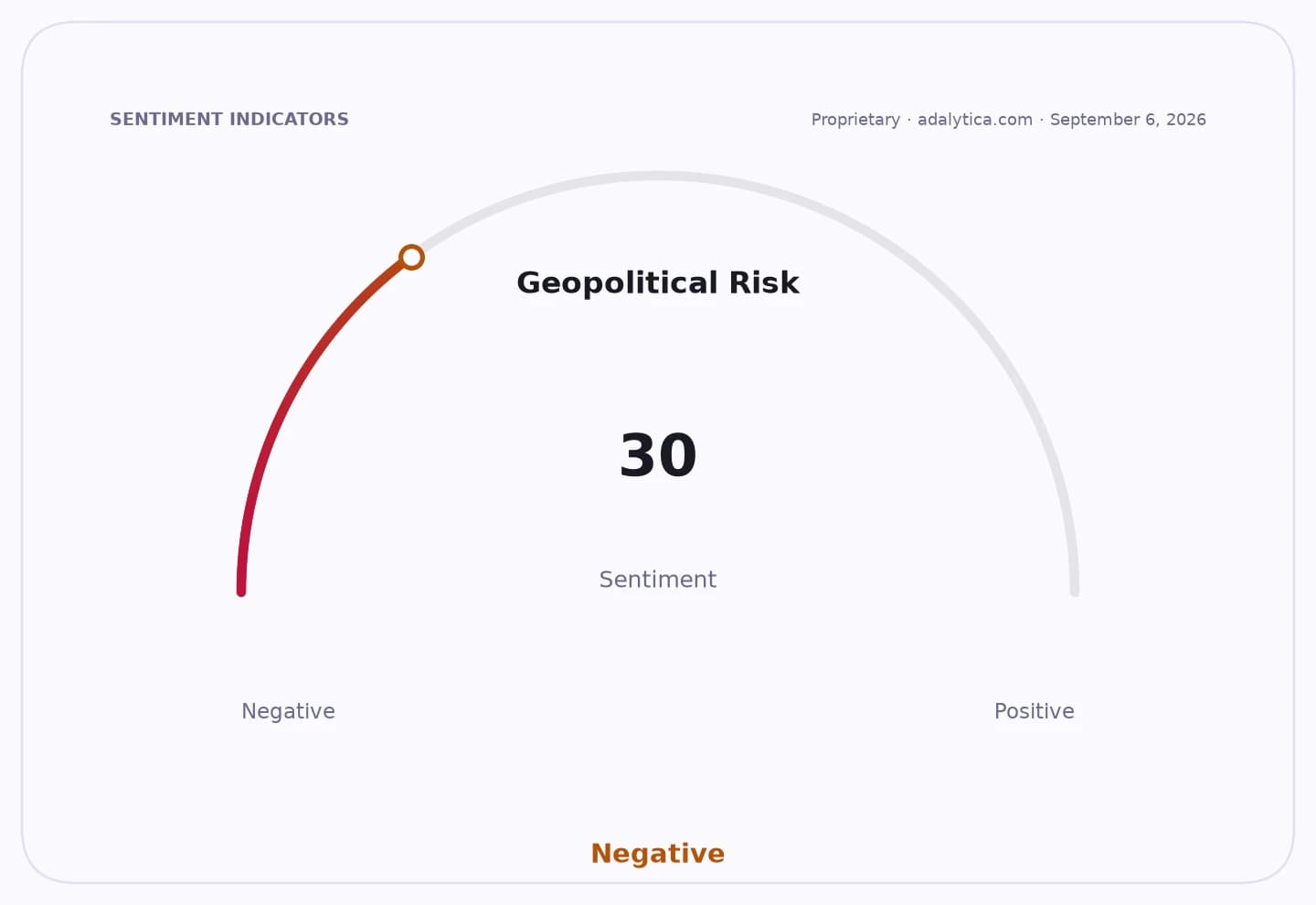
Sentiment IndicatorsⓘProprietary · adalytica.com · September 6, 2026
This is a snapshot — live sentiment, awareness and momentum for 130+ markets update continuously in the dashboard.Open AlphaPulse
Polling has put the AfD well ahead of the center-right Christian Democratic Union, which has led the state government since 2002, with the far-right party typically in the 40% range versus the CDU in the low to mid-20s. If that gap holds, the AfD would become Saxony-Anhalt’s largest party for the first time.
That would still not guarantee power. Every other major party has ruled out working with it, so the AfD would likely need an outright majority to govern alone unless smaller parties fall below the 5% threshold and shrink the size of the legislature enough to improve its seat share.
For Berlin, the stakes are political and strategic. A strong AfD result would intensify debate inside the CDU over its refusal to cooperate with either the far right or the far left, a line that has defined German politics since the postwar era but is increasingly under strain in the east.
The result also carries investor relevance because Germany’s domestic political stability and policy direction matter for everything from fiscal priorities to industrial policy and relations with the European Union. A deepening split between eastern and western politics could complicate Merz’s authority and keep uncertainty elevated around future coalition building and reform momentum.
Around 1.7 million adults are eligible to vote, with polling stations closing at 6 p.m. local time and preliminary results expected in the early hours of Monday. The outcome will determine whether Saxony-Anhalt stays under broad mainstream control or becomes the latest test of how far Germany’s political center can bend without breaking.
| Entity | Gains | Losses |
|---|---|---|
| AfD | ▲Historic governing chance | ▼Firewall resistance |
| CDU | ▲Potential rally if AfD falls short | ▼Seat losses, leadership pressure |
| Smaller parties | ▲Bargaining leverage if they clear 5% | ▼Representation if they miss threshold |
| Merz government | ▲Stability if CDU limits losses | ▼Credibility if conservatives stumble |