Germany’s far-right Alternative for Germany is tightening its grip on the former East, while Chancellor Friedrich Merz’s CDU is losing ground even in places long assumed to be structurally conservative, underscoring how political fragmentation in Europe’s biggest economy is moving from protest vote to governing risk.
Germany AfD gains as CDU loses ground
The most economically important development is not just AfD’s rise in isolated state elections, but the erosion of the CDU’s nationwide credibility as a governing force. In Mecklenburg-Vorpommern, an eastern state long seen as fertile territory for anti-establishment parties, AfD was running at 38.4% late on Sunday, up from 20.3% in 2021 and nearly doubling its support in four years. The CDU, by contrast, was limping along at 4.9% — just below the 5% threshold needed to enter a state parliament.
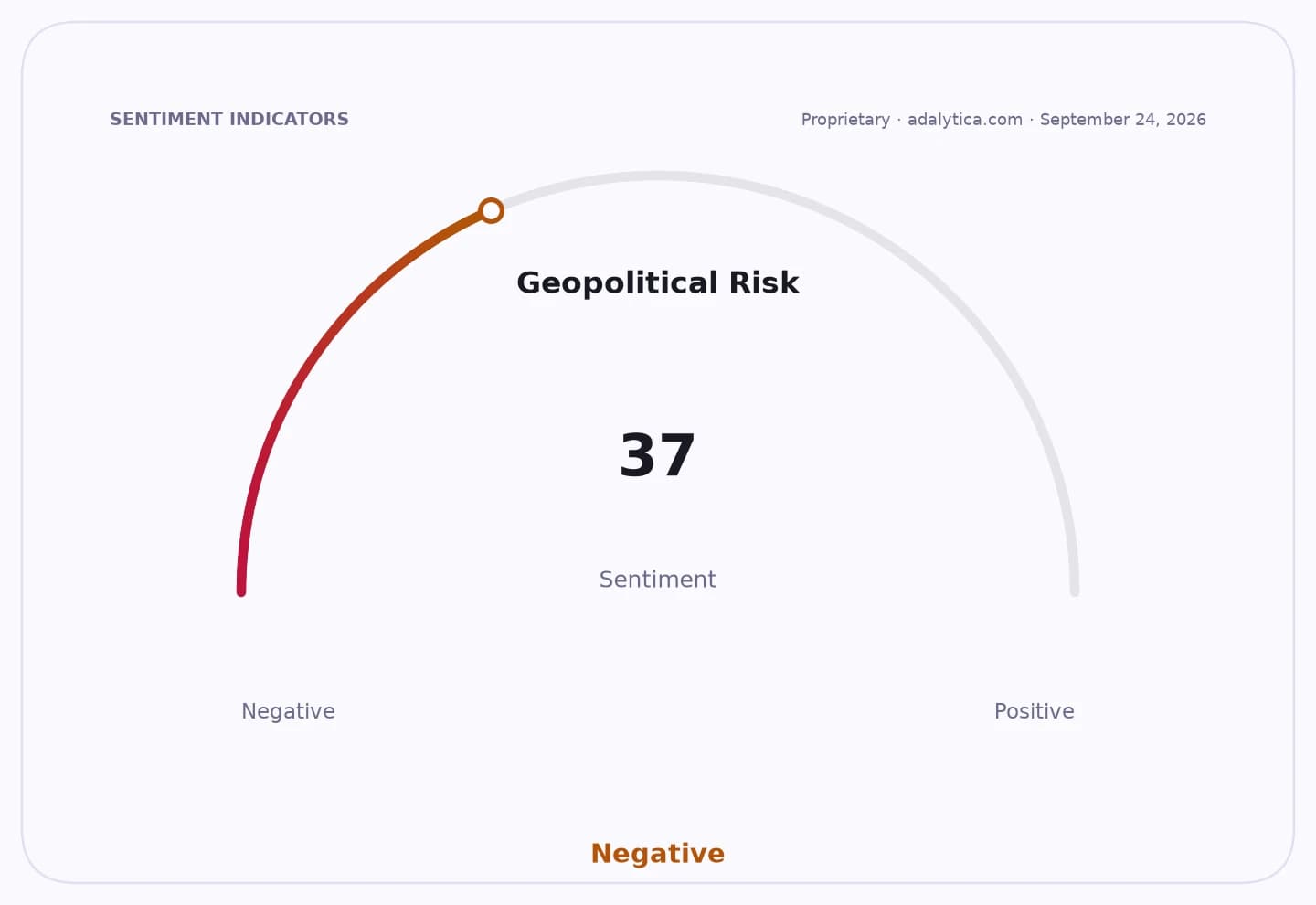
Sentiment IndicatorsⓘProprietary · adalytica.com · September 24, 2026
This is a snapshot — live sentiment, awareness and momentum for 130+ markets update continuously in the dashboard.Open AlphaPulse
That matters because Germany’s federal system is increasingly where political momentum is being made. State results do not directly determine the survival of the national government, but repeated losses in the east, alongside weak showings elsewhere, make it harder for Merz to sell his reform agenda and easier for opponents to portray his coalition as unable to deliver. Reuters noted the votes came as the government’s popularity remains low and its reforms are under pressure.
The pattern is now broadening beyond the old east-west divide. In Saxony-Anhalt on Sept. 6, AfD won 43.8% and CDU just 17.2%. In Berlin, another blow came on the same election day, where the left was leading with 25.7%, CDU had slipped to 18.8% from 28.2% in the prior vote, and AfD had climbed to 16.0% from 9.1%. For investors, the significance is less about any single regional result than about what it says on the durability of Germany’s centrist political bloc.
Markets tend to price political instability in Germany through the lens of policy execution rather than immediate regime change. That is why the implications are subtle but real. A weaker CDU means less room for Merz to push through labor, fiscal or industrial reforms needed to revive growth, and more risk that coalition politics become defensive. That can weigh on sentiment toward German equities, especially domestically exposed cyclical names, and on the euro if investors start to see Germany as slower to respond to the stagnation that has already hit manufacturing, investment and consumer confidence.
The regional data also show how much of AfD’s strength is now structural rather than episodic. In the east, economic underperformance, demographic decline and resentment over migration and living standards have created a durable protest base. AfD’s inability to govern at state level because mainstream parties refuse coalitions with it may limit its direct power, but that cordon sanitaire has not stopped it from converting frustration into votes. The bear case for Germany is that this leaves the country with a stronger opposition and a weaker governing center, but no clear mechanism to translate voter anger into policy compromise.
The bull case is that the CDU’s setback could still force faster delivery from Merz, particularly on competitiveness and growth. But that requires political bandwidth, and the latest votes suggest the government is spending it on defense. Merz called the Mecklenburg result a “disaster,” even as he tried to project continuity and said the government would press ahead with reforms.
For investors, the key question is whether this becomes another phase of chronic German drift or a catalyst for policy urgency. If the CDU cannot stabilize its base outside the Bundestag, the risk is not an immediate constitutional crisis but a longer period of political constraint at the heart of Europe’s largest economy.
| Entity | Gains | Losses |
|---|---|---|
| AfD | ▲stronger east German support | ▼mainstream coalition access |
| CDU/Merz | ▲pressure for reform urgency | ▼electoral credibility and authority |
| SPD/Left parties | ▲opportunity from CDU weakness | ▼stable centrist consensus |
| German economy | ▲potential policy focus | ▼slower reform execution |