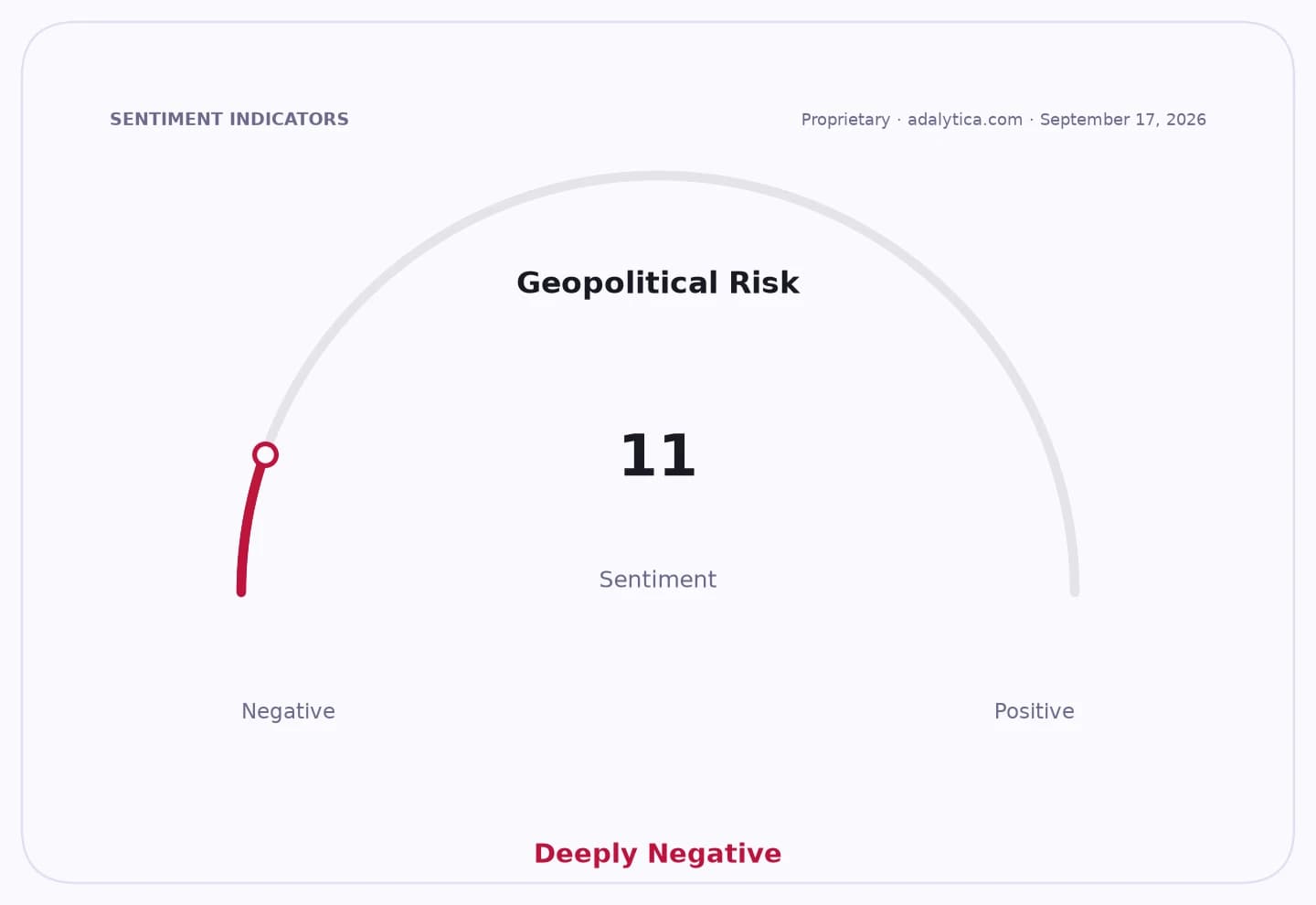
The leader of Germany’s far-right Alternative for Germany has called for all sanctions on Russia to be lifted and for military aid to Ukraine to stop, sharpening a fight over whether Europe’s biggest economy should maintain pressure on Moscow or reset ties in the name of lower energy costs.
Germany AfD Calls for Russia Sanctions Relief
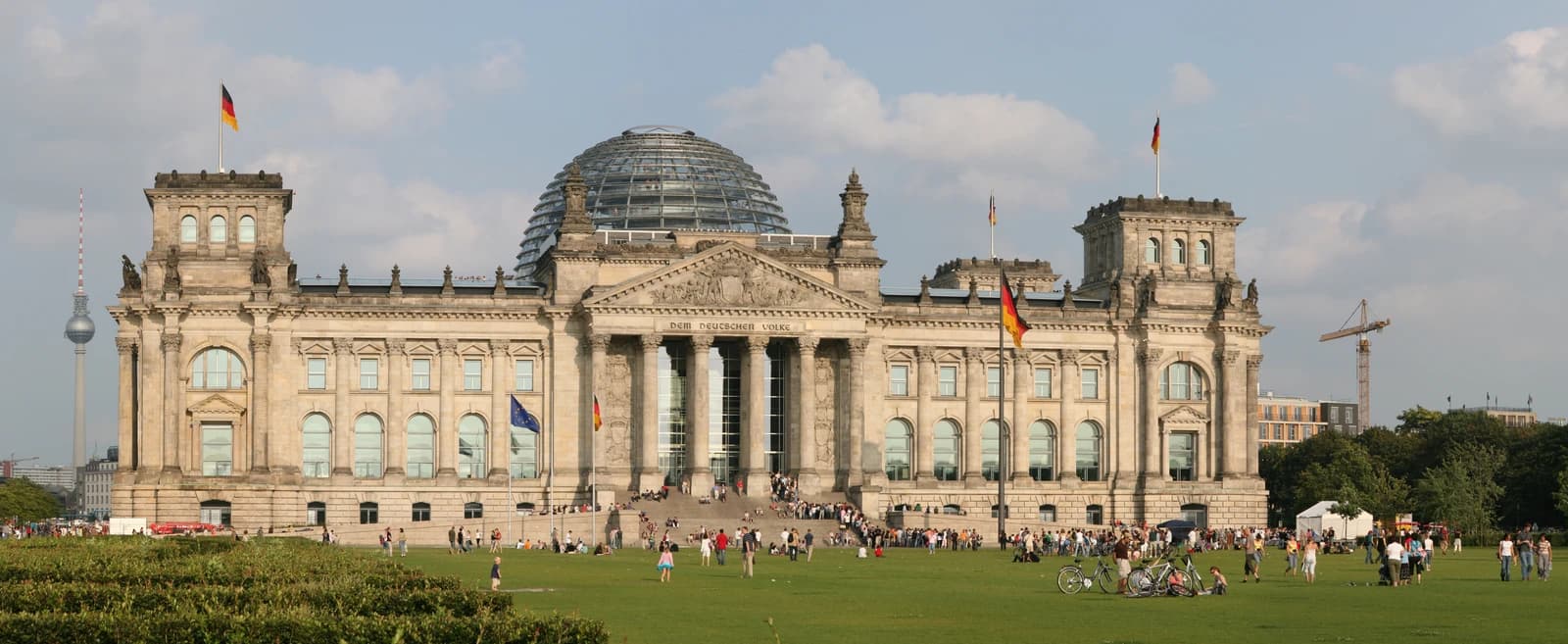
Tino Chrupalla’s remarks matter because they go beyond rhetoric about the war in Ukraine and cut straight into the policy architecture that has defined Europe’s response since 2022. If such a stance gains more political traction in Germany, it would complicate the EU’s ability to keep sanctions aligned, raise the risk of policy fragmentation inside the bloc and potentially soften one of the key economic levers the West has used against Russia.
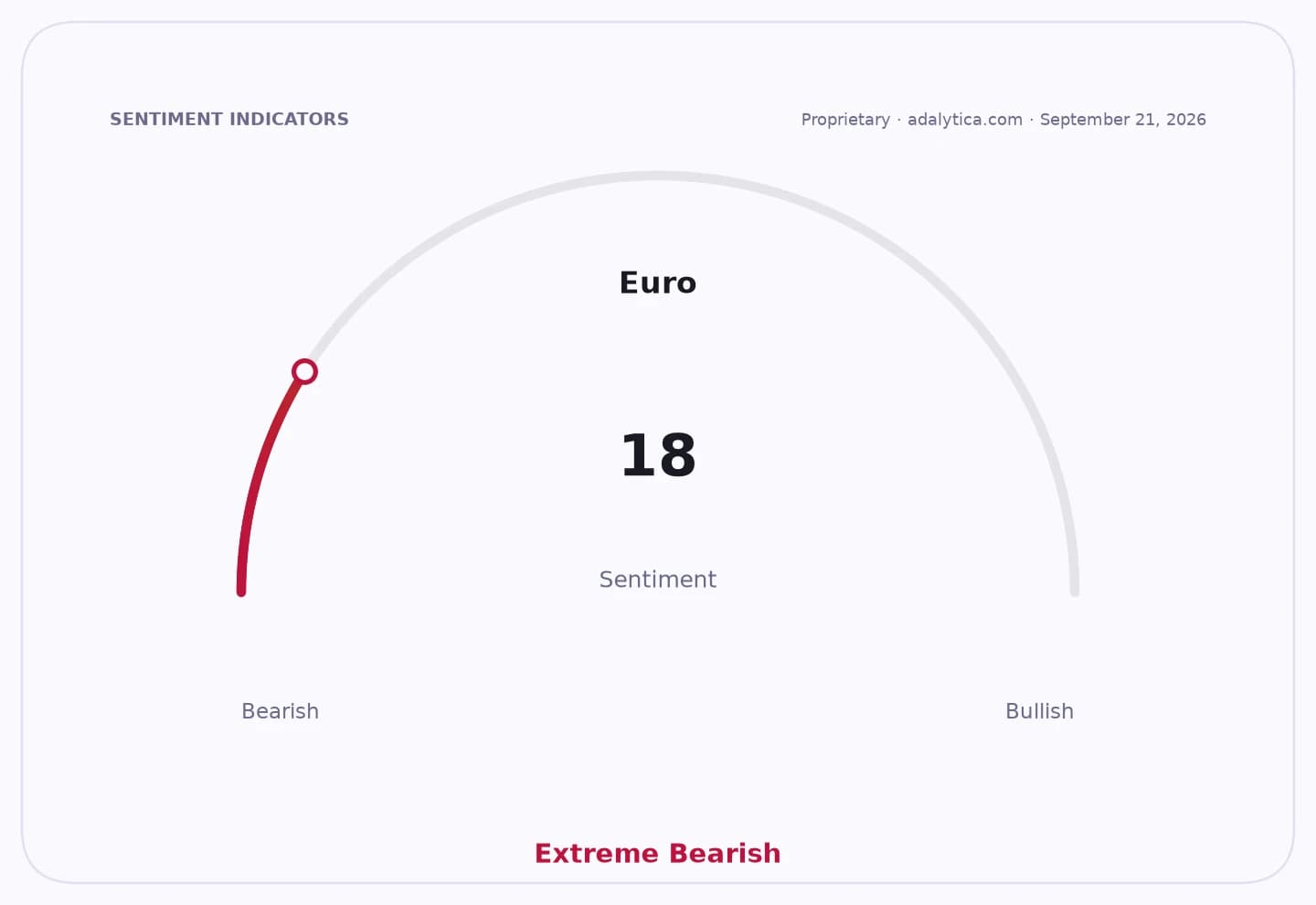
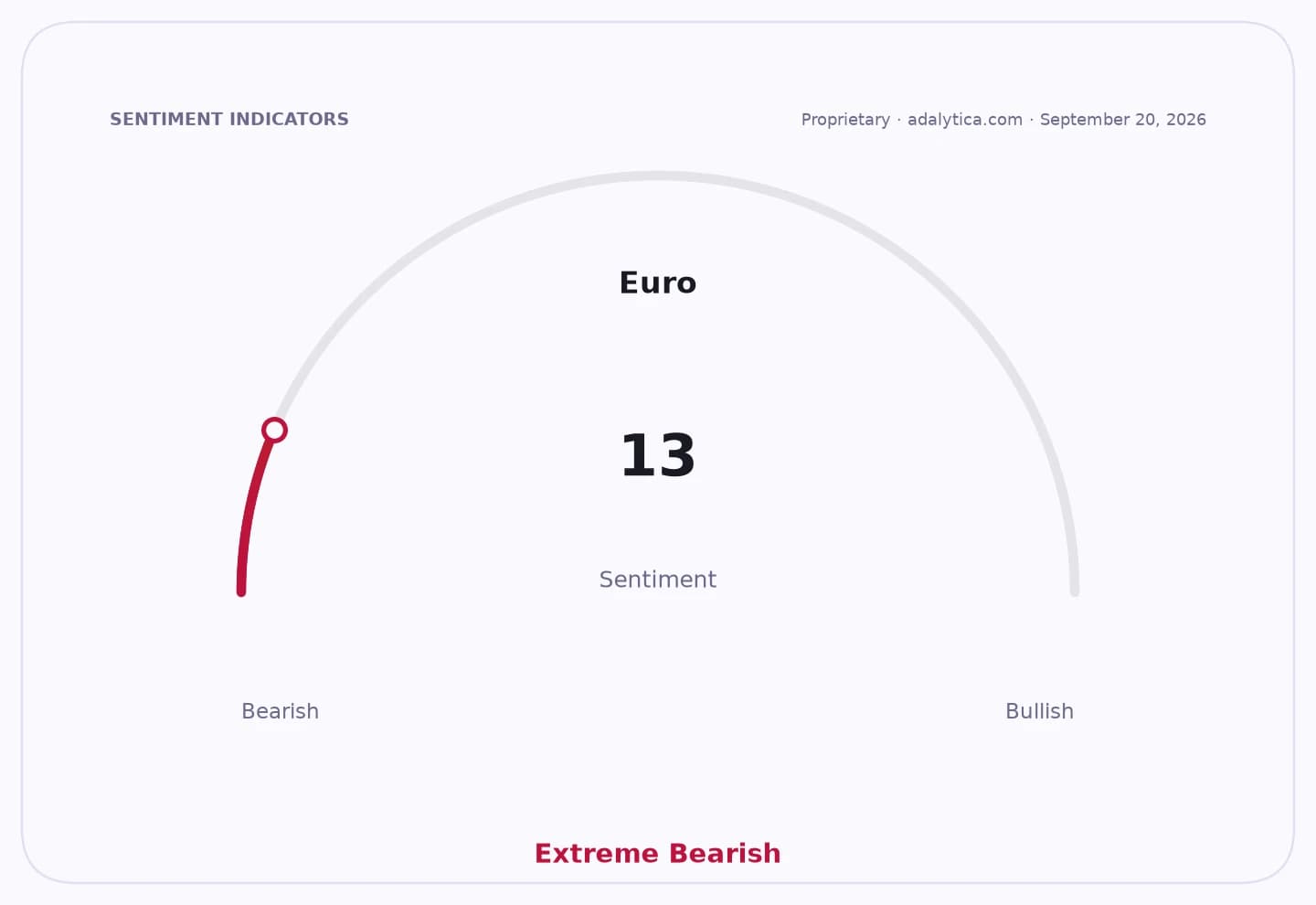
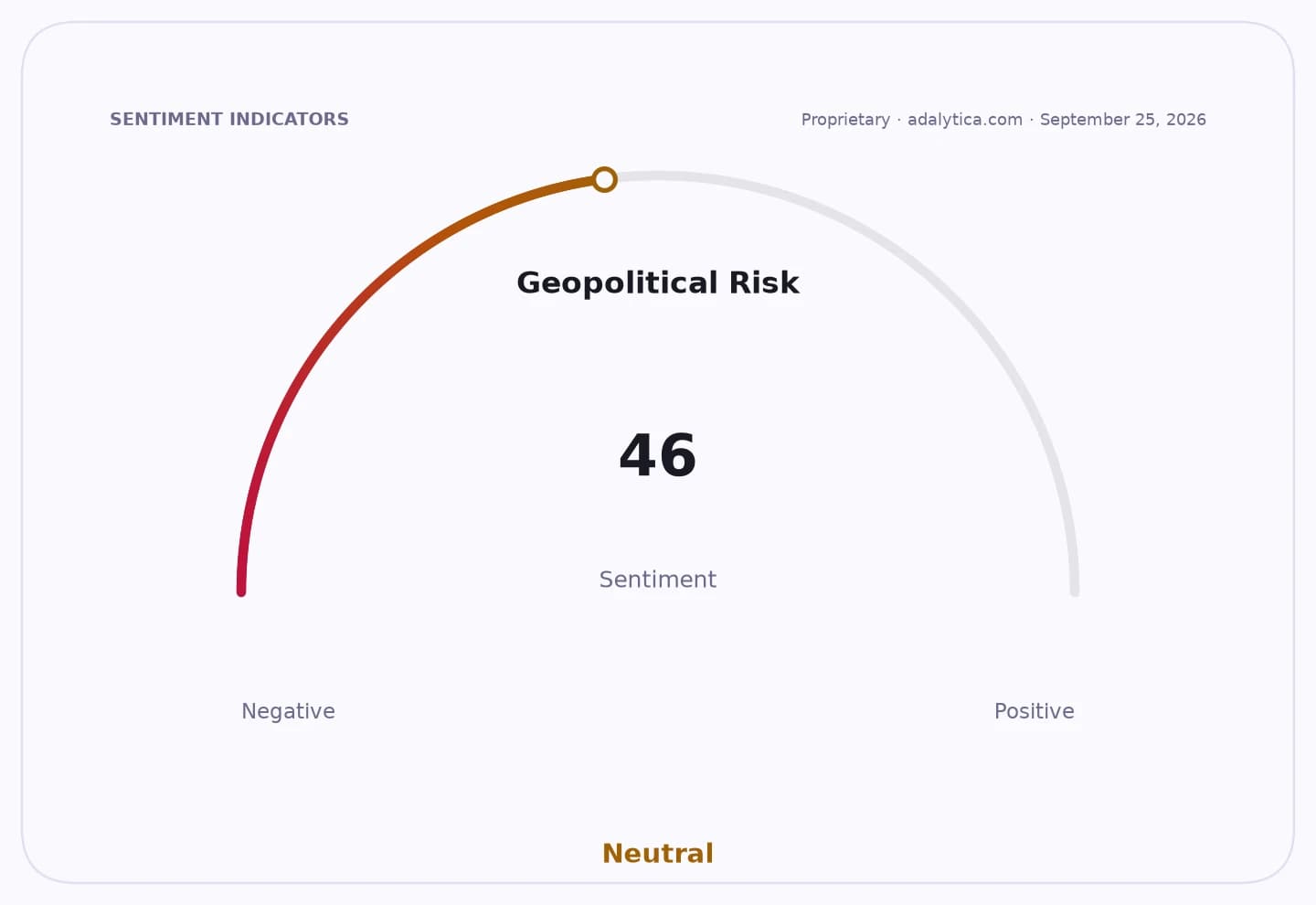
Sentiment IndicatorsⓘProprietary · adalytica.com · September 10, 2026
This is a snapshot — live sentiment, awareness and momentum for 130+ markets update continuously in the dashboard.Open AlphaPulse
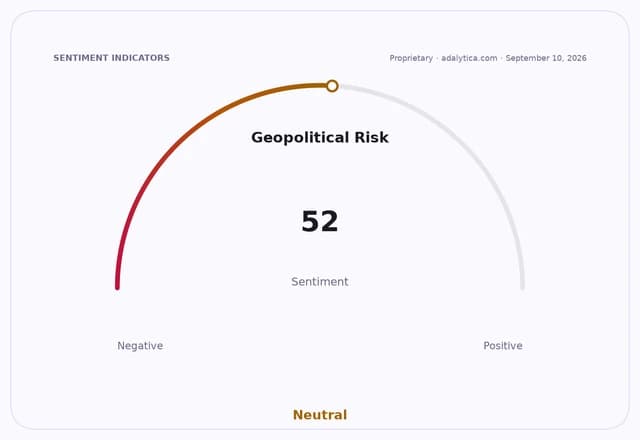
Chrupalla framed sanctions as a drag on Germany itself, arguing that they have done “huge damage” to the German economy and that Berlin should restore dialogue with Moscow. He held up Hungary under Viktor Orban as a model of “real sovereignty,” citing low gas costs as proof that keeping energy links with Russia can still pay. The message is aimed squarely at voters and businesses frustrated by high energy prices, weak industrial output and the cost of supporting Ukraine.
For investors, the significance is less about an immediate policy shift than about the direction of travel in European politics. The AfD is no longer a protest movement on the margins: a new poll put its support in eastern Germany at 45%, 13 percentage points above the 2025 election result and almost four times the Christian Democrats’ 12%. In Saxony-Anhalt, exit polls showed the party winning 44.4%, putting it on the threshold of regional power for the first time since World War Two. That strengthens the prospect that anti-sanctions and anti-aid arguments could become more embedded in Germany’s mainstream debate.
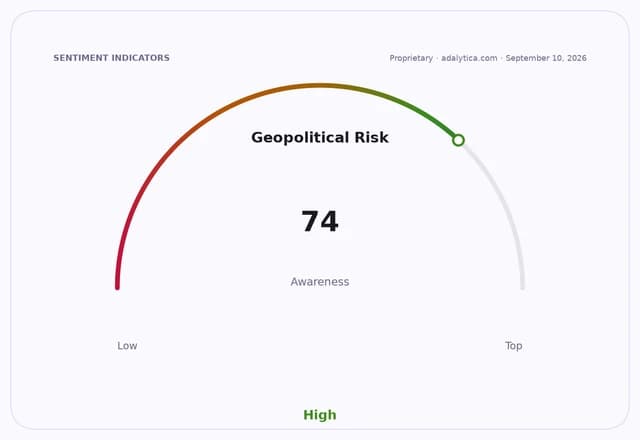
The market implications are asymmetric. Any meaningful weakening of sanctions pressure would be positive for Russian assets and for energy-sensitive sectors in Europe that would benefit from lower imported fuel prices and a potential normalization of trade. But it would be negative for Ukraine, for European security policy and for companies exposed to a prolonged strategic decoupling from Russia. It would also inject another layer of political risk into euro-area assets at a time when the EU is preparing a fresh sanctions package after a drone incident near Leipzig/Halle airport.
Still, the AfD’s rise does not automatically translate into policy change. Germany’s governing coalition and EU institutions remain committed to sanctions, and Brussels has continued to tighten measures, including action against Russian oligarchs. But the political narrative is shifting: what was once a consensus on isolating Moscow is now being challenged by a party that is turning energy affordability, sovereignty and industrial competitiveness into arguments for reopening the Russia file.
For investors, the key question is whether that challenge stays electorally potent or begins to shape coalition arithmetic in Berlin and the wider EU. If it does, sanctions durability, defense spending and energy policy in Europe will all face renewed scrutiny — with implications for currencies, defense stocks, utilities and any asset priced on the assumption that the continent’s Russia policy remains firmly in place.
| Entity | Gains | Losses |
|---|---|---|
| AfD | ▲Electoral momentum | ▼Policy isolation |
| Russia | ▲Sanctions relief hopes | ▼Western pressure |
| Germany’s energy-intensive industry | ▲Lower gas-cost scenario | ▼Status quo energy prices |
| Ukraine / EU sanctions camp | ▲Policy continuity | ▼Support for hard-line stance |