Mortgage life insurance premiums are rising, and that matters because a product often sold as a simple add-on to a home loan is turning into a sharper test of pricing discipline, borrower trust and insurer underwriting in Russia’s mortgage market.
Sber Mortgage Life Ranking Raises Payout Standards
Sber’s updated public ranking of mortgage life insurers shows the average payout ratio climbing to 40.5% in the first half of 2026 from 38.6% in the previous review period, while the lender also expanded the league table to 18 companies from 16. The message is clear: insurers that are paying claims more consistently are being elevated, while the market’s low-transparency, low-payout model is coming under pressure.
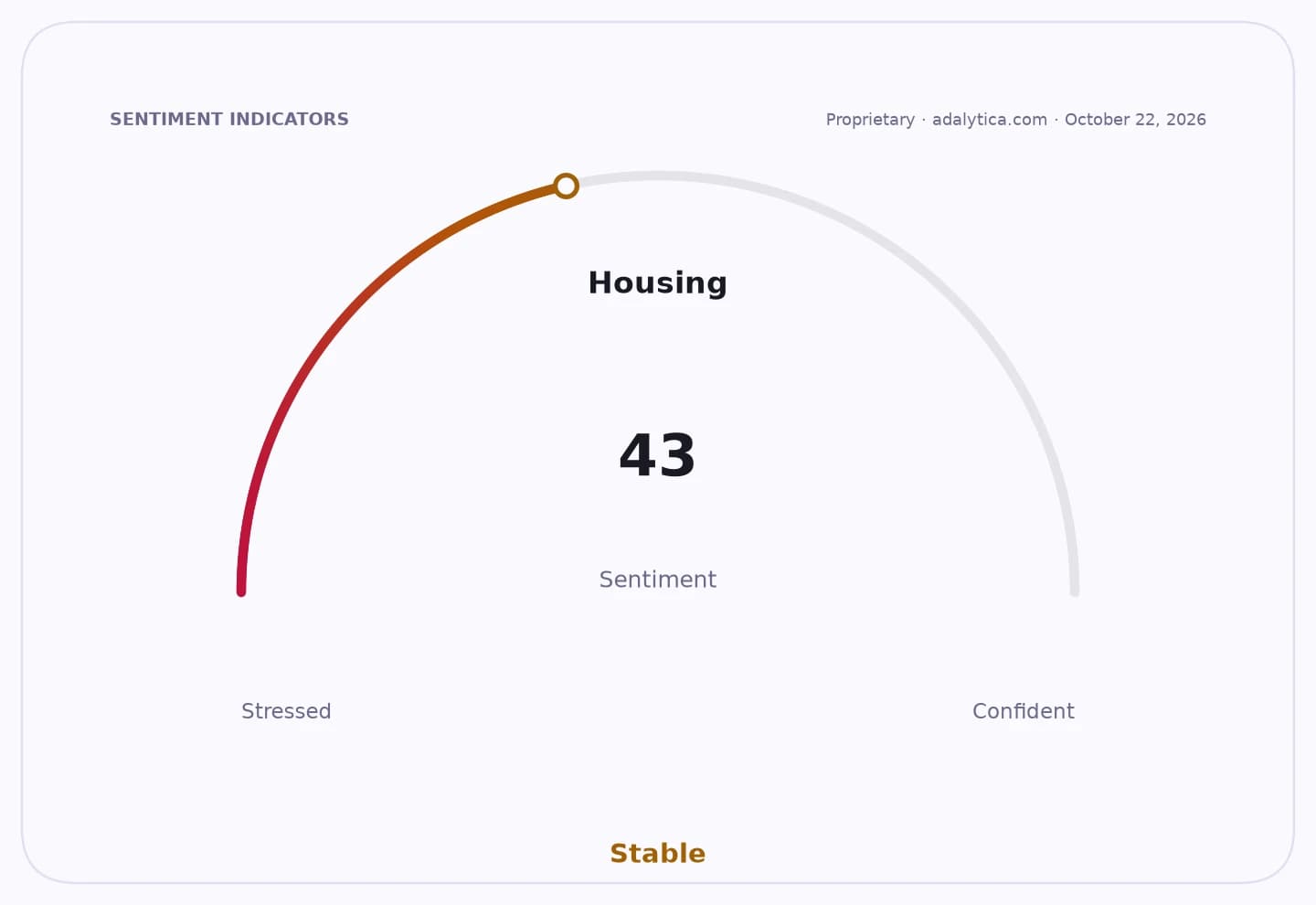
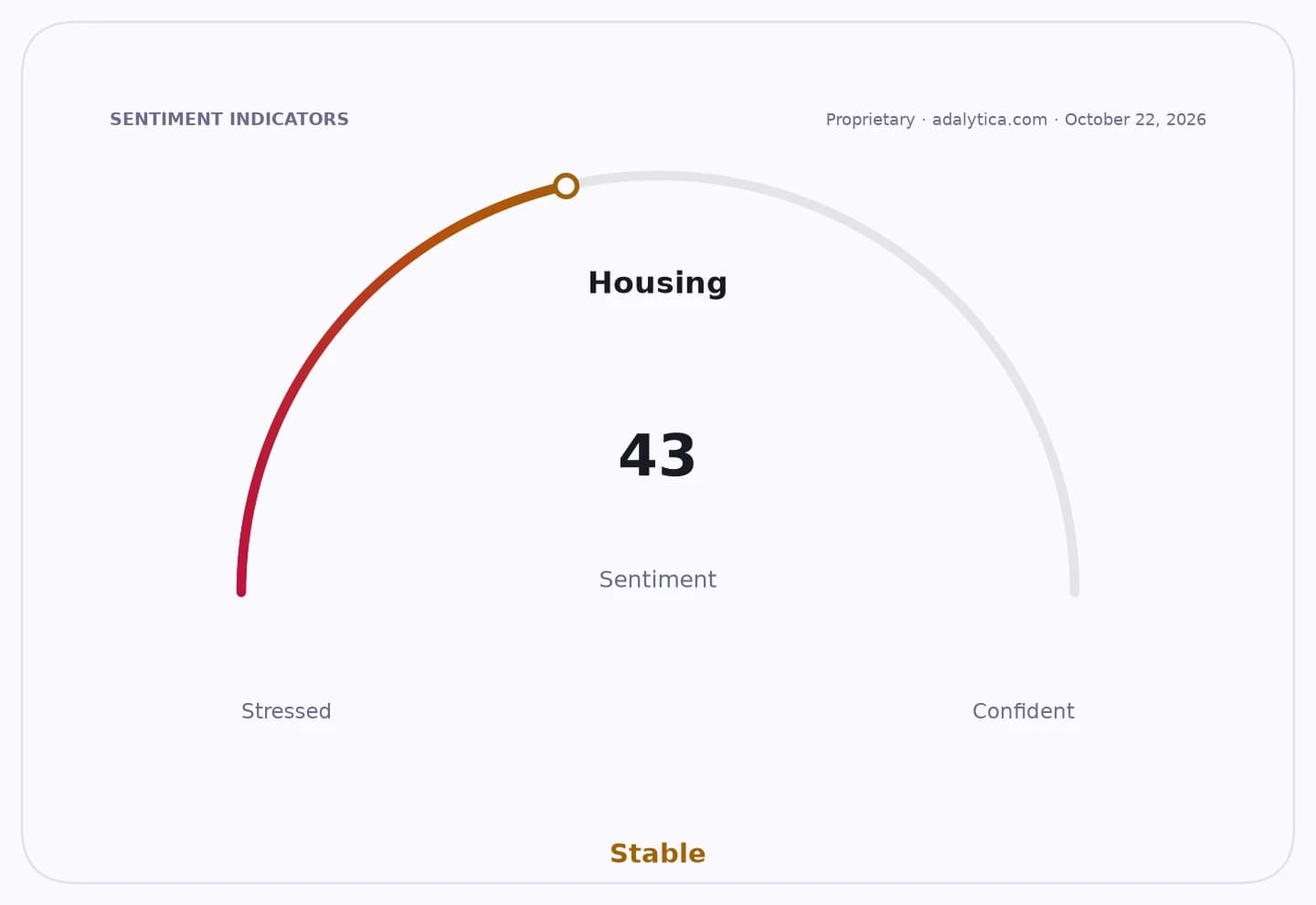
Sentiment IndicatorsⓘProprietary · adalytica.com · October 23, 2026
This is a snapshot — live sentiment, awareness and momentum for 130+ markets update continuously in the dashboard.Open AlphaPulse
That shift matters economically because mortgage life cover sits at the intersection of consumer lending, housing finance and protection products. When payouts are weak, the policy can look less like insurance and more like a fee-rich lender attachment. The Bank of Russia has already called a 3% average payout rate in consumer credit life insurance “anomalously low,” warning that such practices undermine trust in life products more broadly. For households already stretched by higher borrowing costs and cautious housing sentiment, the difference between a credible policy and a hollow one is becoming more visible.
The ranking is also a competitive weapon. Sber’s top five — SberStrakhovanie Zhizni at 93%, Sogaz at 59%, Sovkombank Strakhovanie at 50%, and RESO-Garantiya and AlfaStrakhovanie at 46% — creates a de facto standard that rewards insurers able to demonstrate claims behavior, not just low sticker prices. That is a tailwind for larger, better-capitalized players and a headwind for firms dependent on aggressive pricing and opaque exclusions.
Investors should read this as a margin and mix story, not just a disclosure exercise. More transparent payout benchmarks can force weaker competitors to reprice risk, potentially lifting loss ratios and compressing profitability in the short run. But over time, better disclosure should support healthier underwriting and a more defensible market for the insurers that can prove they pay. It also strengthens the hand of lenders like Sber that want to steer customers toward products tied to reliability rather than the cheapest quote.
The wider backdrop is a housing market still under pressure. U.S. housing data in the context points to a softer global rates environment, but Russia’s mortgage ecosystem faces its own affordability and confidence challenges. If mortgage insurance is repriced upward because claims are finally being recognized more consistently, borrowers will pay more upfront — yet that may be the cost of repairing a market where trust has been badly eroded. The next catalyst will be whether regulators or rival lenders adopt similar ranking systems, turning Sber’s disclosure push into an industry-wide reset.
| Entity | Gains | Losses |
|---|---|---|
| Sber and SberStrakhovanie Zhizni | ▲Trust and market share | ▼Low-transparency rivals |
| Large claims-paying insurers | ▲Stronger positioning | ▼Underpriced competitors |
| Borrowers | ▲Better product reliability | ▼Higher premium costs |
| Weak-payout insurers | ▲None | ▼Margin pressure and scrutiny |