Dividend-focused funds are still drawing investor attention even as the broader market’s appetite for risk remains unsettled, with a cluster of income vehicles and dividend-paying stocks continuing to trade near or above their longer-term trend lines. For long-term investors, that matters because the case for dividend funds is no longer just about yield — it is increasingly about resilience, valuation discipline and the ability to compound returns when price momentum is less reliable.
SCHD Holds Above 200-Day Average as Dividend Funds Split
The most visible part of that story is the relative stability in several dividend yield funds and dividend-oriented benchmarks. DHF has spent much of the period clustered around $2.20 to $2.33, with its latest close at $2.20, roughly in line with its 50-day moving average at $2.21 and slightly below the 200-day average at $2.28. The fund’s RSI has cooled to 43.8 from overheated readings earlier in the year, suggesting momentum has reset without a dramatic break in the price pattern.
Sentiment Indicators
NFJ has been stronger over a longer horizon, though recent trading shows the strain of a broader pullback. The fund closed at $13.04 on Nov. 20, below both its 50-day moving average of $14.59 and its 200-day average of $14.08, with RSI down to 27.3, a level that typically indicates an oversold market. That weakness comes after a run that took it as high as $15.39 in September, underscoring how dividend funds can still be sensitive to shifts in rates expectations and equity risk appetite even when they are marketed as defensive holdings.
By contrast, SCHD has remained the standout among the group. The fund ended at $34.44, above its 200-day moving average of $32.44 and close to its 50-day average of $34.31, after touching $36.21 earlier this month. The broader trend still looks constructive despite a short-term pullback, which helps explain why dividend ETFs continue to appeal to investors looking for income with lower volatility than the broader market.
That relative strength matters economically because dividend funds often sit at the intersection of income demand and balance-sheet quality. When investors favor cash returns over speculative growth, companies and funds with established payout records tend to benefit from steadier inflows and lower financing pressure. The pattern also suggests that investors are not simply chasing yield: they are differentiating between funds with sustainable payouts and those whose distributions may be more vulnerable to earnings swings or rate changes.
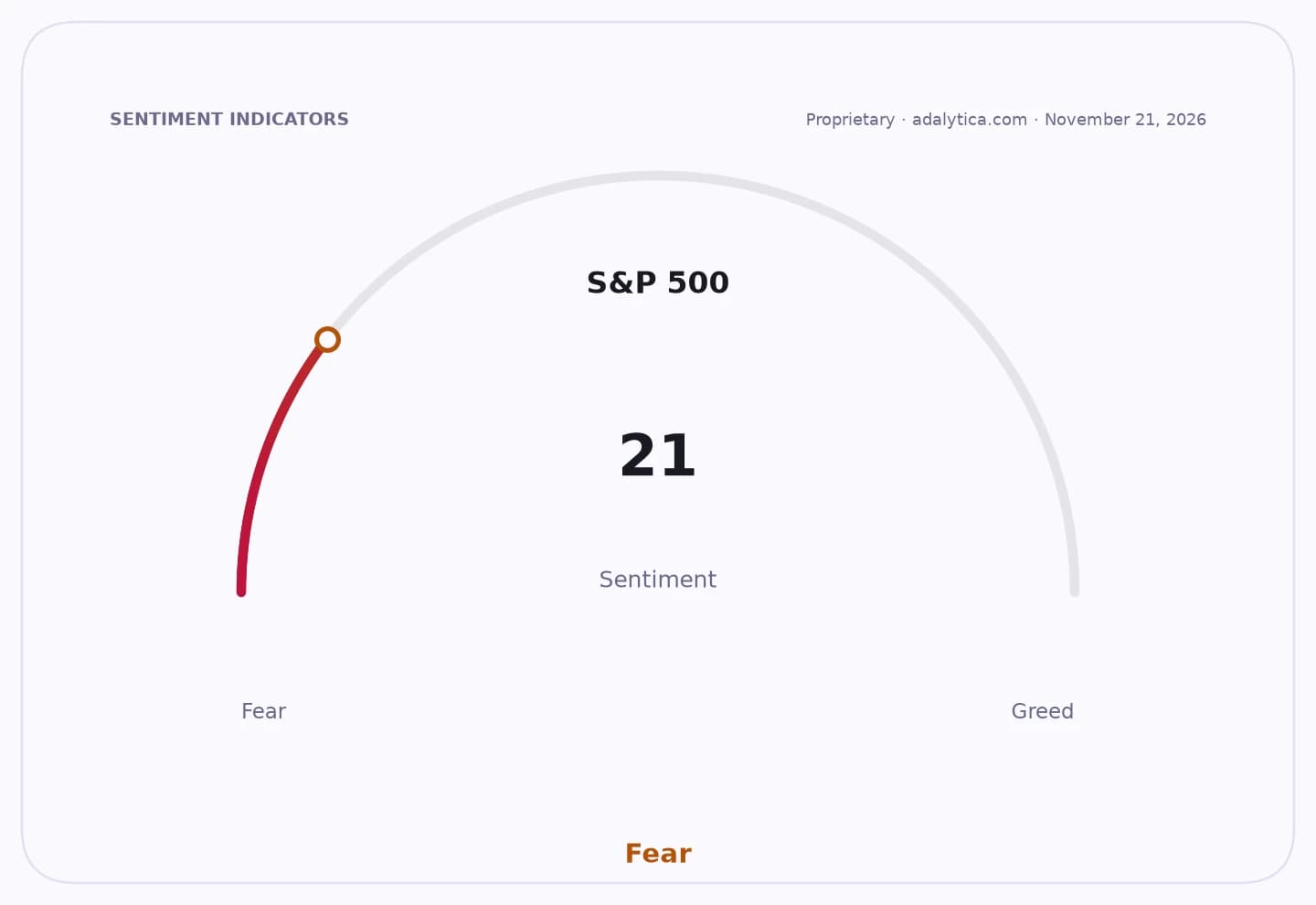
The macro backdrop is doing part of the work. Adalytica’s S&P 500 trade signals show sentiment at 26, labeled fear, while U.S. Treasury bond signals remain in extreme fear territory on awareness, implying persistent caution around duration and risk assets. In that environment, dividend strategies can look more attractive as a middle ground — offering income without the full rate sensitivity of bonds and without the valuation fragility of high-growth equities.
Individual corporate dividend news is reinforcing that theme. Avnet has approved a quarterly cash dividend payable Dec. 16, while Antam is expected to distribute an interim dividend of IDR 228 a share, a payout that market watchers say could translate into an unusually high yield. Mitsubishi Corporation and YUPI have also announced dividends, keeping the flow of income stories broad-based across sectors and geographies. Schroder Oriental Income Fund’s AIC Dividend Hero status adds another layer, showing that consistent dividend growth remains prized by long-term holders.
For investors, the key question is whether dividend funds are offering genuine income durability or simply a temporary refuge in a nervous market. The bull case is straightforward: if growth remains uneven and rates stay restrictive, funds with steady distributions and quality holdings can continue to attract capital. The bear case is that some yield vehicles may be lagging because their underlying constituents are under pressure, and lower prices can flatter headline yield metrics without improving the underlying earnings base.
What the current tape suggests is that dividend funds are still a viable long-term allocation, but selection matters more than branding. SCHD’s relative strength points to demand for high-quality dividend exposure, while NFJ and DHF show how quickly sentiment can weaken when price momentum fades. For income investors, the next catalyst will be whether dividend declarations continue to come through at the corporate level and whether market volatility rewards stability over speculation.
| Entity | Gains | Losses |
|---|---|---|
| SCHD | ▲Relative price strength | ▼Short-term momentum traders |
| NFJ | ▲Income-seeking investors if payouts hold | ▼Holders exposed to drawdown |
| DHF | ▲Yield-focused buyers | ▼Traders wanting capital gains |
| Dividend-paying companies | ▲Shareholder support | ▼Firms with weak cash flow |