Selo Group’s launch of a new ecommerce platform matters because it is aimed at converting one of the fastest-growing sales channels into a more localised economic engine, even as sellers across the sector say the benefits of online expansion remain uneven.
Selo Bets on Localized Ecommerce Growth
The timing is significant. Ecommerce sales across four major platforms jumped 44% in the first half of the year to 291.6 billion, underscoring how quickly digital commerce is taking share. But the same data suggests the gains are not being distributed evenly, with sellers still facing structural frictions that can limit margins, retention and long-term participation. For Selo, the strategic question is whether a community-focused platform can capture that growth while addressing the trust and access issues that have left many merchants feeling squeezed.
Sentiment IndicatorsⓘProprietary · adalytica.com · July 26, 2026
This is a snapshot — live sentiment, awareness and momentum for 130+ markets update continuously in the dashboard.Open AlphaPulse
That matters economically because ecommerce is no longer just a retail distribution channel; it is increasingly a lever for local business formation, logistics, payments and consumer access. If Selo can make online selling more accessible for smaller, community-based merchants, it could support broader income generation and keep more value within local economies. If it cannot, the platform risks becoming another layer of intermediation that channels growth to the platform operator without fixing the seller-side economics that have been holding back participation.
For investors, the key issue is whether Selo’s initiative creates defensible engagement or merely rides a sector tailwind. A successful platform could improve transaction frequency, merchant stickiness and monetisation over time, especially if it can build network effects around local supply and demand. The bullish case is that community ownership or participation can reduce churn and strengthen brand loyalty, giving Selo a differentiation angle in a crowded market. The bear case is that ecommerce economics remain unforgiving: customer acquisition, fulfilment and seller support are expensive, and growth can mask weak unit economics if merchants do not see durable returns.
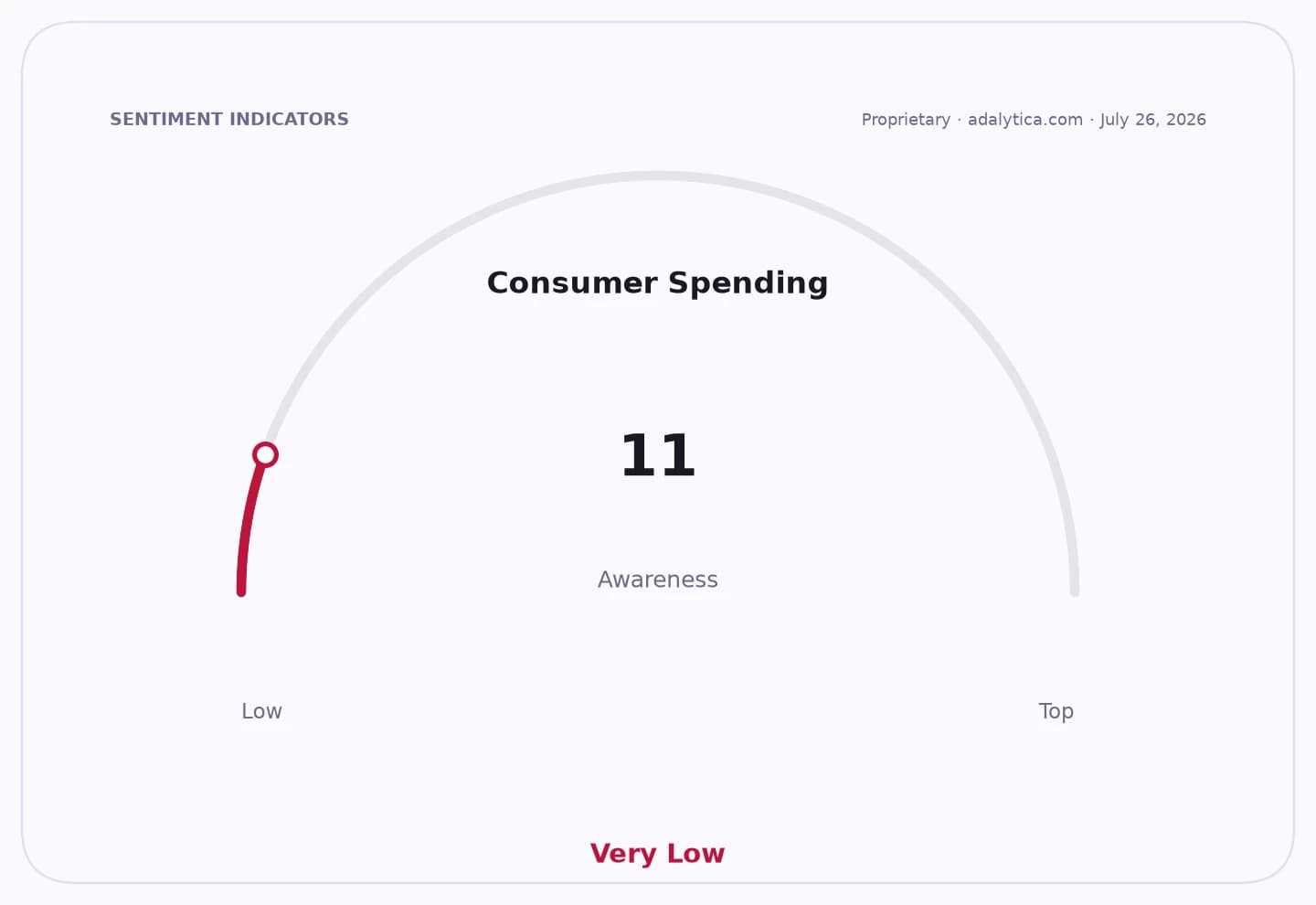
The broader market backdrop is cautious. Adalytica’s Consumer Spending Sentiment remains neutral at 32, but awareness is in extreme fear territory at 11, while S&P 500 trade signals also show extreme fear. That combination points to a fragile consumer and market environment in which selective business models are likely to be rewarded over broad-based growth stories. In that setting, platforms that can demonstrably improve seller outcomes and local demand capture may have more staying power than those relying only on top-line expansion.
The narrative here is not simply that ecommerce is growing. It is that the next phase of growth will be judged by who benefits: platforms and large merchants, or the local businesses that generate the underlying commerce. Selo’s move is an attempt to place itself on the latter side of that divide. Investors will be watching whether the platform can translate community empowerment into repeat usage, seller retention and economics that justify the growth story.
| Entity | Gains | Losses |
|---|---|---|
| Selo Group | ▲platform differentiation | ▼execution risk |
| Local merchants | ▲wider market access | ▼pricing pressure |
| Large incumbents | ▲sector validation | ▼share at risk |
| Consumers | ▲more local choice | ▼weaker service if scaling falters |