Senegal is racing to lock in a debt restructuring by year-end, with creditors set to return in November for negotiations that will determine whether the country can secure a $2.2 billion IMF package and avert a deeper financing squeeze.
Senegal Seeks Debt Restructuring Before IMF Deal
That matters because Senegal’s debt load has climbed to 132% of GDP, a level that leaves little room for delay, forcing Dakar to seek relief under the G20 Common Framework while rating agencies cut the sovereign deeper into distressed territory. S&P has already downgraded Senegal’s foreign-currency rating to CC, underscoring how quickly a once-buoyant West African borrower has become a test case for how far official lenders, bondholders and commercial banks are willing to go.
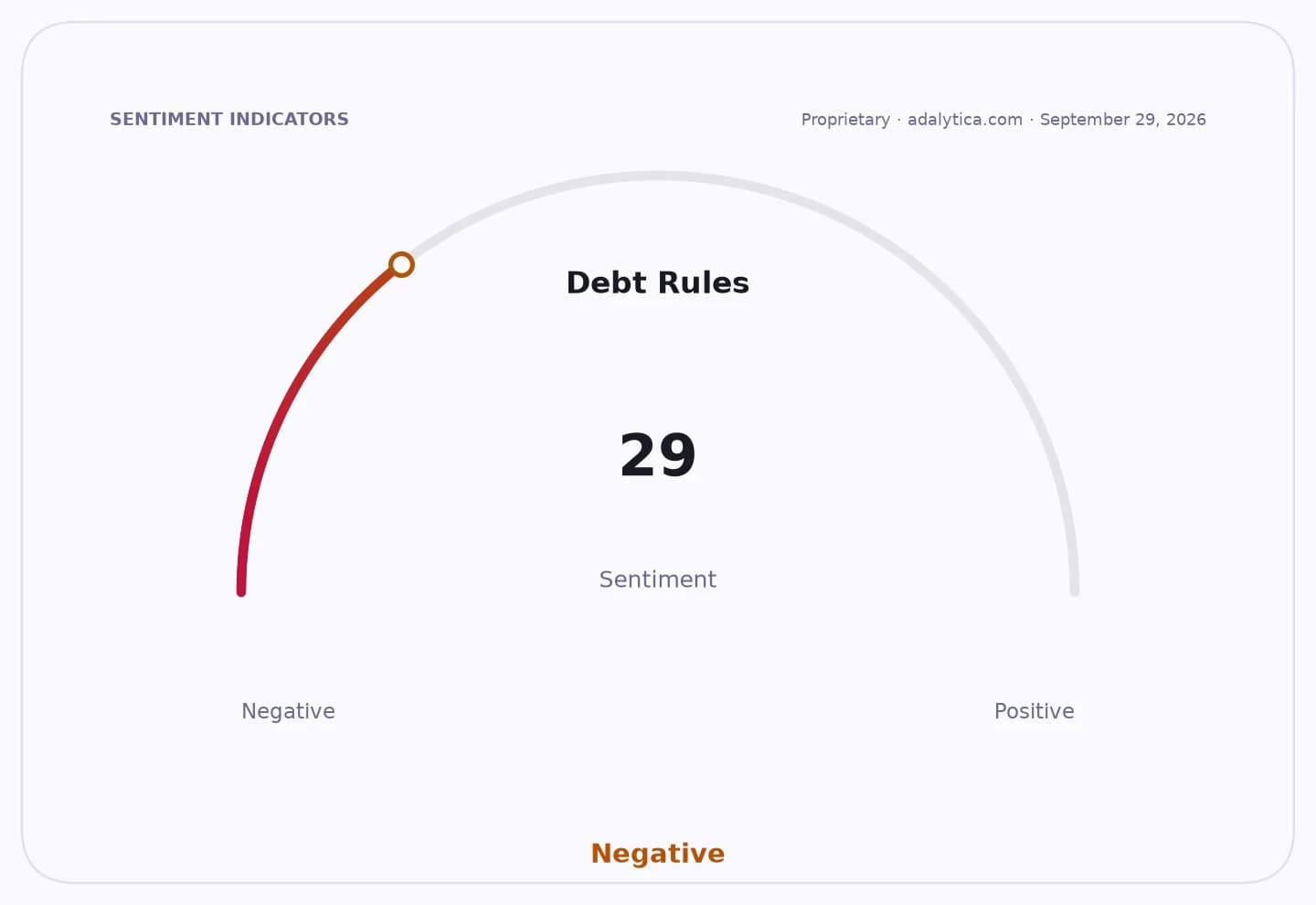
Sentiment IndicatorsⓘProprietary · adalytica.com · October 11, 2026
This is a snapshot — live sentiment, awareness and momentum for 130+ markets update continuously in the dashboard.Open AlphaPulse
The stakes go well beyond Dakar. If Senegal can pull together bilateral creditors, bondholders and banks around a credible deal, it would reinforce the Common Framework as a usable tool for frontier-market restructurings. If it cannot, the country risks a protracted standstill that keeps IMF money on hold and raises the chance of a blunt, expensive fix that leaves the sovereign with a heavier debt burden for longer.
At Tuesday’s first all-creditor meeting, more than 400 participants joined by video, including bilateral lenders such as China and France, which chairs the Paris Club, as well as bondholders and commercial banks. Dakar presented an 18-page briefing on the public-finance situation, its debt-treatment strategy and a timetable it wants to compress into just a few months.
The government is pressing for IMF board approval in November and hopes to receive an initial disbursement from the fund, which has already given preliminary backing to the loan. But the IMF has made clear the money will not flow until debt is judged sustainable again, making the negotiations the real bottleneck.
For investors, the key question is whether Senegal’s lenders will accept meaningful relief or settle for maturity extensions that postpone, rather than solve, the problem. Sources cited in the French report suggest bondholders are signaling they prefer only longer repayment terms, with no haircut to principal or coupons, while Paris Club members must decide by the end of October whether they will merely reschedule or also write off some payments.
That split matters because Senegal’s creditor mix is fragmented: bilateral lenders account for about 17% of external debt, with China the largest single bilateral creditor at roughly 8%, followed by France, India, the U.K., Kuwait, Germany and Japan. The more limited the relief, the more likely Senegal is to remain trapped in a high-debt, low-confidence cycle that keeps funding costs elevated and crowds out investment.
The market implication is straightforward: this is not just a sovereign rescue, it is a pricing event for frontier Africa. A credible November breakthrough would be constructive for Senegal bonds, regional risk appetite and other borrowers watching the G20 framework. Another delay would reinforce the market’s bias toward higher yields, wider spreads and a much tougher path for nations already under fiscal strain.
My view is that the market underestimates how important this negotiation is for the next wave of capital flows into Africa. The winner here is the patient creditor or investor positioned for eventual normalization; the loser is any holder relying on a quick, minimal restructuring to restore market access. In a world already defined by higher borrowing costs and fragile debt dynamics, Senegal is becoming a template case.
| Entity | Gains | Losses |
|---|---|---|
| Senegal government | ▲IMF funding path | ▼Fiscal room and market access |
| Bondholders | ▲If relief is limited | ▼If haircuts are imposed |
| Bilateral creditors | ▲Avoid large write-downs | ▼If asked for debt forgiveness |
| Senegal bonds / frontier debt investors | ▲Upside on credible deal | ▼Prolonged distress and spread widening |