Sensofusion is heading to the Helsinki stock exchange in one of Finland’s largest listings, riding surging demand for drone defense technology and a war-driven rearmament cycle that is still only in its early innings.
Sensofusion IPO on Helsinki stock exchange

The oversubscribed offering values the anti-drone company at about 1.6 billion euros, making it one of the biggest main-market debuts in Helsinki in two decades and a rare case of a fast-growing Finnish technology group jumping straight into the large-cap tier. That matters because the market is not just buying a listing — it is assigning a premium to a business tied directly to one of the clearest secular themes in defense: the need to detect, jam and destroy cheap drones at scale.
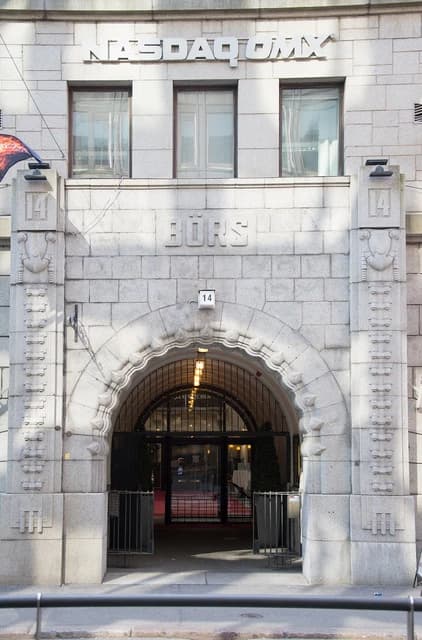
Sensofusion priced shares at 16.41 euros in a deal set to raise about 259 million euros, or as much as 300 million euros if the greenshoe is used. Trading is expected to begin on the prelist on Oct. 9 and on the main list on Oct. 13. The company said demand was many times oversubscribed, with almost 95% of the shares allocated to institutional investors, underscoring how much of the money came from professional capital rather than retail enthusiasm.
That institutional backing is the real signal here. Anchor investors include Finnish pension heavyweights Elo, Varma and Ilmarinen, plus funds run by OP Asset Management. In a market where defense exposure has become increasingly sought after, Sensofusion offers a pure-play way to access the drone warfare stack — not just the weapons themselves, but the sensors, countermeasures and mobile production systems that make modern battlefield air defense possible.
The valuation is rich, and intentionally so. On last year’s results, Sensofusion generated 35 million euros in revenue, up nearly 88%, and operating profit of 23.3 million euros, a striking margin of 66%. Revenue in the first half of 2026 climbed to 26 million euros from 11.7 million a year earlier, showing growth is accelerating even before the proceeds from the IPO are deployed. That helps explain why investors were willing to pay up: this is not a loss-making concept stock, but a profitable business with a market moving from niche procurement to urgency.
Still, the pricing implies a lot of future success. Sensofusion’s enterprise value is about 40 times operating profit, a demanding multiple even for software or industrial tech, let alone defense hardware. The market is effectively betting that drone warfare will expand beyond the current conflict cycle into a long-duration global spend category, with governments, militaries and critical infrastructure operators all forced to buy counter-drone systems, sensors and localized production capacity.
That is where the investment case gets more interesting. Sensofusion’s Airfence system detects and localizes hostile drones and can disable them by disrupting radio signals. The company is also building optical sensors, small electric drones that can be used against enemy drones, a containerized mini-factory for 3D-printed drone production near the front, and even its own satellite platform, with the first launch targeted for 2027. In other words, this is not a one-product story — it is an attempt to build a full-stack drone-defense platform around an emerging military requirement.
The offering also says something broader about Europe’s capital markets. Finland has produced few public-market listings of this scale, and even fewer in defense technology. Sensofusion will stand alongside Sanoma in size, but unlike a mature media company it is still in an expansion phase, with international production planned in Canada and Britain and Vantaa manufacturing capacity being expanded with three new land acquisitions. For investors, that means the IPO is less about harvesting cash from founders and more about funding a larger industrial footprint.
Founder and chief executive Tuomas Rasila remains deeply aligned with shareholders, retaining a stake worth more than 1 billion euros after controlling about 82% before the listing. The company said the IPO is not a major exit for existing owners, with only about 16.4 million euros in secondary sales and Rasila agreeing not to sell more shares for 720 days. That structure matters because it reduces the usual overhang risk and reinforces the idea that this is a capital-formation event for growth, not a liquidity trade for insiders.
The bigger narrative is clear: drone warfare is becoming a budget line, and the companies that can see, jam and produce faster than adversaries are likely to command premium valuations for years. Sensofusion is early, profitable and exposed to a geopolitical arms race that still has room to run. For investors looking for the next wave of defense-tech winners, this listing is a reminder that the real upside may sit not in legacy contractors, but in the smaller specialists building the toll roads of modern battlefield infrastructure.
| Entity | Gains | Losses |
|---|---|---|
| Sensofusion | ▲Fresh capital; premium valuation | ▼Heavy growth expectations |
| Anchor institutions | ▲Access to scarce defense-tech exposure | ▼Liquidity if valuation cools |
| Legacy defense contractors | ▲Broader sector tailwind | ▼Share of drone-defense spending |
| Short sellers / skeptics | ▲Potential volatility opportunity | ▼Pain if demand stays strong |