Shopify, Mercado Libre and Amazon are all trading well above long-term trend levels as investors keep rewarding platforms that help local businesses sell online and reach far wider customer bases.
Shopify, Mercado Libre, Amazon above trend levels
The market action underscores a bigger economic shift: even as household spending has been uneven, merchants are still leaning on digital storefronts, payments and marketplace tools to keep volume moving. For investors, that makes ecommerce platforms a direct play on small-business resilience, checkout traffic and the growing cost of building a digital sales presence.
Shopify finished Monday at $146.77, down from $168.42 in early December but still above its 200-day moving average of $131.38. The stock has pulled back from a sharp run higher earlier in the year, and the 43.5 RSI reading suggests momentum has cooled after an overbought stretch.
Mercado Libre closed at $1,952.07, near its 50-day moving average of $1,828.23 and above its 200-day average of $1,861.76. Amazon ended at $261, also above both its 50-day and 200-day moving averages, after a volatile year that included a surge to $284.02 in August.
The setup matters because these companies are not just e-commerce retailers; they are the infrastructure behind digital commerce. Shopify helps merchants set up storefronts, process payments and expand across channels, while Mercado Libre combines marketplace, logistics and financial services across Latin America. Amazon remains the biggest scale player, benefiting whenever sellers need reach, fulfillment and consumer traffic.
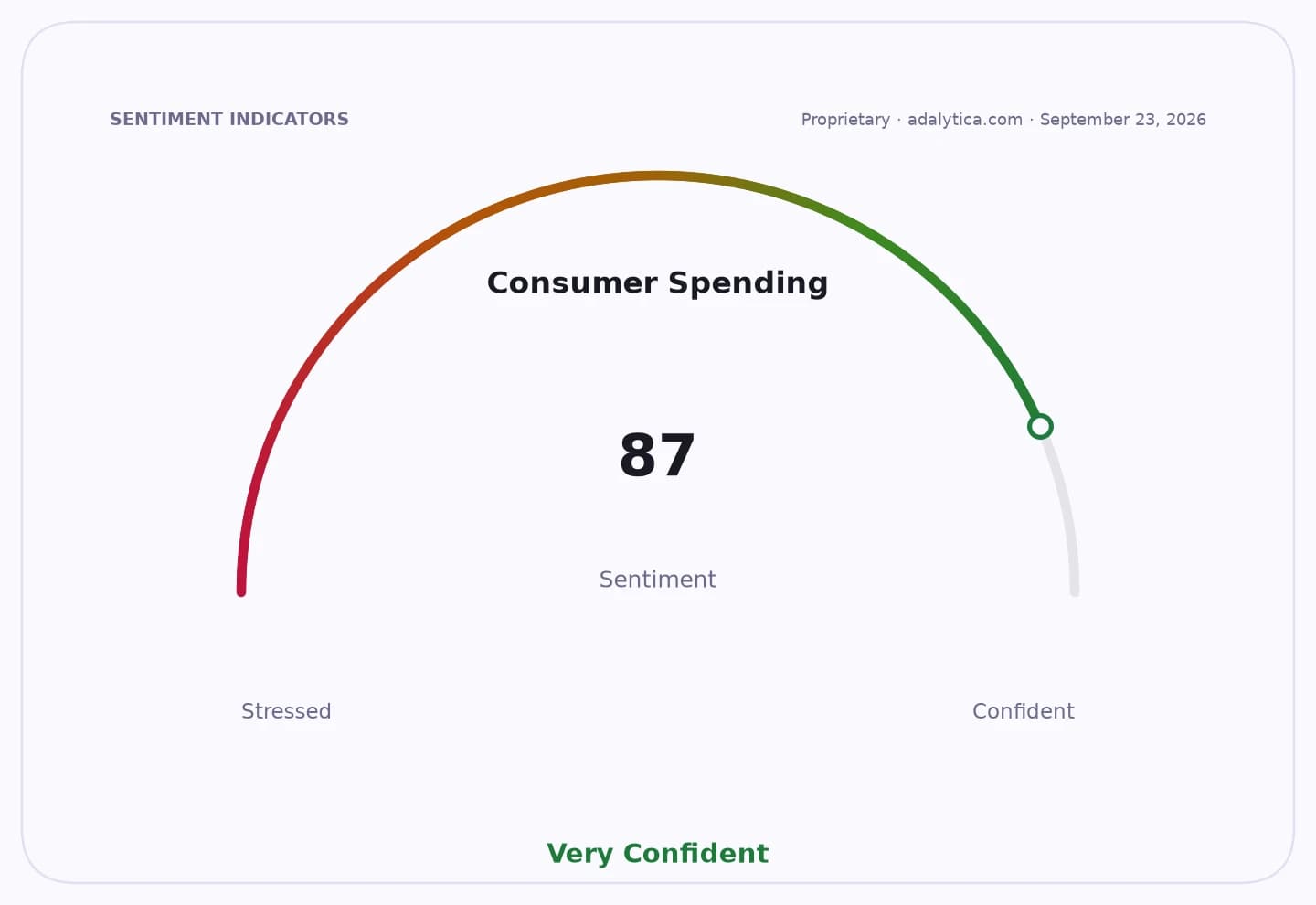
That business model has stayed relevant despite more cautious consumers. Recent spending data show sentiment in consumer spending remains high in Adalytica’s gauge, with the snapshot at 85, or “Greed,” and up 22 points in one day, suggesting households are still willing to shop even if they remain selective.
The latest regulatory filings also point to the revenue engine investors are watching most closely. Shopify said merchant solutions made up 77% of total revenue in the first six months of 2026, driven largely by payment processing and currency conversion fees, while cloud and infrastructure costs increased on AI-related usage. That gives the company more top-line leverage if merchant activity holds up, but it also means margins are sensitive to higher compute and infrastructure spending.
For investors, the key question is whether merchants keep moving offline sales into digital channels fast enough to justify elevated valuations and support operating leverage. The next catalysts are likely to come from consumer-spending data, platform adoption trends and any sign that AI-driven infrastructure costs are eating into the gains from higher online sales.
| Entity | Gains | Losses |
|---|---|---|
| Shopify | ▲merchant growth, payments volume | ▼infrastructure costs, margin pressure |
| Mercado Libre | ▲marketplace traffic, fintech use | ▼consumers cutting back |
| Amazon | ▲seller activity, fulfillment demand | ▼weaker discretionary spending |
| Traditional local retailers | ▲digital reach | ▼foot traffic and pricing power |