Simon Property Group is holding up better than the broader market selloff, and that makes the mall REIT one of the more attractive places to hide out for income while still getting paid to wait.
Simon Property Group holds up in market selloff

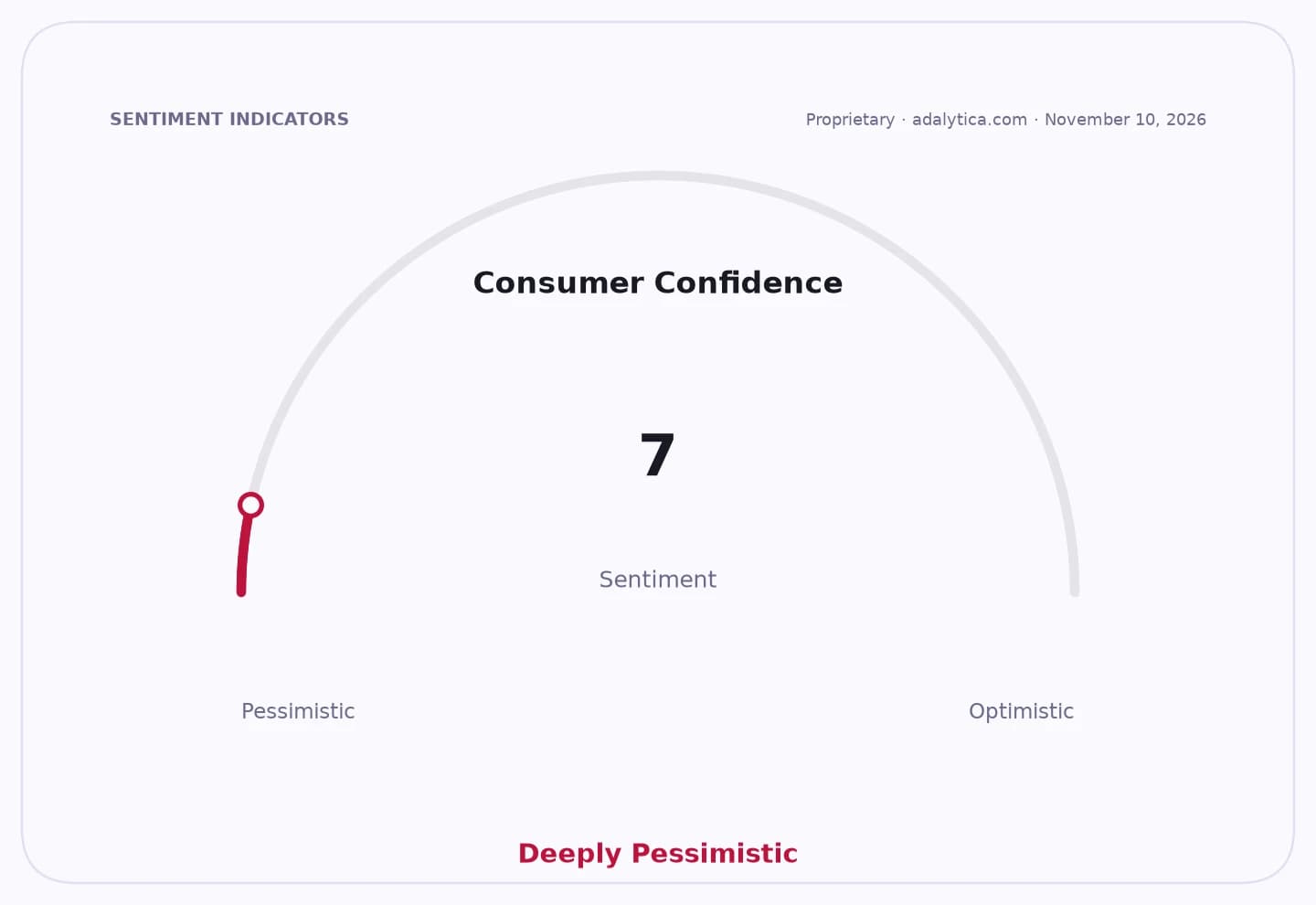
With the S&P 500 flashing extreme fear in Adalytica.com's trade signals, investors are increasingly rewarding companies that can deliver cash flow without demanding heroic assumptions. Simon, the largest U.S. mall owner, fits that bill. The stock closed at $227.65 on Nov. 19, just below a recent intraday range and well above its 50-day and 200-day moving averages, while its 94.9% leased occupancy at the latest quarter-end underscores that premium malls still command tenant demand.
Sentiment Indicators

That combination matters economically because mall REITs are not supposed to look defensive unless consumers are still spending and retailers still want space. Simon’s lease-up strength and rising occupancy suggest its properties remain a toll road on discretionary retail, even as higher rates and choppy equity markets punish weaker real estate names. For investors, that means the market is still willing to pay for durable rent collections and balance-sheet quality, not just for yield.
The setup also opens the door to a covered-call strategy. In a volatile market, selling upside against a high-quality REIT can generate additional income while slightly lowering the cost basis and cushioning downside. That is especially appealing when the stock is near a buy point and the underlying business is still posting solid occupancy and healthy tenant economics.
Simon’s latest filing showed leased occupancy improving to 94.9%, up from 93.4% a year earlier and 94.0% in the prior quarter. Across the sector, that kind of resilience is becoming the dividing line between winners and laggards. Premium mall owners with strong tenants and access to capital can still attract demand; lower-quality centers, by contrast, are more exposed to refinancing risk and weaker leasing power.
The macro backdrop only sharpens the case. The 10-year Treasury yield has remained elevated above 5%, while the Fed funds rate is still near 3.9%, keeping financing costs restrictive for property owners. Yet Simon’s shares have continued to outperform many REIT peers, suggesting investors are already treating it as a quality compounder rather than a rate-sensitive bond proxy.
That is why this story is bigger than a single stock chart. In a market ruled by fear, the best REIT opportunities will be the ones that can combine income, occupancy, and balance-sheet credibility. Simon Property Group looks like one of them. If you want exposure, the trade is not just the stock — it is the stock plus disciplined option income while volatility stays elevated.
| Entity | Gains | Losses |
|---|---|---|
| Simon Property Group | ▲Income demand, buy-the-dip interest | ▼Weak retail landlords |
| Covered-call sellers | ▲Option premium, lower cost basis | ▼Unhedged longs |
| Premium mall tenants | ▲Stable traffic, quality locations | ▼Secondary-center retailers |
| Higher-rate REITs | ▲— | ▼Refinancing costs, valuation pressure |