More employers are tightening return-to-office rules as the labor market stays steady, giving companies more leverage to pull workers back after years of hybrid work.
Return-to-Office Rules Tighten as Labor Market Holds
Consumer Confidence
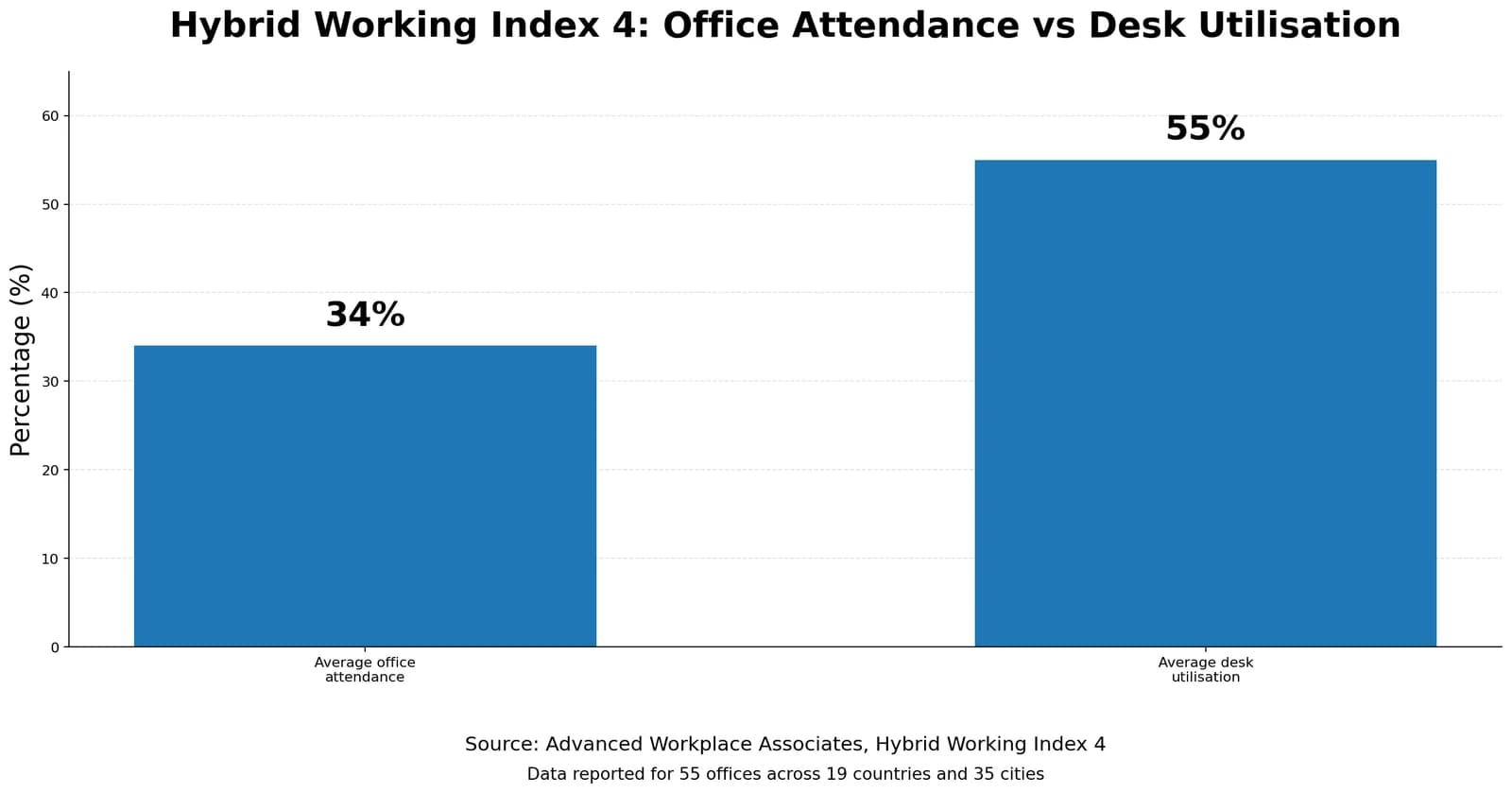
The shift matters because office attendance affects everything from productivity and hiring to downtown real estate demand. It also lands at a moment when the U.S. unemployment rate is holding near 4.1%, suggesting employers still have enough labor-market cushion to press for more in-person work without immediately risking widespread turnover.
Sentiment Indicators
Data in the context point to a labor market that is not collapsing, but is no longer as tight as it was during the pandemic rebound. The jobless rate was forecast at 4.1% for October, while job openings for the office-using economy — measured by a broad services series — were projected around 652,232, nearly flat from the prior month. That combination gives management teams room to reassert control over workplace policy, especially in white-collar sectors where remote work remains a point of friction.
Investors are watching because the return-to-office push could ripple through commercial property demand, transportation, hospitality and staffing trends. Real estate investment trusts with office exposure, including Vornado Realty Trust and Kilroy Realty, have seen volatile trading even as their shares recovered from earlier lows, reflecting the market’s ongoing uncertainty over whether more in-person work can stabilize leasing demand and asset values.
CBRE Group, the world’s largest commercial real estate services firm, has also been highly sensitive to office-market signals. Its stock has swung sharply in recent months and is still below longer-term technical levels, underscoring how closely investors are tracking any signs that employers may be filling offices more consistently.
The broader backdrop is one of mixed market sentiment. Adalytica’s S&P 500 Trade Signals snapshot shows neutral sentiment but extreme-greed awareness, while its consumer-confidence recession gauge remains in extreme fear territory. That disconnect suggests investors are still weighing a soft labor market against persistent uncertainty over growth and workplace demand.
If return-to-office mandates keep spreading, the next read-through will be whether office occupancy, downtown spending and leasing activity firm into year-end — or whether employees push back hard enough to blunt the trend.
| Entity | Gains | Losses |
|---|---|---|
| Office landlords | ▲Higher occupancy demand | ▼Empty space risk |
| Employers | ▲More oversight, collaboration | ▼Higher operating costs |
| Workers | ▲Clearer structure | ▼Remote flexibility |
| CBRE and office REITs | ▲Leasing and valuation support | ▼Prolonged vacancy pressure |