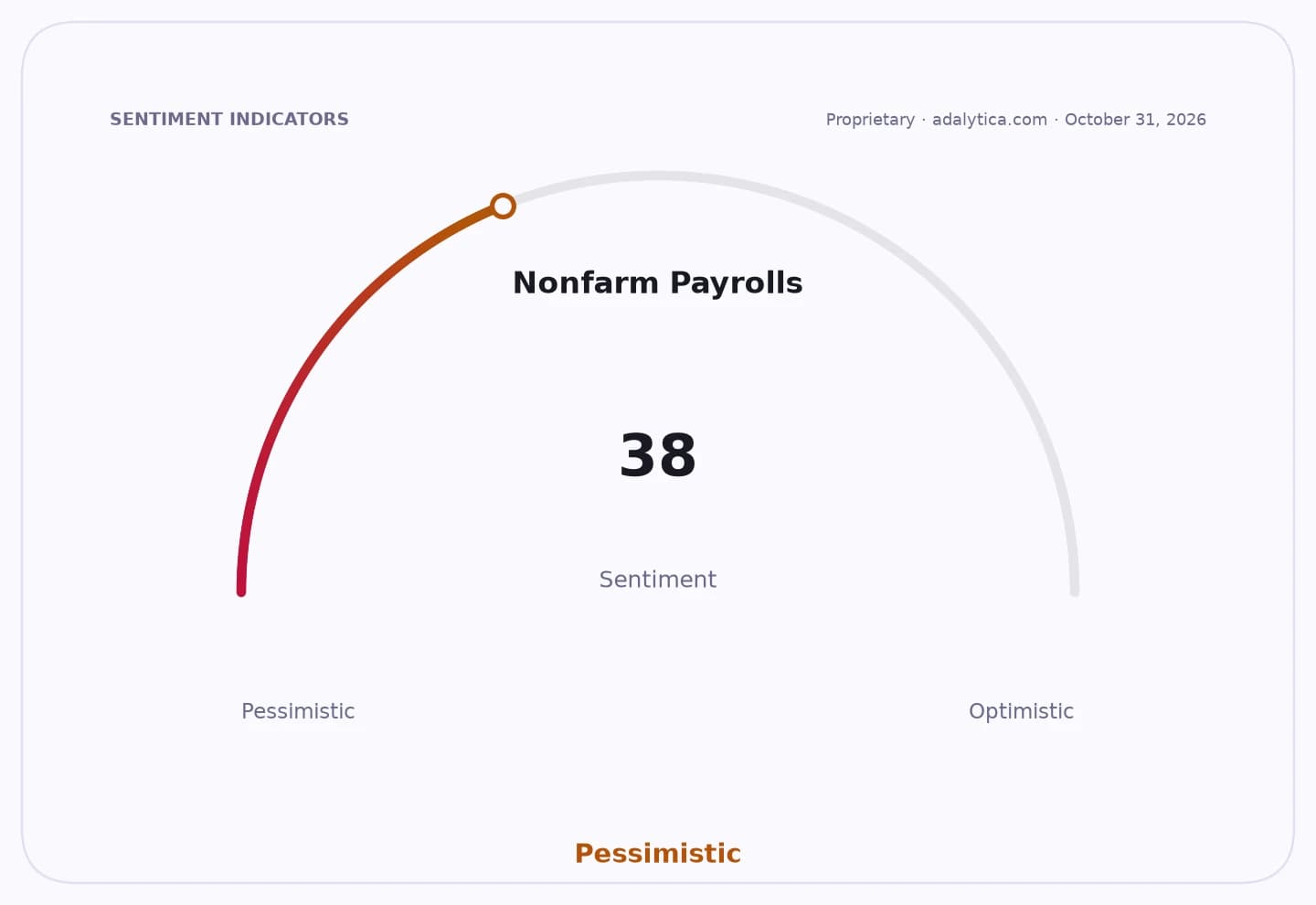
U.S. job openings rebounded in September, a sign the labor market remains solid even as hiring cools enough to keep the Federal Reserve on watch rather than in panic mode.
U.S. job openings rise as labor market stays solid

Openings rose to 7.523 million from 6.943 million in September of the prior year, while the unemployment rate edged up only to 4.2% and payroll employment held at 159.044 million. That combination matters because it says demand for labor is still running above outright recession levels even if the red-hot post-pandemic surge has faded.
Sentiment Indicators
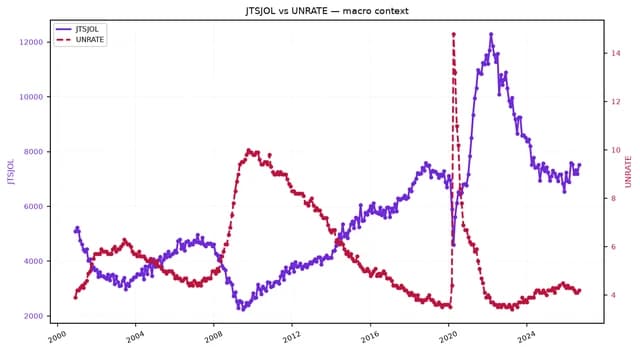
Oxford Economics’ call that labor conditions are “solid” fits the numbers: firms are still posting vacancies, but not at the frantic pace that would force wages and inflation sharply higher. That is the sweet spot markets want to see — enough resilience to support consumer spending and corporate earnings, but not so much overheating that the Fed has to turn more restrictive.
For investors, the message is that the U.S. economy continues to look like a late-cycle slowdown, not a hard landing. That supports risk assets that benefit from steady growth, but it also argues against betting aggressively on an imminent collapse in yields or a rapid weakening in equities tied to recession fears. Treasury traders may keep leaning on duration when growth data softens, but the labor backdrop still leaves room for rates to stay elevated for longer than the most dovish trades expect.
The setup also helps explain why small-cap stocks, which are more sensitive to domestic labor and credit conditions, can remain volatile rather than simply break down. IWM closed at 270.98 after trading as high as 290.56 earlier in the period, while SPY held up better, reflecting a market still rewarding scale and pricing power over cyclically exposed names. By contrast, TLT’s recent firmness shows bond investors are still hunting for safety, but the labor data alone is not enough to confirm a full growth scare.
The real investment takeaway is that the market may be underestimating how durable U.S. demand remains beneath the surface. If job openings stay near this level and payrolls keep grinding higher, the winners are likely to be quality large caps, productivity beneficiaries, and firms with strong margins — not the recession basket. If openings roll over decisively in the months ahead, the trade shifts quickly toward duration and defensives. Until then, the labor market is still telling investors to respect growth.
| Entity | Gains | Losses |
|---|---|---|
| U.S. workers | ▲More bargaining power | ▼Less urgency for layoffs |
| Large-cap equities | ▲Support from steady growth | ▼Less help from recession bets |
| Treasury bulls | ▲Safety bid on mixed data | ▼Faster rate-cut conviction |
| Small caps | ▲Domestic demand support | ▼Higher rate sensitivity |