US stocks are set for a softer open while Treasury yields climb, underscoring a market that is already pricing in a tougher policy backdrop after Democrats regained control of the Senate in the midterm elections.
Treasury yields rise as Senate control shifts
That combination matters because higher long-term borrowing costs and political gridlock can cool risk appetite even if the election outcome removes some policy uncertainty. For investors, the real story is not the headline result in Washington but the market’s response: the 10-year Treasury yield was forecast at 4.893% on Nov. 3, keeping it near levels that pressure equity valuations, especially for rate-sensitive sectors and smaller companies.
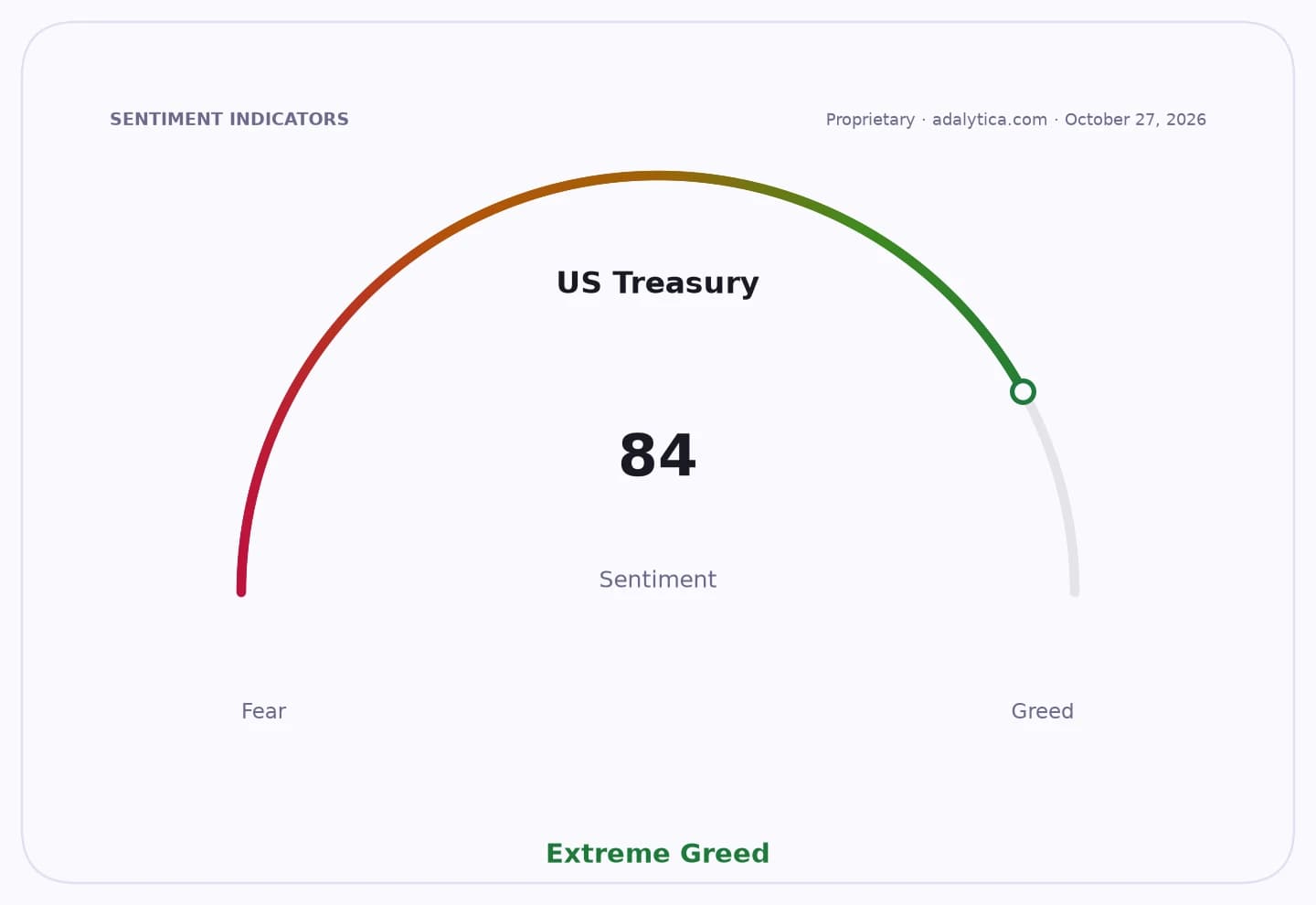
Sentiment Indicators
US Treasury
The move in bonds is more economically important than the modest day-to-day swings in futures. A 10-year yield near 4.9% and a 2-year yield around 4.53% leave the curve only slightly positive, suggesting markets still expect restrictive financial conditions to persist. That is a headwind for consumers, housing, leverage-heavy businesses and the broad market multiple, even as it supports income-oriented assets and short-duration cash alternatives.
Dow futures reflected that tension. The Dow contract, YM=F, rebounded to 53,543 on Nov. 4 after slipping in the prior two sessions, but the broader tone remained cautious as traders balanced election headlines against still-elevated rates. The S&P 500’s trade signals tracked by Adalytica showed neutral sentiment even as awareness stayed elevated, a sign of a market that is watching policy and rates rather than embracing a clean risk-on trade.
Small caps remain especially exposed. The Russell 2000 ETF, IWM, has been trying to recover, but it is still trading well below its 200-day moving average and well under the highs reached earlier in the year. That matters because smaller companies typically carry more floating-rate debt and thinner margins, making them more vulnerable to stubborn Treasury yields and tighter credit conditions.
Treasuries themselves are sending a different message than equities. Adalytica’s TLT signal showed extreme greed in bond exposure and fear in the broader trade gauge, suggesting investors are still reaching for duration protection even as yields remain high. The dollar, meanwhile, continues to look stretched in awareness terms but with weak sentiment, reinforcing the idea that markets are positioning for slower growth and eventual policy easing rather than a full-blown reflation trade.
The investable takeaway is straightforward: this is a rate-market story first and an election story second. If yields stay near 4.8%-plus, the winners are likely to be quality large caps, financials and income plays with pricing power. The losers are long-duration growth names, highly leveraged small caps and any rate-sensitive corner of the market that needs cheaper capital to justify its valuation.
| Entity | Gains | Losses |
|---|---|---|
| Treasury holders | ▲Higher yields | ▼Price volatility |
| Small caps / IWM | ▲Short-covering bounces | ▼Higher funding costs |
| Quality large caps | ▲Relative resilience | ▼Multiple compression |
| Rate-sensitive equities | ▲Selective opportunities | ▼Valuation pressure |