U.S. layoffs remain close to a 57-year low even as finding work gets harder, leaving the labor market in a rare split where employers are still reluctant to cut staff but are also offering fewer openings.
U.S. layoffs stay low as job openings ease
Nonfarm Payrolls
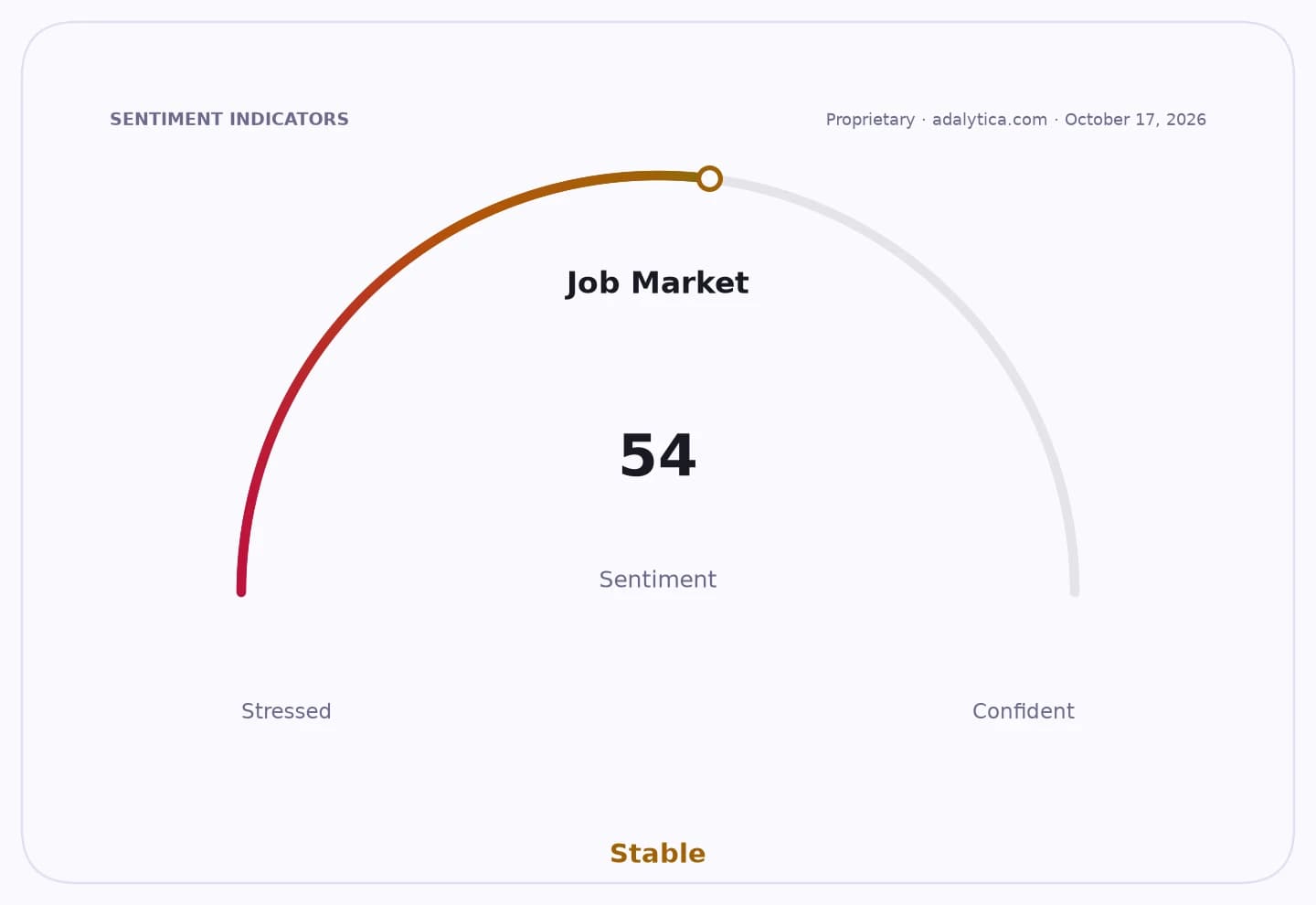
That matters because the slowdown is not showing up first in job losses. Instead, it is appearing in a thinner hiring pipeline: the unemployment rate is forecast to hold at 4.09% in October after rising to 4.2% in September, while nonfarm payroll growth is expected to slow to 41,500 from 29,000 in the prior month, according to the data context.
Sentiment Indicators
Job openings are also easing. The JOLTS series shows vacancies at 7.079 million in August, down from 7.335 million in July and well below the 12.301 million peak reached in 2022. The latest reading remains historically elevated, but it is far removed from the post-pandemic hiring frenzy that gave workers outsized leverage on pay and mobility.
For investors, the key message is that the labor market is cooling without cracking. That kind of slowdown tends to support earnings longer than a full-blown downturn because payrolls are still expanding, yet it also points to softer consumer demand ahead as wage growth and job-switching opportunities fade.
UNRATE vs JTSJOL — macro contextadalytica.com
Explore this data interactively — full history, time series and cross-market comparisons.
The pattern helps explain recent trading in broad market ETFs. The industrial sector ETF, XLI, has slipped to $167.40 from a recent June high near $184.73, while consumer discretionary ETF XLY sits around $115.38, suggesting investors are weighing the impact of slower hiring and cautious household spending. The S&P 500 proxy SPY closed at $755.72 on Oct. 30, down from $772.31 two sessions earlier, as markets digested a softer growth backdrop.
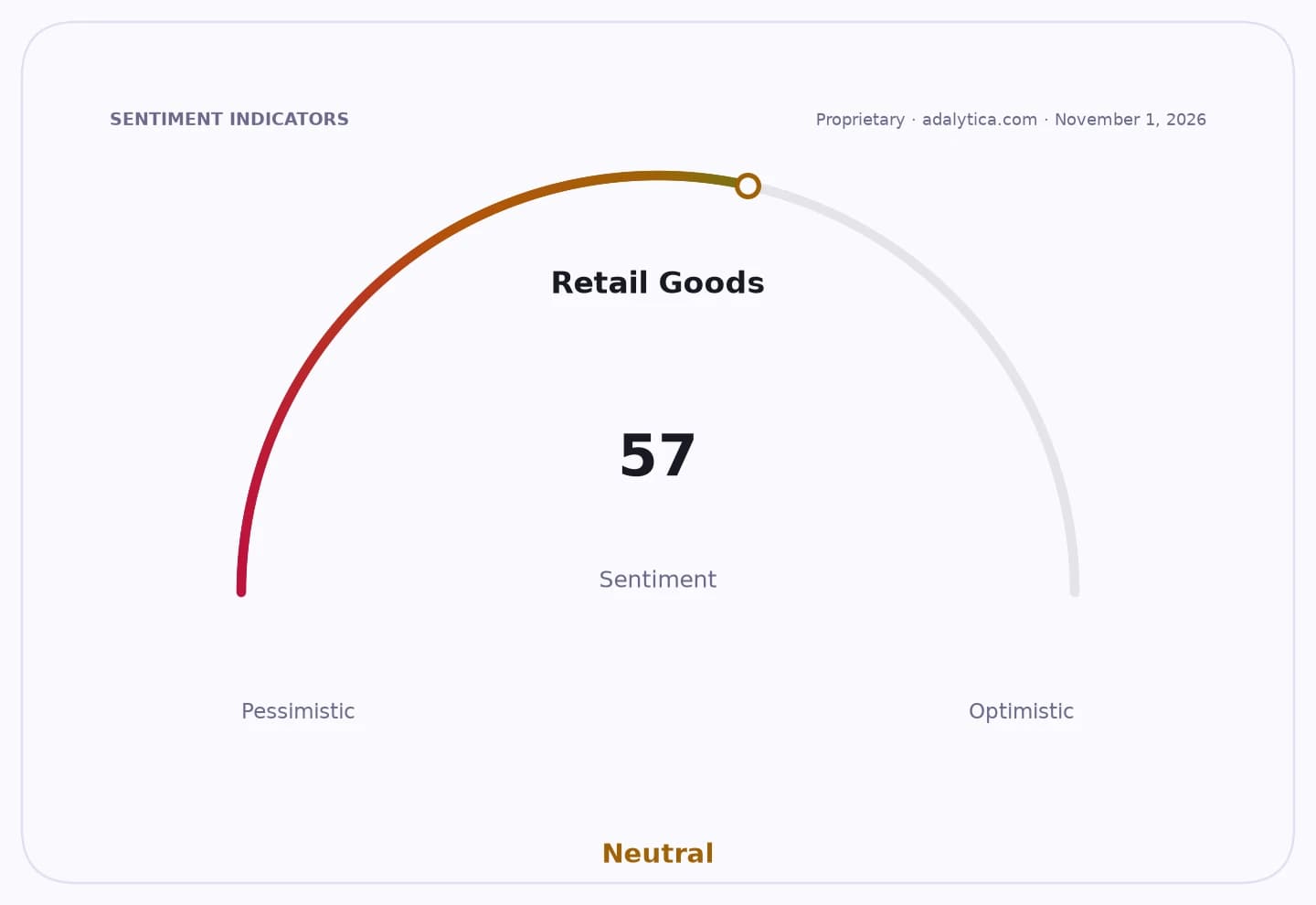
Adalytica’s Nonfarm Payrolls Sentiment gauge is neutral at 38, while its Consumer Confidence Recession Sentiment reads 43, also neutral, underscoring the market’s mixed read on whether the slowdown becomes a recession or settles into a softer landing.
The next catalyst is the October jobs report. If payrolls keep growing but openings and hiring continue to drift lower, markets are likely to keep favoring quality stocks and defensive sectors over the more cyclical parts of the economy.
| Entity | Gains | Losses |
|---|---|---|
| Workers with jobs | ▲job security | ▼wage leverage |
| Job seekers | ▲fewer layoffs around them | ▼fewer openings |
| Employers | ▲lower turnover costs | ▼weaker labor supply |
| Cyclical stocks | ▲stable consumer base | ▼slower demand growth |