U.S. labor demand is losing momentum, a shift that matters for wages, consumer spending and the Federal Reserve’s next move even as the jobless rate remains low by historical standards.
US labor demand slows as payrolls and openings cool

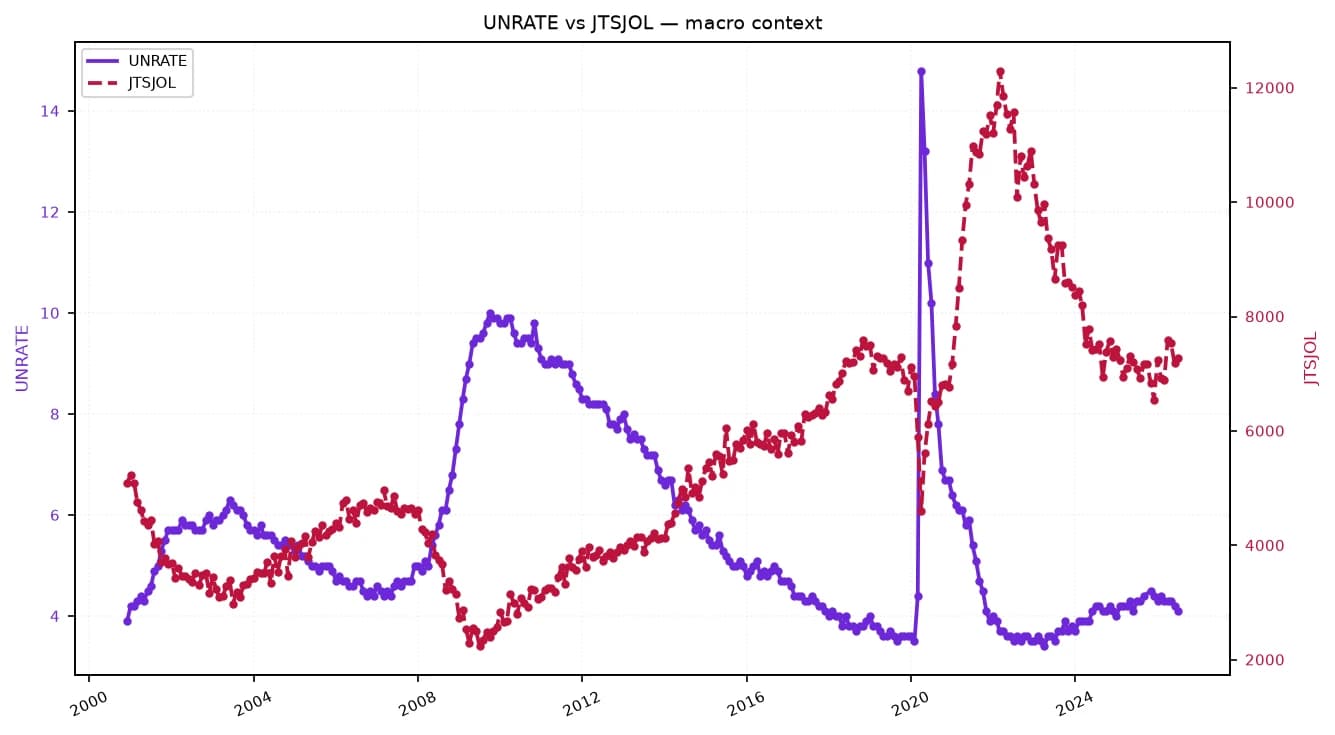
The unemployment rate is forecast to edge down to 4.02% in September from 4.1% in August, but that stability masks softer hiring beneath the surface. Nonfarm payrolls are expected to rise just 14,600 after August’s 162,000 increase, according to the data context, while job openings have slipped to 7.079 million from 7.335 million in July.
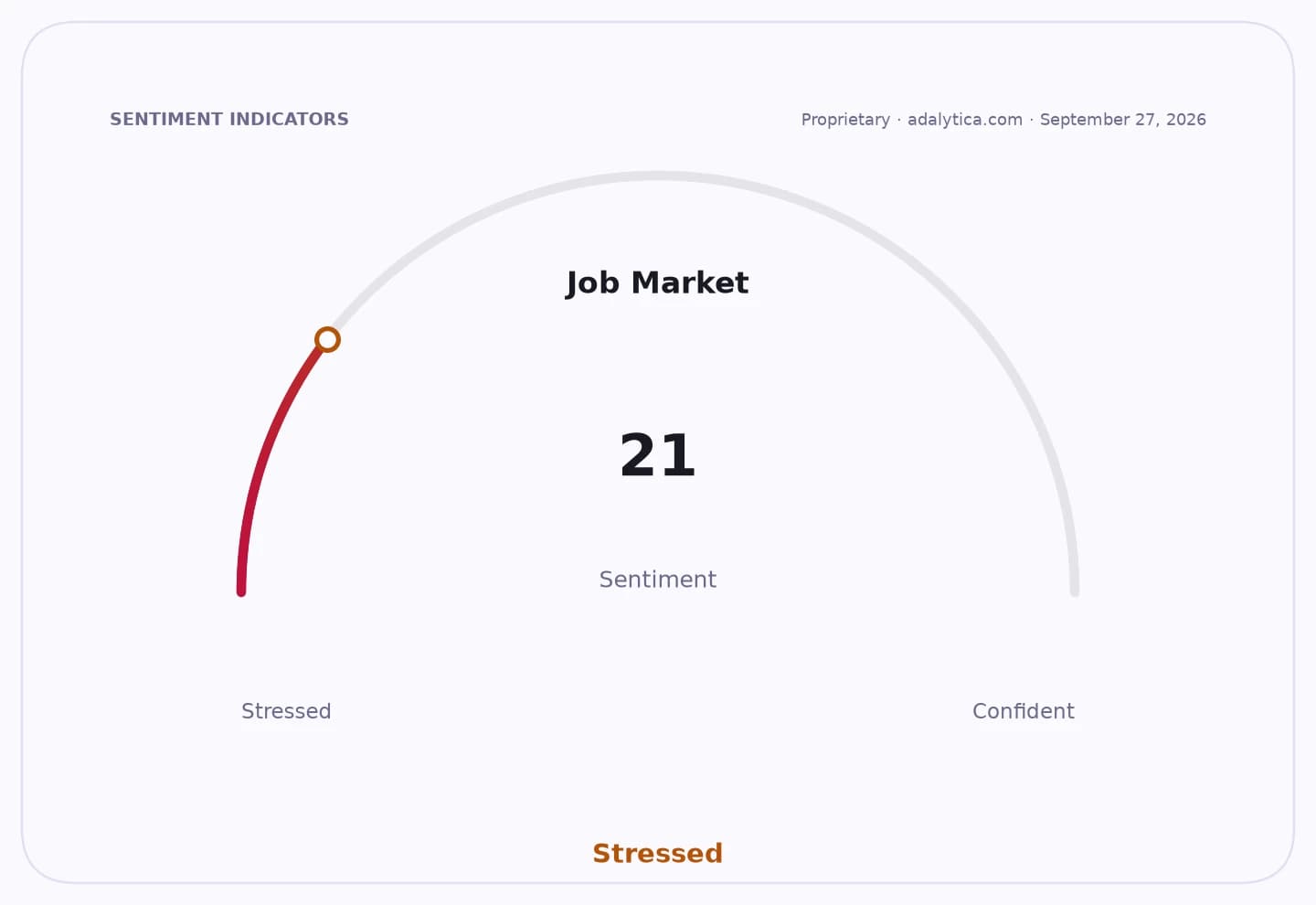
Sentiment IndicatorsⓘProprietary · adalytica.com · September 30, 2026
This is a snapshot — live sentiment, awareness and momentum for 130+ markets update continuously in the dashboard.Open AlphaPulse
That combination — a still-resilient unemployment rate alongside weaker job creation and fewer openings — is the kind of mix that keeps policymakers cautious. It suggests employers are hiring less aggressively, not necessarily laying off in large numbers, a pattern that can slow income growth before it shows up in the headline unemployment rate.
For investors, that matters most because the labor market remains the key swing factor for Treasury yields, rate-cut expectations and equity positioning. Softer payroll gains generally support bonds and rate-sensitive stocks, but if the slowdown deepens too far it starts to threaten consumer spending and corporate earnings.
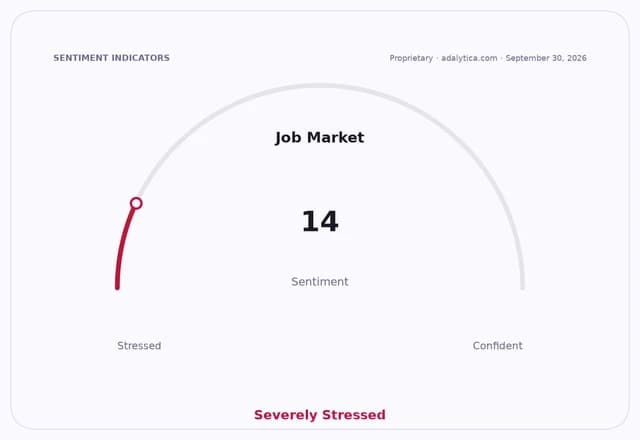
The market backdrop already reflects that tension. The S&P 500 ETF was up to 768.33 on Sept. 30, holding above its 50-day moving average of 761.31 and its 200-day moving average of 716.14, while TLT fell to 77.76 as bond traders priced in less immediate recession fear. Adalytica’s Job Market Sentiment gauge showed “Extreme Fear” at 14, underscoring how quickly labor-market anxiety has overtaken the prior month’s optimism.
The broader narrative is not one of collapse, but of deceleration. Payrolls remain far above the pandemic-era trough, yet openings have retreated from the 2021-22 boom and the labor market is no longer tight enough to guarantee wage-driven spending strength.
That leaves Friday’s labor report as a key test for risk assets: a modestly softer print could reinforce hopes for easier policy, while a sharper slowdown would revive recession worries and pressure cyclical stocks.
| Entity | Gains | Losses |
|---|---|---|
| Bond bulls | ▲Lower yields if hiring cools | ▼If labor stays firm |
| Rate-cut bettors | ▲Easier Fed policy expectations | ▼If payrolls surprise higher |
| Consumers | ▲Slower inflation pressure | ▼If job growth fades too much |
| Employers | ▲More labor supply, less wage pressure | ▼If demand weakens further |