Employers are no longer bracing for the kind of broad-based pay surge seen earlier in the post-pandemic cycle, and that matters because wage growth is one of the biggest drivers of inflation, hiring plans and profit margins.
ADP Salary Outlook Points to Slower Pay Growth
ADP’s latest salary outlook for 2027 points to a stabilization in pay increases rather than another leg higher, with companies increasingly expected to use more targeted remuneration — such as retention premiums, skill-based pay and variable incentives — instead of across-the-board raises. That shift suggests labor markets are cooling enough to ease pressure on payroll budgets, even if firms still have to pay up for scarce technical talent.
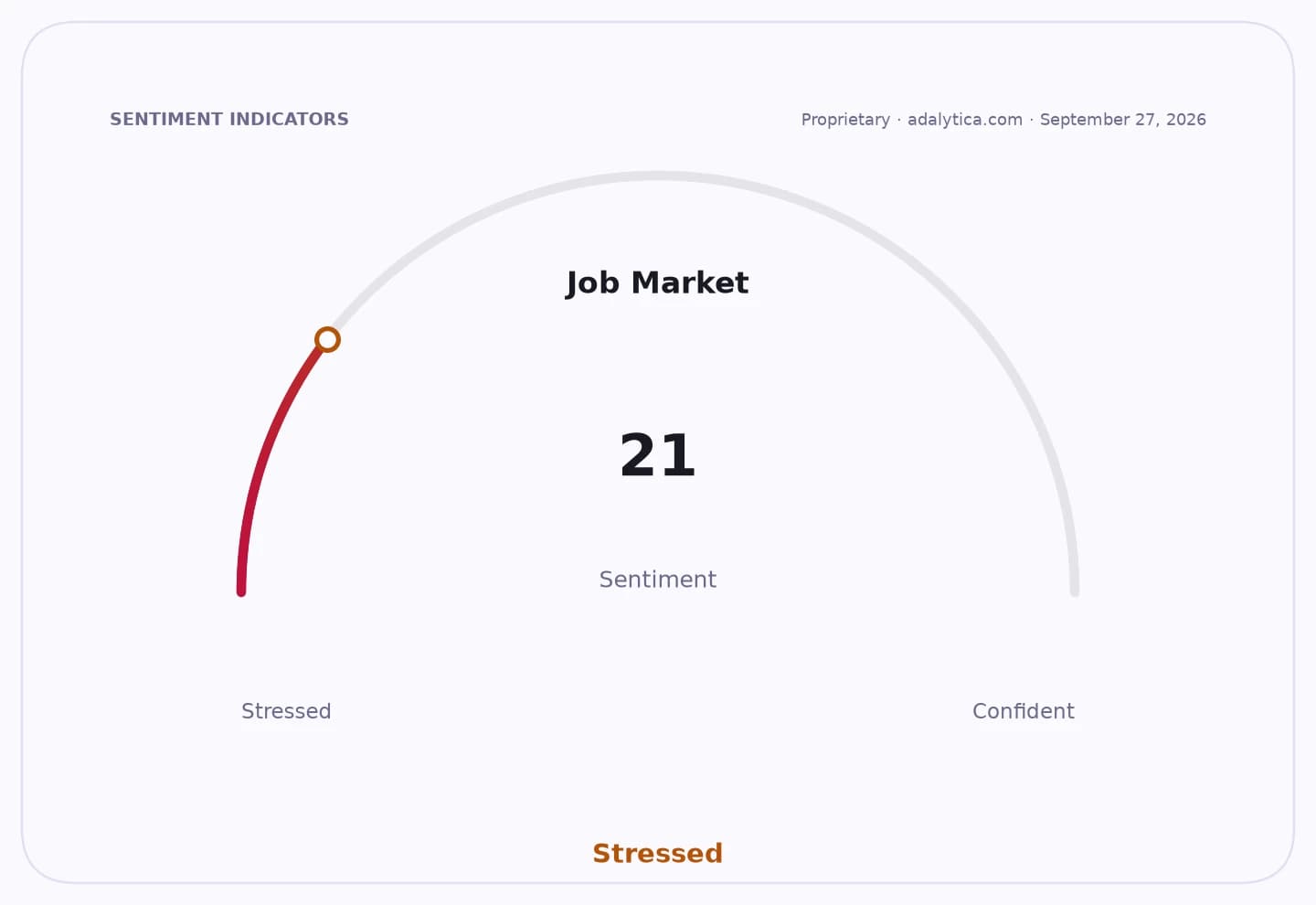
Sentiment IndicatorsⓘProprietary · adalytica.com · September 27, 2026
This is a snapshot — live sentiment, awareness and momentum for 130+ markets update continuously in the dashboard.Open AlphaPulse
The backdrop is a labor market that is still adding jobs, but at a slower and more selective pace. Nonfarm payrolls are forecast to rise to 159,089,600 in September from 158,913,000 in July, while unemployment is expected at 4.02%, little changed from 4.1% in July and August. Job openings, meanwhile, are seen at 7.4019 million in August, up from 7.271 million in July but far below the peaks seen earlier in the cycle.
For investors, that combination is important because it supports the view that wage inflation is becoming more manageable without a sharp deterioration in employment. A steadier salary environment can help preserve margins for employers across consumer, industrial and service sectors, while also lowering the risk that the Federal Reserve has to lean harder against inflation because of labor-cost pressure.
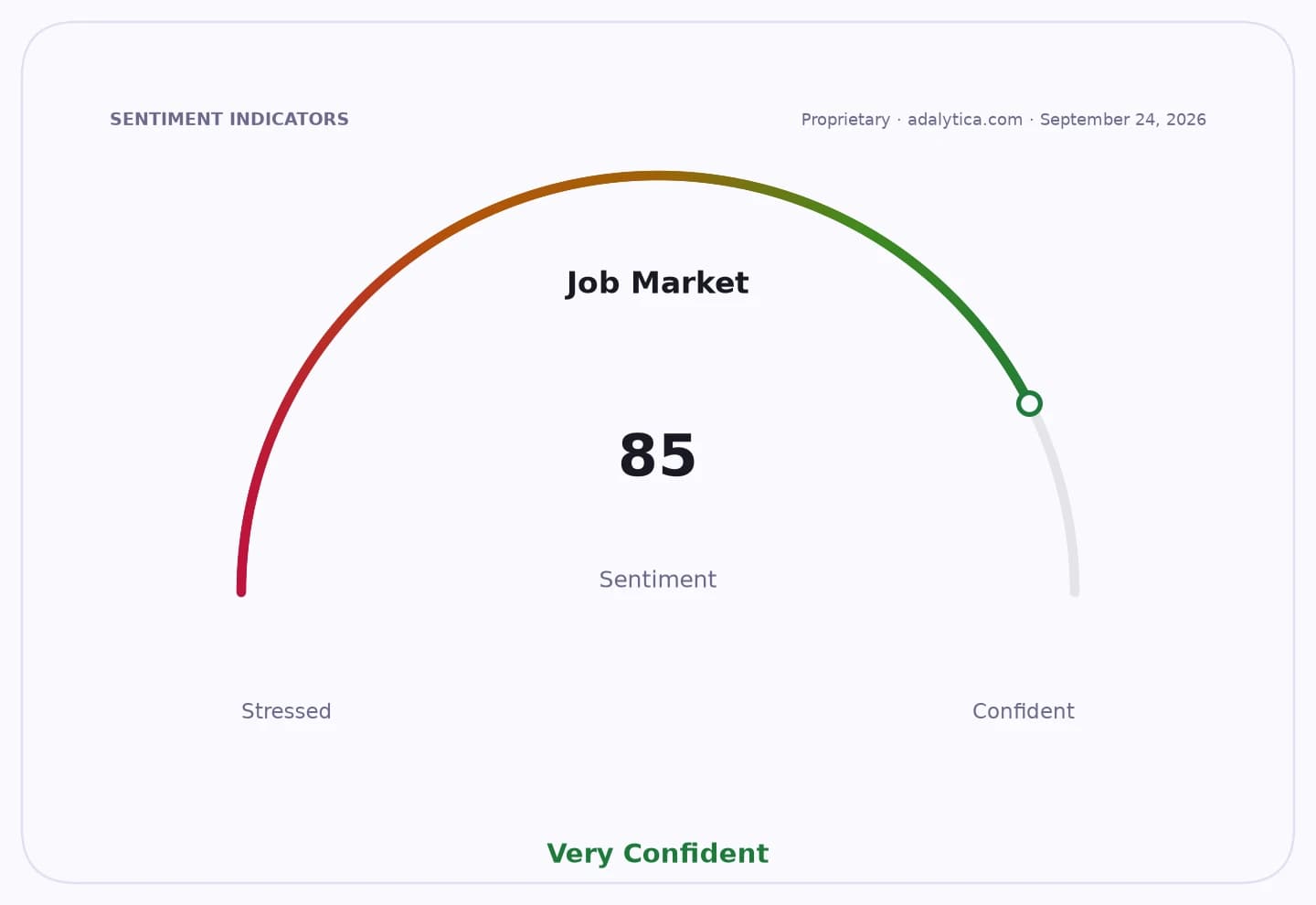
The market has been sensitive to signs of labor softening. Adalytica’s payroll sentiment gauge sits at 2, labeled extreme fear, while its broader job-market sentiment is at 21, also in fear territory. By contrast, consumer confidence remains elevated at 89, suggesting households are still spending, even as the labor picture looks less tight.
The tension between a firmer consumer backdrop and a cooler jobs market helps explain why employers are focusing more on precision than generosity in compensation. In practice, that favors companies with strong compensation-planning tools and staffing demand, including ADP, ManpowerGroup and Korn Ferry, as businesses try to keep critical workers without inflating fixed payroll costs.
ADP shares recently traded around $263.67, below the 50-day moving average of $268.80 and near the lower end of its recent range, after a volatile summer that included a rally above $270. ManpowerGroup closed at $57.41, well below its 50-day moving average of $57.20 but far above its long-term trend earlier in the year, while Korn Ferry traded at $71.73, sharply below its 50-day average of $80.75 as staffing investors priced in a slower hiring backdrop.
The next catalyst is the September payrolls and job-openings data, which will test whether the stabilization in salary forecasts turns into a broader cooling in labor demand or whether employers still need to bid aggressively for talent in key sectors.
| Entity | Gains | Losses |
|---|---|---|
| Employers | ▲Easier payroll control | ▼Less ability to hire on the cheap |
| Workers | ▲Targeted pay for in-demand skills | ▼Broad-based raises |
| ADP | ▲Demand for compensation tools | ▼Slower wage-growth cycle |
| ManpowerGroup/Korn Ferry | ▲Need for strategic staffing | ▼Softer overall hiring demand |