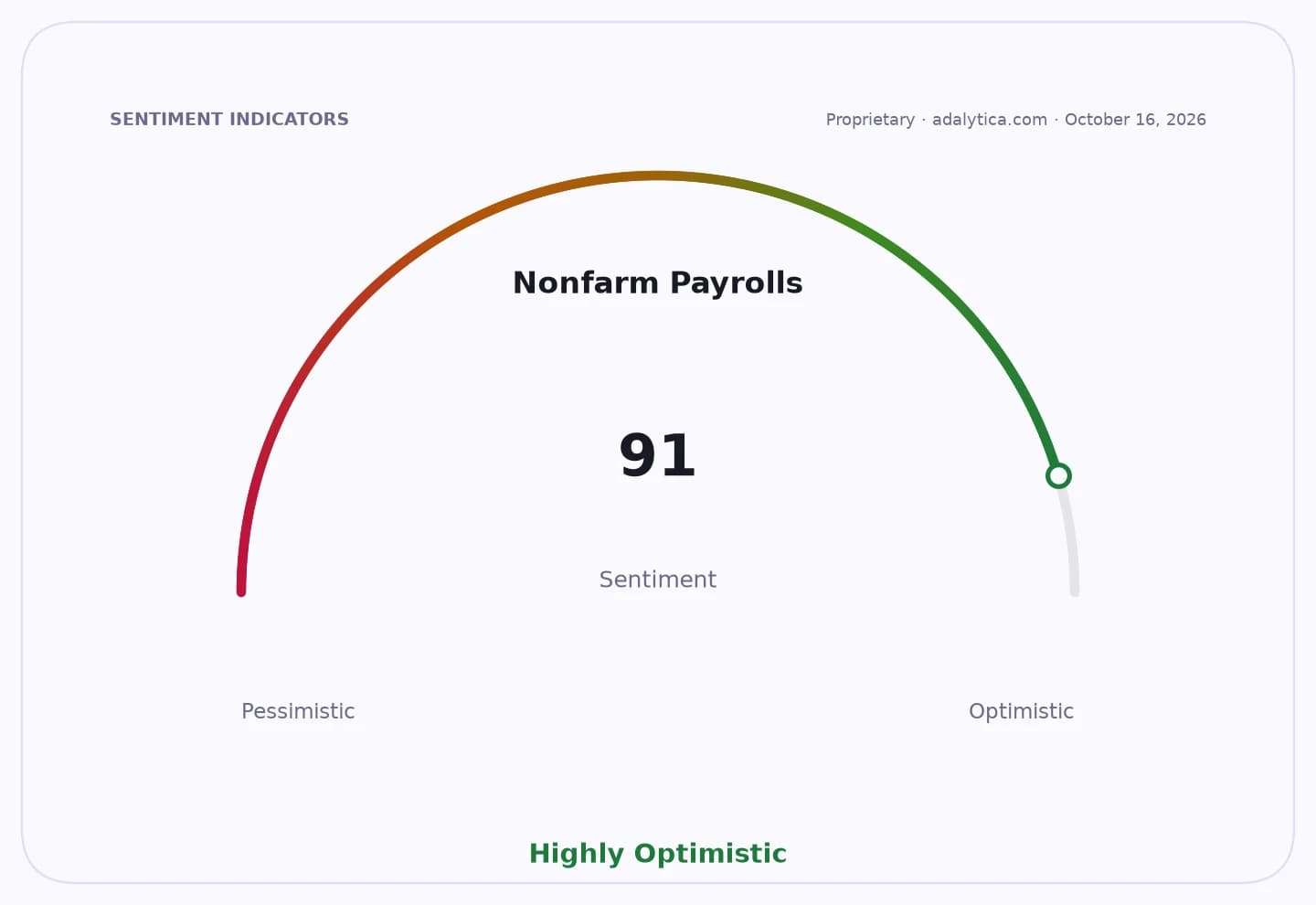
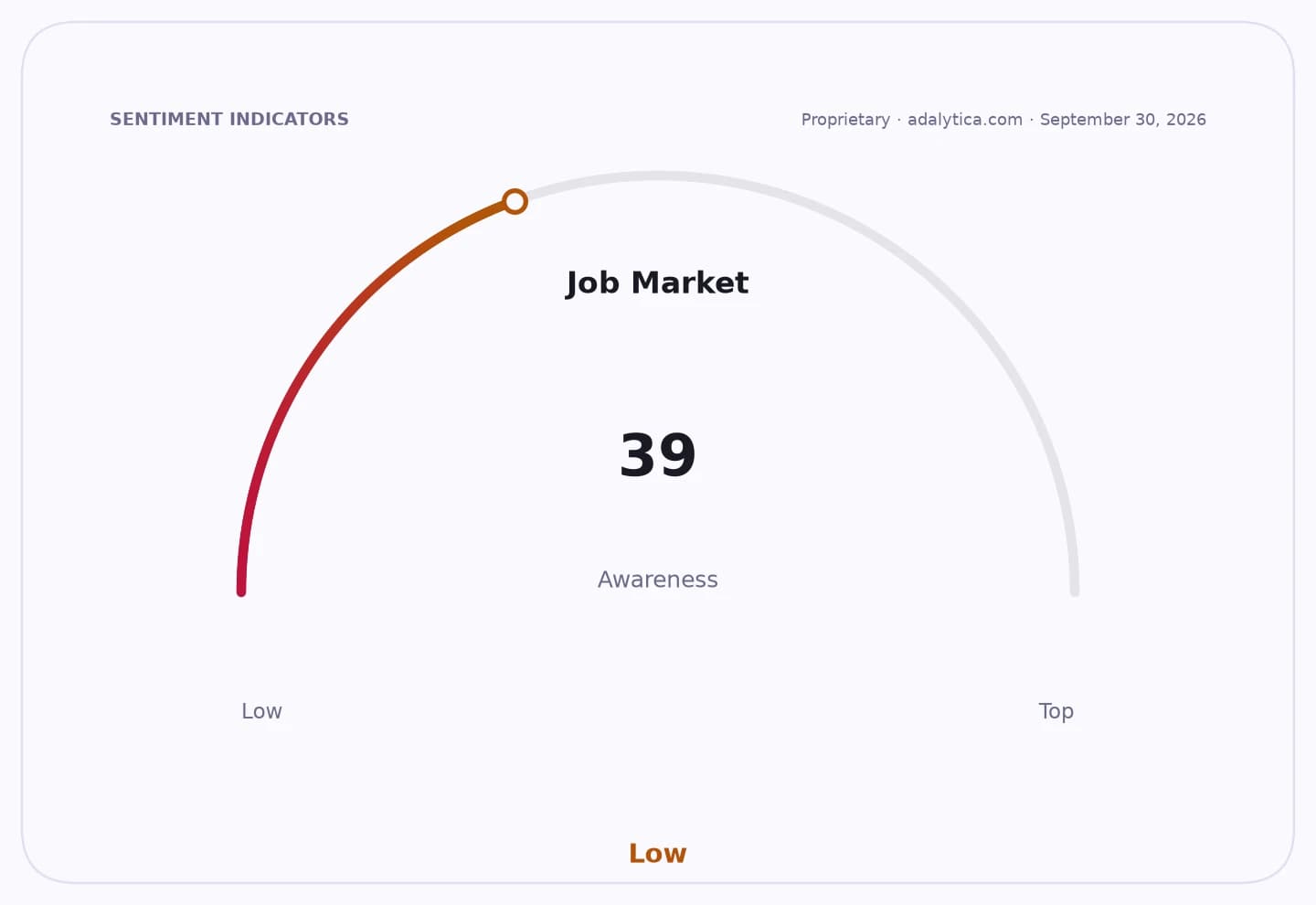
The number of Americans filing new claims for unemployment benefits fell last week to 199,000, the lowest since the pandemic began, underscoring that layoffs remain historically subdued even as hiring has lost momentum.
US jobless claims fall to 199,000
That combination matters because it points to a labor market that is cooling from the red-hot pace of the past two years without rolling over into a broader downturn. For the Federal Reserve, it reduces the urgency to treat the jobs side of the economy as a source of immediate inflationary pressure. For investors, it keeps alive the case for a “soft landing” in which weaker hiring does not yet translate into rising unemployment or a sharp drop in spending.
Sentiment IndicatorsⓘProprietary · adalytica.com · October 16, 2026
This is a snapshot — live sentiment, awareness and momentum for 130+ markets update continuously in the dashboard.Open AlphaPulse
Initial claims were little changed from the prior week’s 198,000 and matched the forecast for 199,000, suggesting employers are still largely holding onto workers. The unemployment rate has hovered near 4.1% to 4.2%, and payroll growth has slowed from earlier in the recovery, but the claims data imply that firms are not responding by cutting staff in a material way.
That distinction is important for markets because claims are one of the cleanest real-time indicators of labor stress. A rise in jobless applications often foreshadows a deterioration in consumer income, confidence and retail demand; a decline, by contrast, suggests wage income is being preserved even if hiring opportunities are thinner. In other words, the labor market is becoming less dynamic, not yet fragile.
ICSA vs UNRATE — macro contextadalytica.com
Explore this data interactively — full history, time series and cross-market comparisons.Open AlphaPulse
The backdrop also helps explain the recent split between equities and bonds. The S&P 500 has been grinding higher, with the SPY ETF trading above its 200-day moving average, while long-dated Treasuries have been volatile as investors debate how much easing the Fed will ultimately deliver. Strong claims data argue against a rapid deterioration in growth, but they also reduce the odds of a labor-market-driven rush into bond safety.
For the Fed, the message is nuanced. Stable claims allow policymakers to stay patient on rates because they do not need to respond to a clear spike in layoffs. But slowing hiring and a modestly higher unemployment rate keep the door open to cuts later if job creation weakens further. That balance is exactly why each weekly claims report still moves rates and equity futures.
The consumer angle is equally significant. Adalytica’s consumer confidence recession sentiment gauge is in “Extreme Fear,” reflecting persistent anxiety about jobs and future income even as actual layoffs remain low. That gap between sentiment and hard data suggests households may be cautious on spending, especially on discretionary items, but are not yet being forced into retrenchment by a wave of job losses.
For investors, the bull case is that a low-claims environment supports earnings, wages and consumption long enough for inflation to continue easing gradually. The bear case is that hiring weakness eventually catches up with the claims data, turning a benign slowdown into a more visible labor-market deterioration. The next key test will be whether continuing claims and monthly payrolls confirm that employers are simply slowing recruitment, or whether they are starting to cut deeper.
| Entity | Gains | Losses |
|---|---|---|
| Workers with jobs | ▲income stability | ▼fewer new openings |
| Employers | ▲lower wage pressure | ▼harder hiring |
| Equities | ▲soft-landing hopes | ▼upside if growth weakens |
| Treasuries | ▲later Fed cuts | ▼immediate recession bid |