The U.S. labor market is still generating enough jobs to keep the Heartland economy moving, even as confidence in the broader economy remains fragile and recovery efforts from flooding and storm damage add pressure to local businesses.
U.S. Jobs Support Heartland Recovery and Small Caps
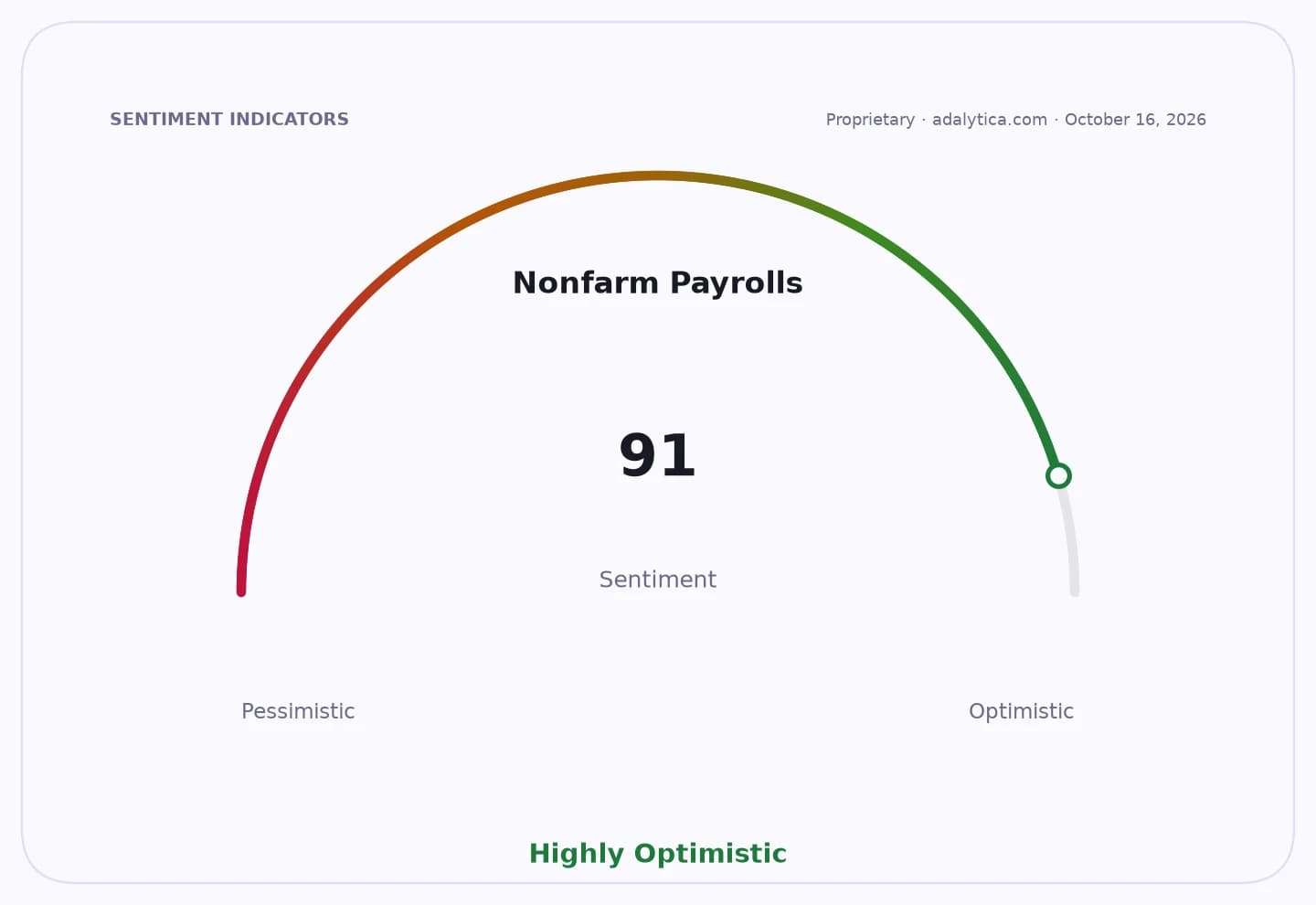
That matters because employment is the clearest transmission channel from the national economy to Midwestern and Southern communities: steady payroll growth supports household spending, eases credit stress and helps farm towns, manufacturing hubs and service businesses absorb shocks from weather, higher borrowing costs and uneven commodity demand. The latest labor data point to continued expansion, with nonfarm payrolls at 159.044 million in September versus 158.882 million in July, while the unemployment rate is forecast at 4.09% for October after a 4.2% reading in September.
Sentiment IndicatorsⓘProprietary · adalytica.com · October 16, 2026
This is a snapshot — live sentiment, awareness and momentum for 130+ markets update continuously in the dashboard.Open AlphaPulse
For the Heartland, the significance is less about the headline unemployment rate than about resilience. Job creation keeps regional retailers, restaurants, freight operators and repair shops in business, and it helps offset the drag from disaster recovery. Missouri has just opened federal low-interest disaster loans for victims of July flooding, underscoring how local economies are being forced to rebuild while trying to maintain employment and cash flow. In that environment, even modest payroll gains can be the difference between a temporary setback and a broader contraction in small-business activity.
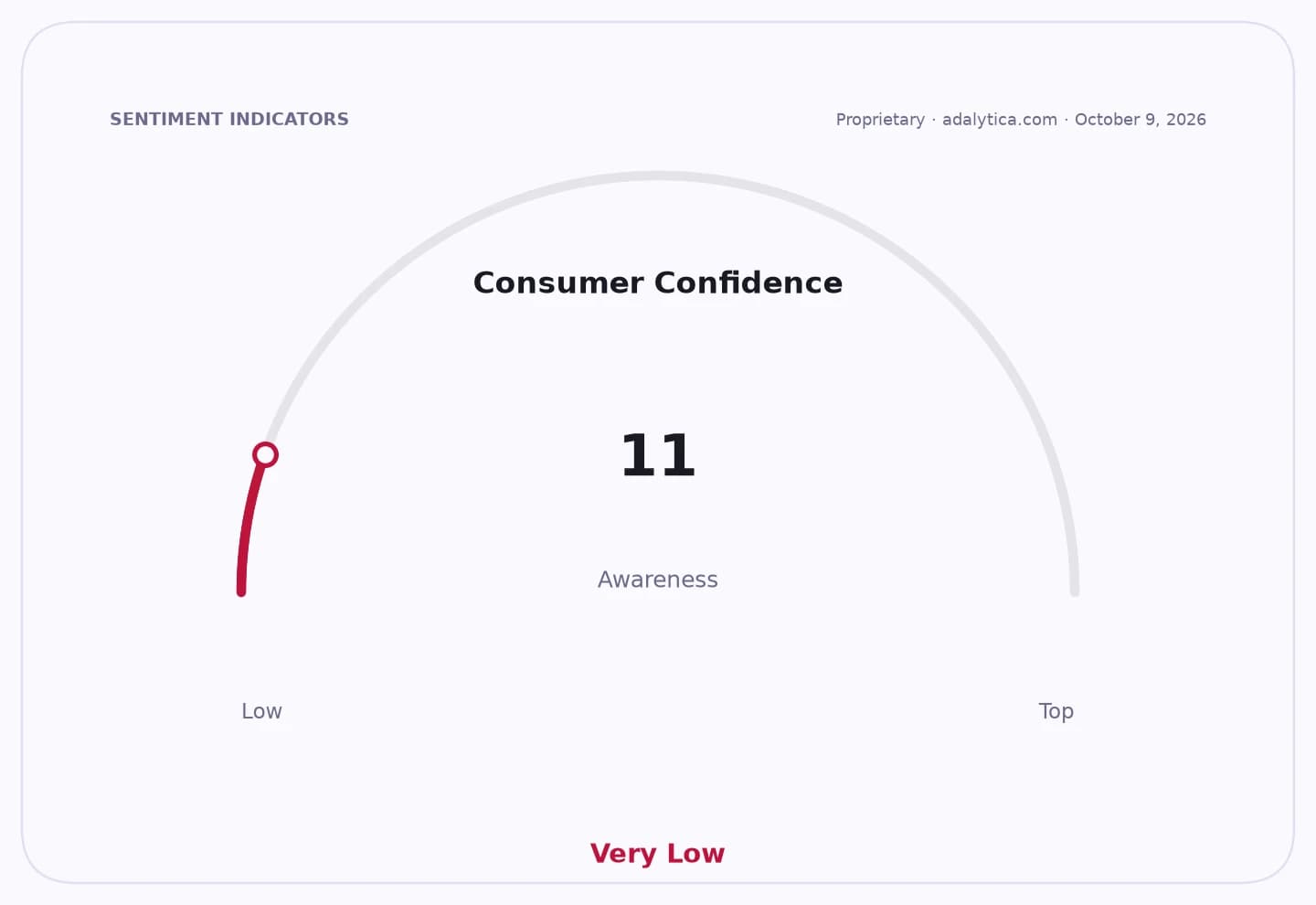
The market backdrop reflects that tension. Adalytica’s job-market sentiment indicator is in “Extreme Greed” at 93, suggesting investors and traders are leaning toward continued labor strength. By contrast, consumer-confidence recession sentiment is in “Extreme Fear” at 4, a split that captures the disconnect between hard data and household anxiety. For investors, that gap matters because it can support risk assets tied to domestic demand while also warning that spending may not keep pace with jobs if consumers remain cautious.
UNRATE vs PAYEMS — macro contextadalytica.com
Explore this data interactively — full history, time series and cross-market comparisons.Open AlphaPulse
Small-cap stocks are the clearest equity expression of that local-economy story. The Russell 2000 ETF, IWM, has pulled back to 275.08 after trading as high as 290.56 in June, and its 14-day RSI has slipped to 37.7, with price near the 200-day moving average around 276.42. That suggests the market is probing whether domestically oriented companies can reaccelerate or whether slower growth, tighter credit and weak sentiment will keep pressure on earnings. Industrials have held up better: XLI is around 167.89, still above its 200-day moving average, though its RSI has cooled to 42.5. Agricultural exposure has been steadier too, with MOO at 82.14, leaving farm-linked names better insulated than broader cyclicals.
The macro thesis is straightforward. A labor market that remains firm enough to keep payrolls rising supports the Heartland’s recovery, but the recovery is uneven and increasingly dependent on whether wages, jobs and disaster aid can offset softer confidence. That favors lenders, railroads, industrial suppliers and local consumer businesses if employment holds, while hurting firms that depend on discretionary spending, easy credit or a quick rebound in household optimism.
For investors, the next catalyst is whether the October payroll reading confirms that the labor market is cooling only gradually rather than rolling over. A stronger-than-expected print would reinforce the case for small-cap and industrial exposure, especially in the domestic economy. A weaker report would likely intensify pressure on Heartland-sensitive shares and keep the market focused on recession risk, even as emergency aid supports some of the most damaged communities.
| Entity | Gains | Losses |
|---|---|---|
| Heartland workers | ▲steady income | ▼job insecurity |
| Small-cap stocks (IWM) | ▲stronger domestic demand | ▼slower growth fears |
| Industrials (XLI) | ▲ongoing production/repair spending | ▼weaker industrial cycle |
| Consumers in flood-hit regions | ▲disaster aid and paychecks | ▼cautious spending power |