Millions of Americans losing SNAP benefits is not just a food-aid story — it is becoming a labor-market and consumer-demand issue with real implications for employers, retailers and the broader economy.
SNAP Cuts Pressure Retailers and Low-Wage Employers
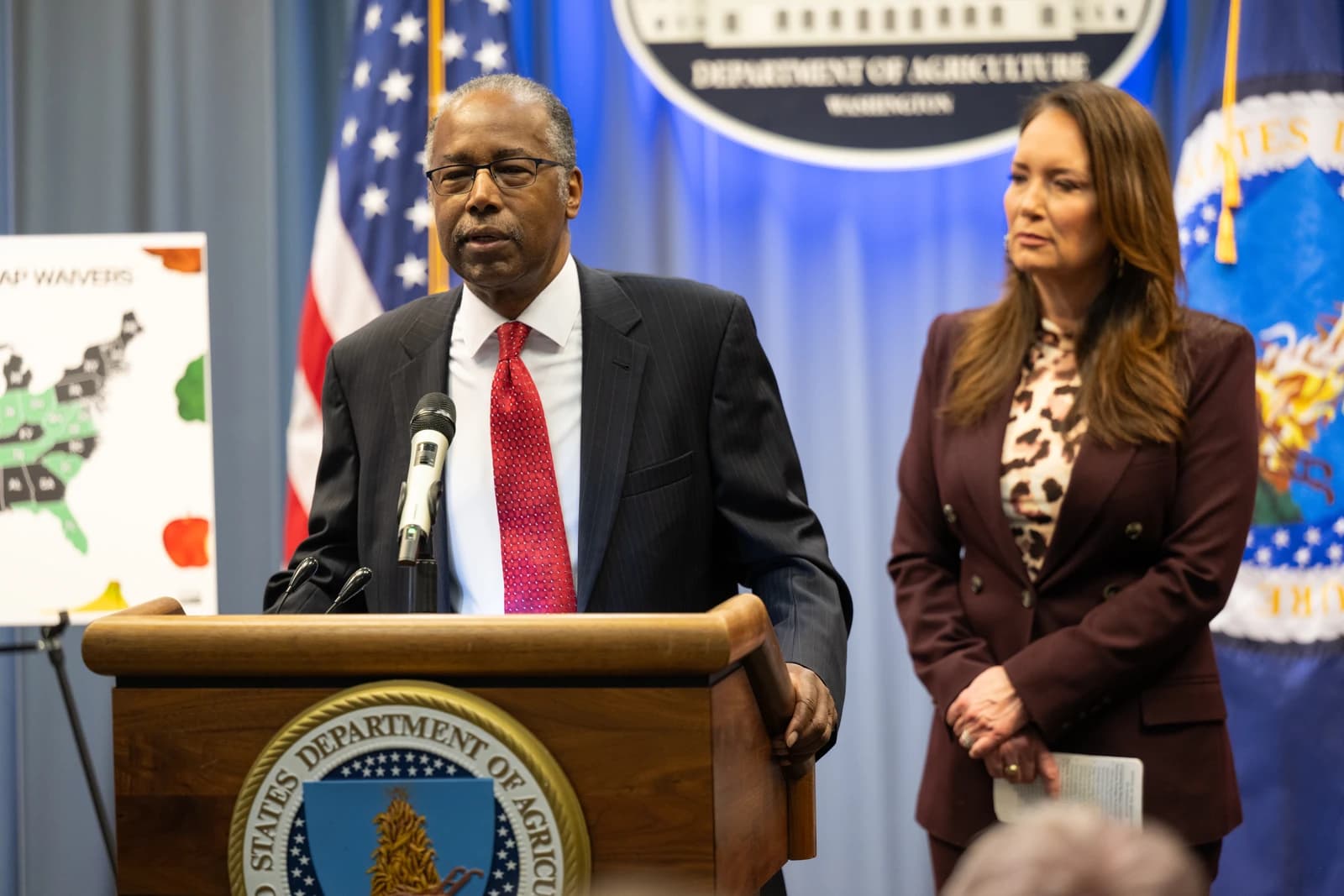
The policy shift, driven by tighter federal work requirements and higher state cost-sharing under the One Big Beautiful Bill Act, has already cut SNAP participation by more than 5 million people, or about 13%, since July last year, according to the Center on Budget and Policy Priorities. More than 1 million children are also estimated to have lost access to assistance.
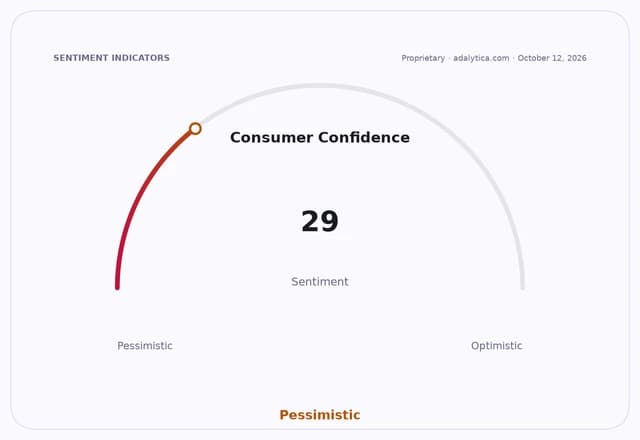
Sentiment IndicatorsⓘProprietary · adalytica.com · October 12, 2026
This is a snapshot — live sentiment, awareness and momentum for 130+ markets update continuously in the dashboard.Open AlphaPulse
The economic significance is straightforward: SNAP acts as a stabilizer for households with little financial slack. When those benefits disappear, job seekers face a worse trade-off between searching for work and paying for basics such as food, transport, childcare and internet access. That can reduce labor force attachment rather than strengthen it, especially when unemployment remains relatively steady and the labor market is not suddenly absorbing large numbers of displaced workers.
That tension matters because the policy’s stated goal is to move more people into work. But cutting food support can make work harder to secure and keep, particularly for lower-income workers already cycling through unstable jobs. Food insecurity also tends to undermine health, concentration and attendance — all of which can lower productivity and increase turnover.
The risk extends beyond households. SNAP dollars flow quickly into grocery stores and local businesses, supporting demand in lower-income communities. As benefits fall, spending power weakens, which can pressure merchants and service-sector employers at the margin. That is why industries such as retail, hospitality and food service — already dependent on a stable low-wage workforce — may face a more fragile labor pool even if there is a larger supply of applicants.
Investors should care because the fallout cuts both ways. On one hand, employers in low-wage sectors could gain access to more job seekers willing to take work to preserve eligibility. On the other, a weaker consumer base can hit same-store sales at grocery chains and discount retailers, while higher turnover and absenteeism can raise labor costs for restaurants and other service businesses. The broad equity market has not priced this as a standalone shock, but consumer staples and discretionary names with exposure to low-income households could feel the impact first.
Technical signals in broad U.S. equity benchmarks show markets are not yet pricing a severe macro break. The S&P 500 has been near record levels and consumer-focused ETFs have remained relatively firm, while the defensive consumer staples fund XLP has held above key long-term support on its 200-day moving average even after recent volatility. But the underlying policy change points in the opposite direction of support for household demand.
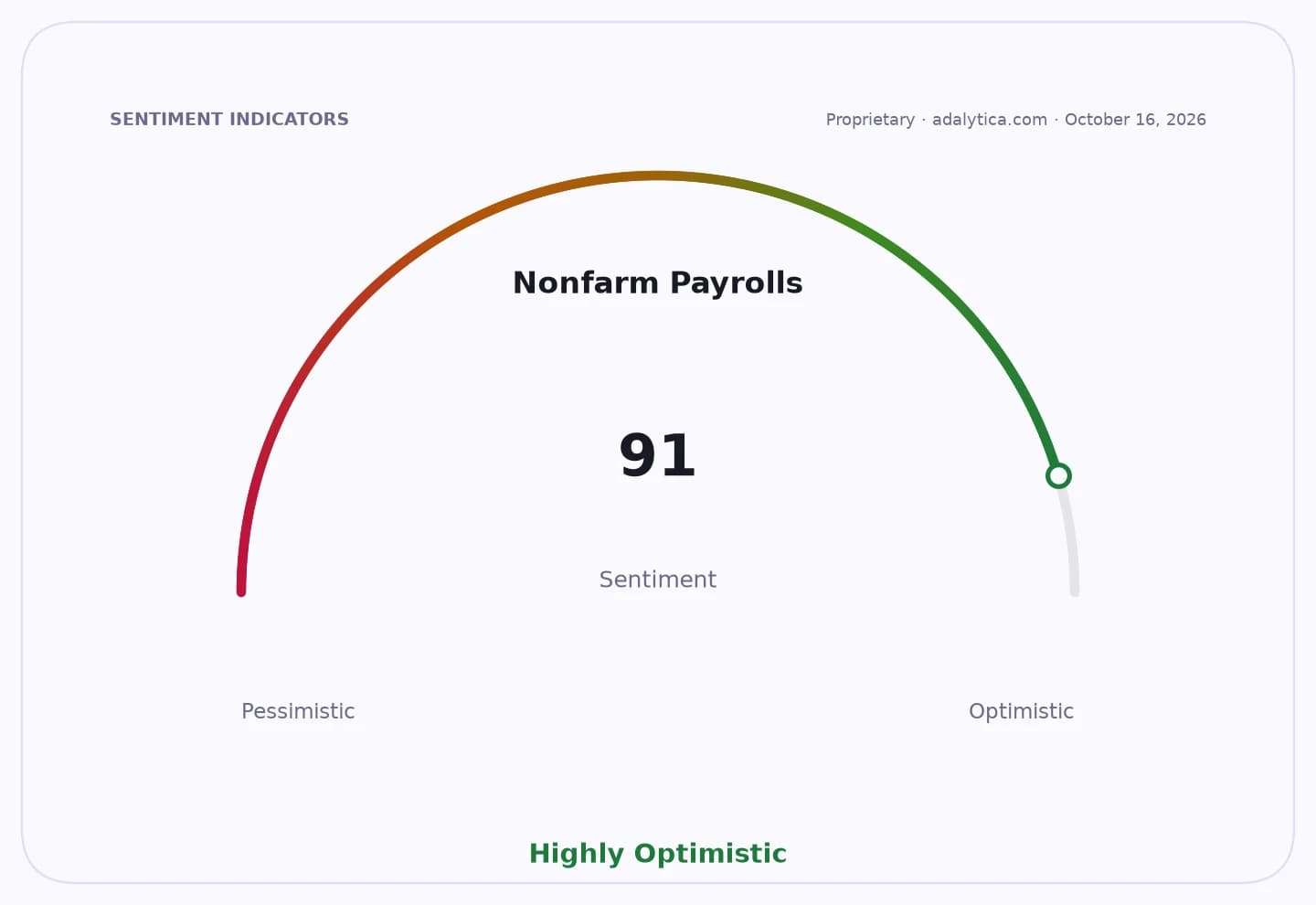
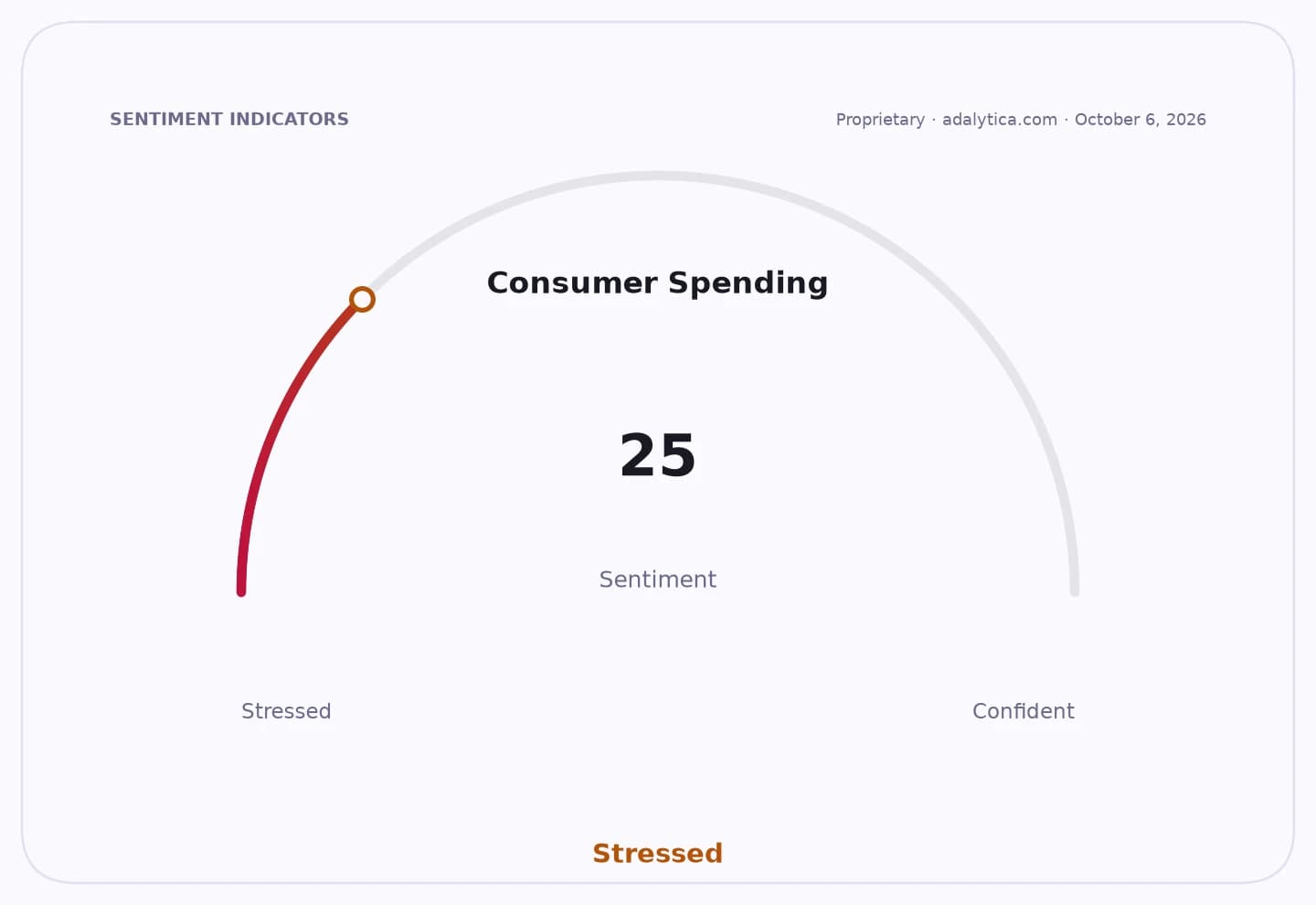
Adalytica’s consumer-confidence recession sentiment gauge has also fallen sharply, while job-market sentiment remains extremely elevated, a combination that suggests investors and households may be looking through the labor data while underestimating the pressure on lower-income spending. That disconnect matters if SNAP reductions start showing up in grocery volumes, hiring quality or delinquency trends later this year.
The next catalyst is whether additional SNAP changes roll out as scheduled and whether states absorb more of the cost burden. If they do, the story may shift from welfare policy to a broader test of how much stress the low end of the labor market can absorb before it shows up in spending, staffing and margins.
| Entity | Gains | Losses |
|---|---|---|
| Low-wage employers | ▲Larger applicant pool | ▼Higher turnover risk |
| Grocery retailers | ▲Some demand persistence | ▼SNAP-linked sales pressure |
| SNAP recipients | ▲— | ▼Lost food assistance |
| State governments | ▲More control over costs | ▼Bigger budget burden |