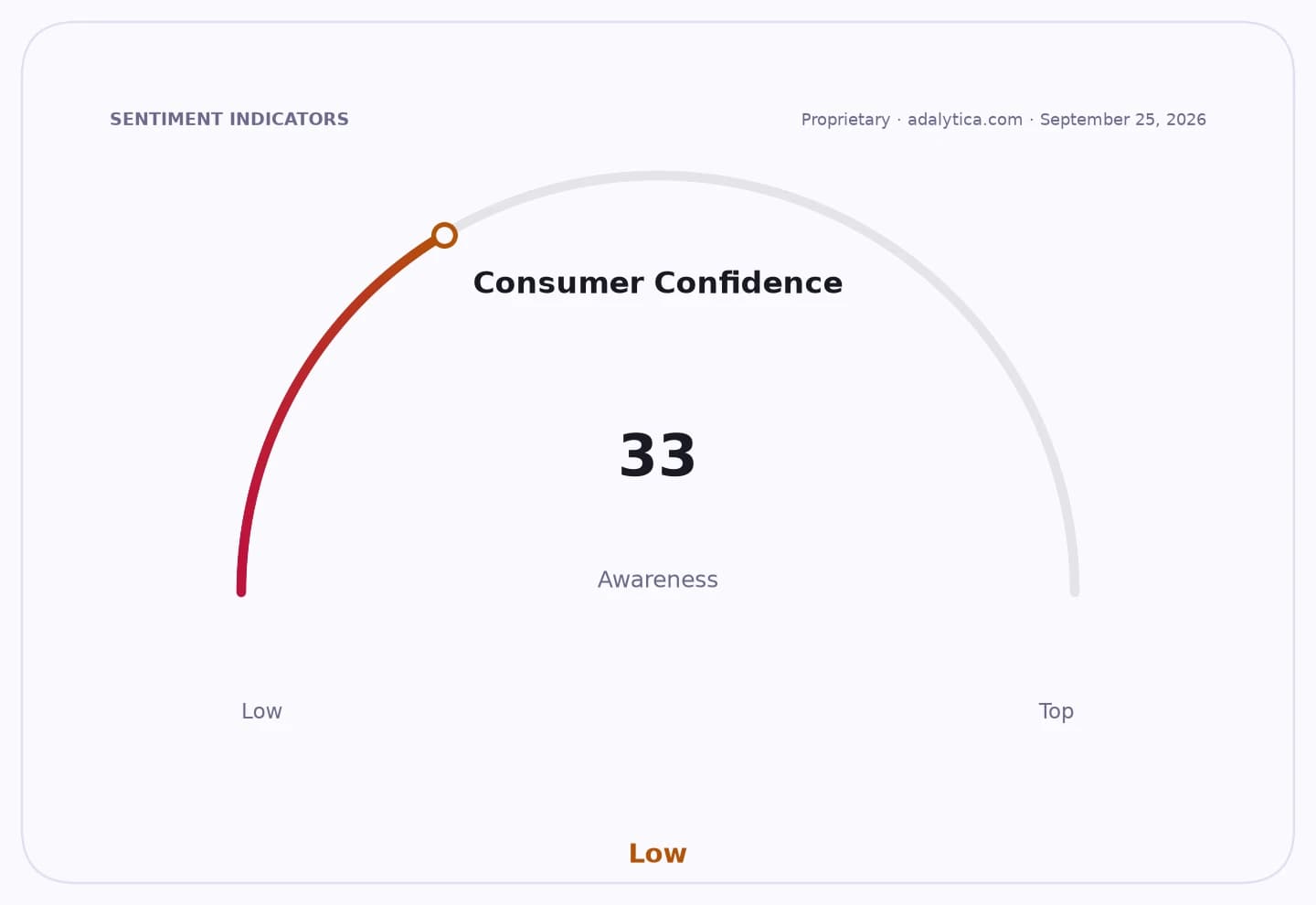
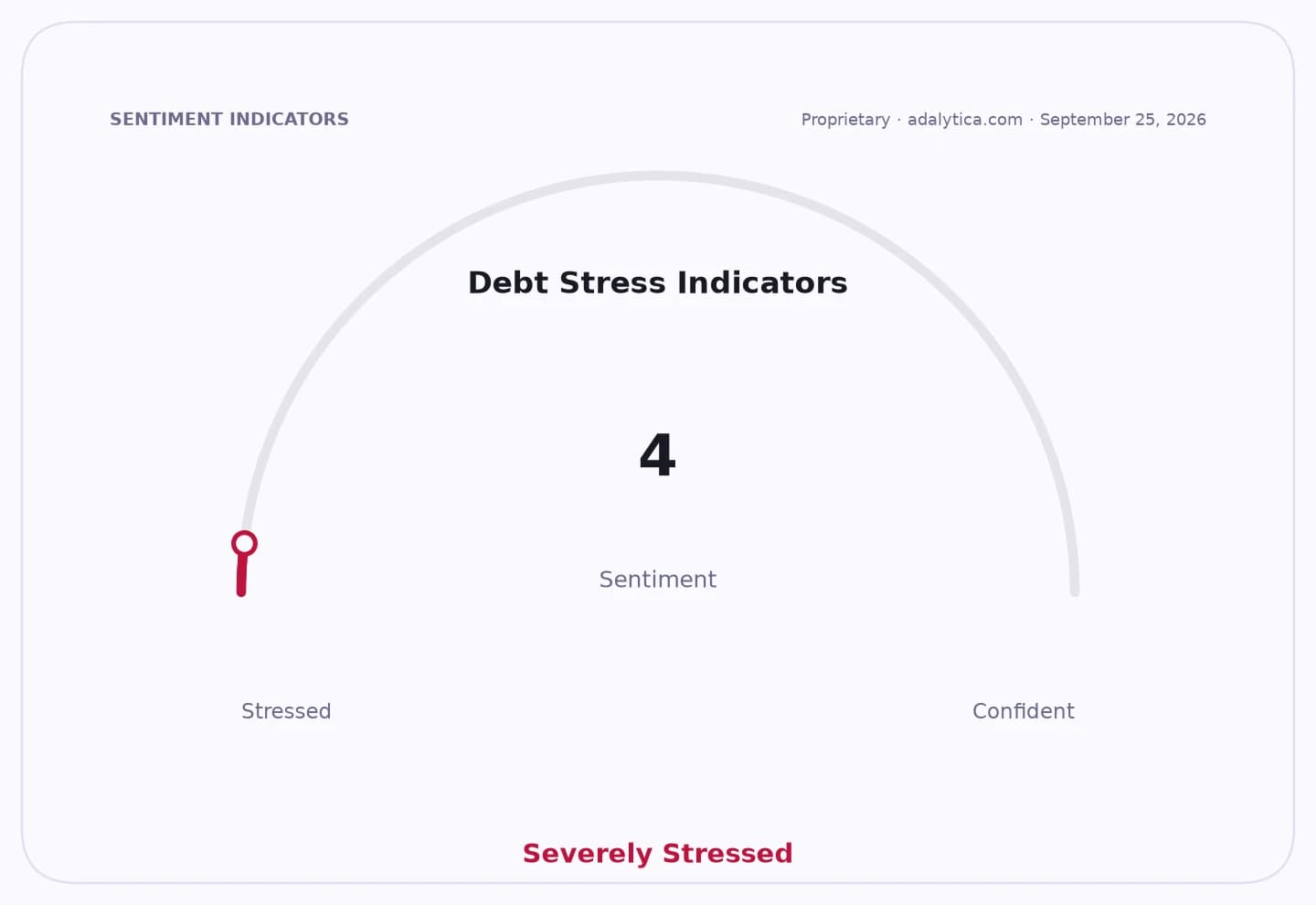
More layoffs are being driven by bankruptcies and corporate reorganizations, a sign that the weakest companies are no longer just cutting costs — they are running out of room to survive.
U.S. layoffs tied to bankruptcies and restructurings
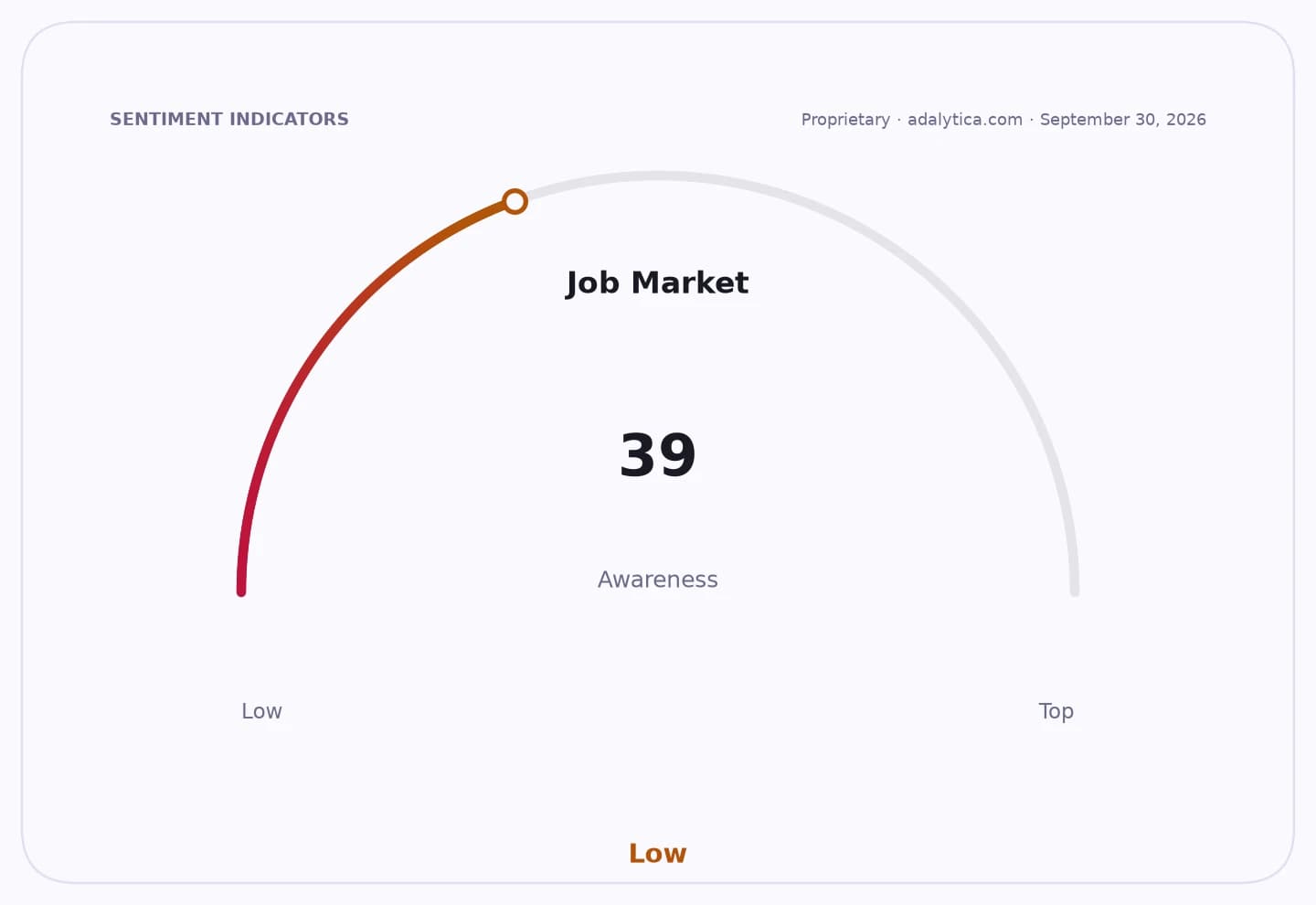
That matters because the labor market is usually slow to crack in the face of a cooling economy, but bankruptcies force the issue. When companies enter restructuring, severance and wage negotiations turn into immediate cash questions, while suppliers, landlords and local economies absorb the shock. The result is a more abrupt hit to spending than a standard round of efficiency cuts, and a bigger risk that job losses feed on themselves.
Sentiment IndicatorsⓘProprietary · adalytica.com · September 30, 2026
This is a snapshot — live sentiment, awareness and momentum for 130+ markets update continuously in the dashboard.Open AlphaPulse
The broader backdrop is still one of relative labor-market stability, with the U.S. unemployment rate forecast near 4.0% in September and job openings holding near 7.1 million in August. But that headline resilience is masking pockets of real stress. The latest figures around layoffs due to bankruptcies and reorganizations point to a churn-heavy market where healthy employers are still hiring selectively, while distressed firms are slashing payrolls to stay alive or prepare for asset sales.
For investors, the message is not just that labor is weakening at the margins. It is that the adjustment is becoming more bifurcated and more capital-driven. Firms with weak balance sheets, high refinancing needs and fading demand are the ones most exposed, while cash-rich businesses with pricing power and access to capital can use the shakeout to consolidate market share. That dynamic is bullish for stronger operators in defense, infrastructure, software and industrial automation, where customers are still spending and where bankrupt peers can create opportunistic acquisitions.
UNRATE vs USRECM — macro contextadalytica.com
Explore this data interactively — full history, time series and cross-market comparisons.Open AlphaPulse
It also matters for rates and risk assets. The S&P 500 remains well above its summer lows, but the move higher has depended on expectations for a soft landing and easier policy ahead. If layoffs tied to restructurings keep climbing, the market may have to choose between weaker growth and faster Fed easing. Treasury buyers have already started to lean into that possibility, with the long bond slipping to 78.62 and the iShares TLT proxy showing a technically oversold reading on the 14-day RSI. In plain English: investors are beginning to price more stress, even if the index-level jobs data has not fully cracked.
The real opportunity is in the second-order effects. Bankruptcies are not just a sign of weakness; they are a transfer mechanism. They move market share, assets and labor from failed operators to survivors. That is why the most attractive trade may be to own the companies that can buy distressed assets cheaply, automate around shrinking headcount, or gain customers when competitors disappear. The market often underestimates how quickly restructuring waves reshape industries.
If this trend persists, watch for more pressure in labor-intensive sectors, more caution from lenders, and more dispersion between balance-sheet winners and everything else. For investors, that argues for staying positioned in the survivors, not the strugglers. The next phase of this cycle may be less about broad job creation and more about who can take share when weaker companies finally give way.
| Entity | Gains | Losses |
|---|---|---|
| Strong balance-sheet companies | ▲Take share from failures | ▼Face less distressed competition |
| Distressed bankrupt firms | ▲Limited options | ▼Jobs, equity value, bargaining power |
| Treasury bulls | ▲Safer-haven demand | ▼Growth-sensitive assets |
| Employees at reorganizing firms | ▲Possible redeployment at stronger rivals | ▼Layoffs and wage uncertainty |