US unemployment is edging higher and traders are repricing the labor-market damage from tighter policy, reinforcing the view that the Federal Reserve may have to do more even after cutting rates.
US unemployment rises as Fed cut bets build

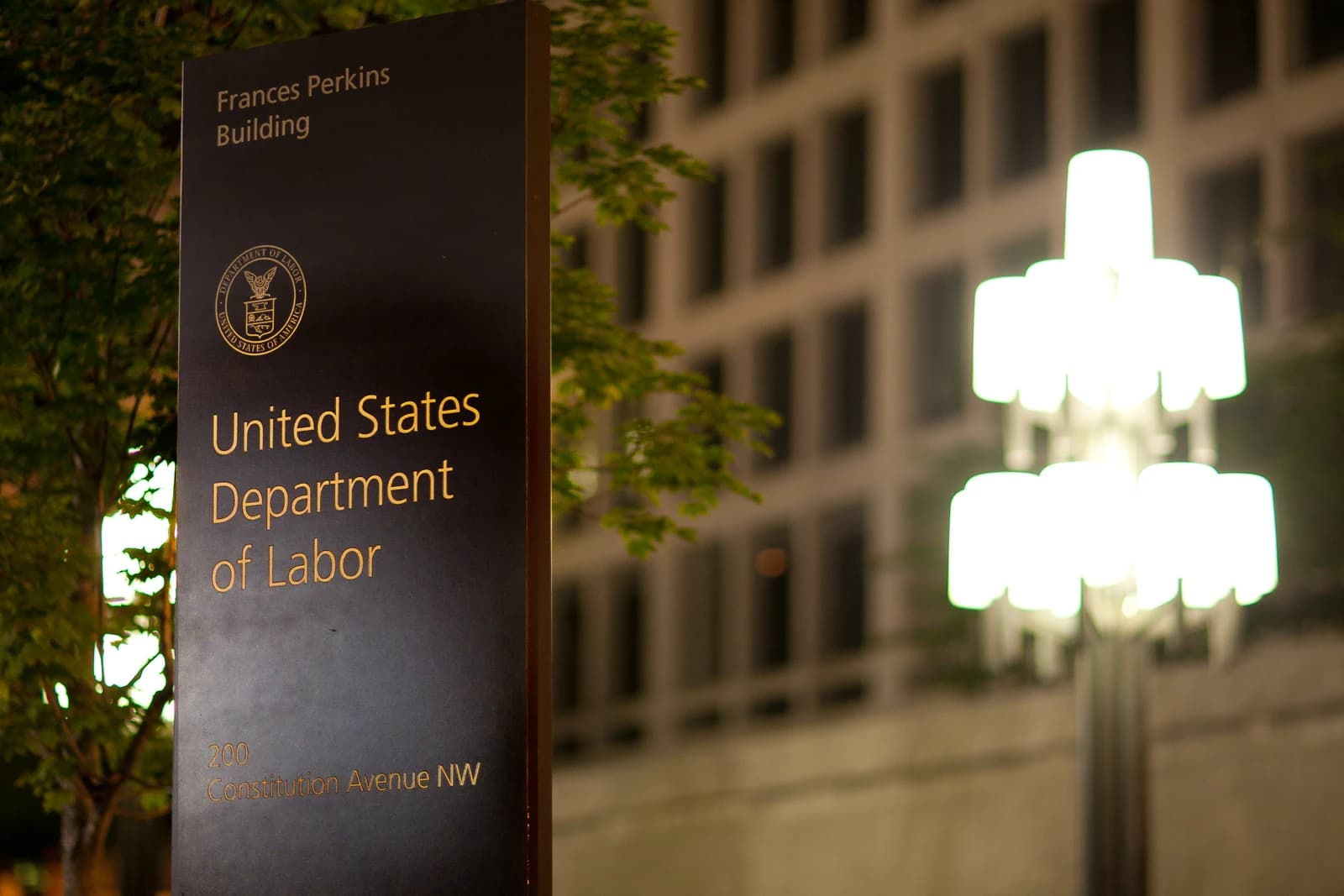
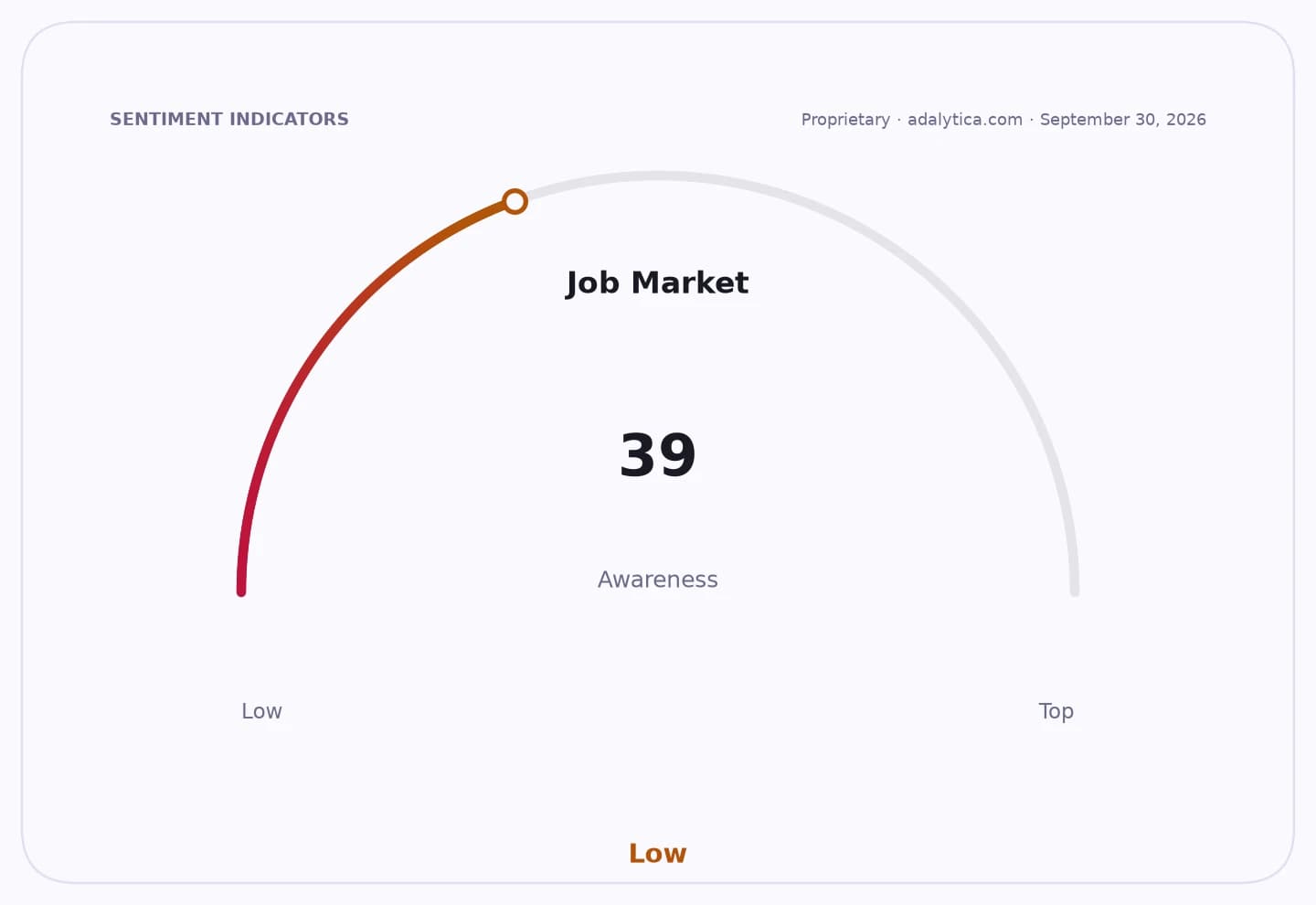
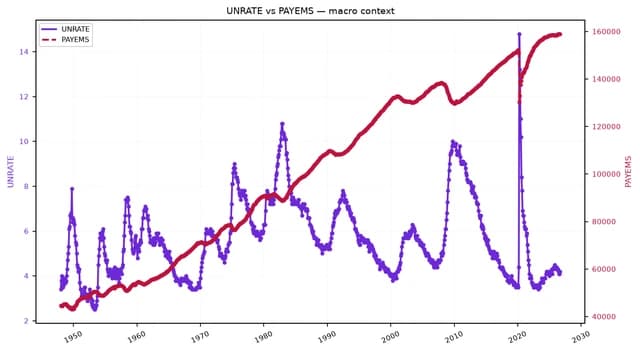
The unemployment rate rose to 4.2% in September from 4.1% in July and August, while the economy added only modestly to payrolls, underscoring that job creation is losing momentum even as the headline labor market still looks orderly. Forecasts now point to 4.09% unemployment in October, suggesting the deterioration has not yet reversed. For the Fed, that is the critical problem: rate cuts may be arriving too late to prevent a slower hire-and-fire environment from spreading across the economy.
Sentiment IndicatorsⓘProprietary · adalytica.com · October 16, 2026
This is a snapshot — live sentiment, awareness and momentum for 130+ markets update continuously in the dashboard.Open AlphaPulse
That matters because labor weakness is the transmission mechanism that turns a policy slowdown into a broader earnings slowdown. When payroll growth stalls, household income growth cools, spending moderates and credit quality usually follows. The market is already seeing the first signs of stress in cyclical lenders and consumer-sensitive names. Ally Financial has slid to $37.78 from above $45 in early July, while Capital One has fallen to $201.04 from a peak above $254 in January. Zions Bancorp, meanwhile, has pulled back to $63.23 after topping $72 in July. Those moves reflect not just rate expectations, but the possibility that weaker hiring will eventually hit delinquencies, loan growth and provisions.
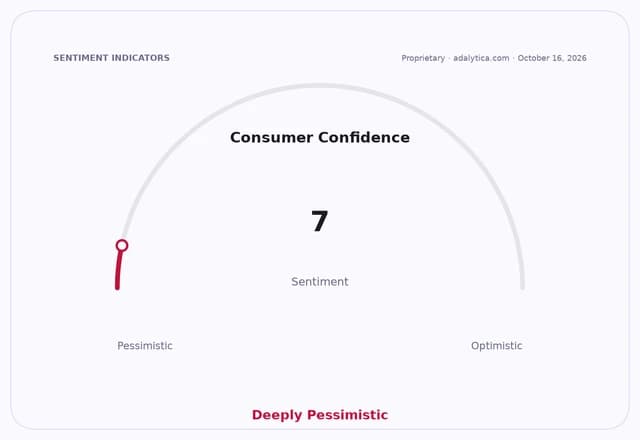
The irony is that easier policy is now being asked to fix damage already done. The labor data show payroll employment at 159.044 million in September, only marginally above August, hardly the kind of expansion that restores confidence in growth. At the same time, consumer confidence readings remain stuck in extreme fear, a sign that households are already acting defensively. That combination is usually favorable for Treasurys and defensive balance-sheet stories, and less friendly to banks, lenders and retailers that need steady income growth to support demand.
For investors, the setup argues for a barbell. I believe the market is underestimating how quickly weakening employment can shift leadership away from cyclical credit and back toward duration and quality. Treasury exposure, especially intermediate and long-duration bonds, becomes more attractive if the labor market continues to soften. Within financials, the winners are the better-capitalized lenders with less rate sensitivity and more diversified fee income; the losers are the consumer-credit names most exposed to job losses and rising stress in borrowers.
The next catalyst is whether the October jobs report confirms that the slowdown is broadening beyond isolated layoffs into a fuller labor-market downshift. If it does, the Fed will not just be cutting into softness — it will be racing to catch up with it. For portfolios, that is a signal to own duration, quality and defensive balance sheets now, before the next leg of job losses forces a sharper market repricing.
| Entity | Gains | Losses |
|---|---|---|
| Treasurys / TLT | ▲Higher duration demand | ▼Less appeal if growth reaccelerates |
| Quality lenders | ▲Lower funding pressure | ▼Slower loan growth |
| Ally Financial | ▲Niche auto-credit resilience if cuts help | ▼Job-loss exposure |
| Capital One / Zions | ▲Possible valuation rebound on easing | ▼Credit stress, weaker borrowers |