Lakshman Achuthan says the U.S. labor market is unlikely to suffer a sharp deterioration, even as weaker job creation continues to argue for caution from the Federal Reserve and investors.
U.S. labor market cools without sharp deterioration
The outlook matters because employment has been one of the biggest swing factors for recession risk, interest-rate expectations and equity valuations. A labor market that cools without breaking would give the Fed more room to ease gradually, but it would also keep pressure on growth-sensitive sectors if hiring stays soft.
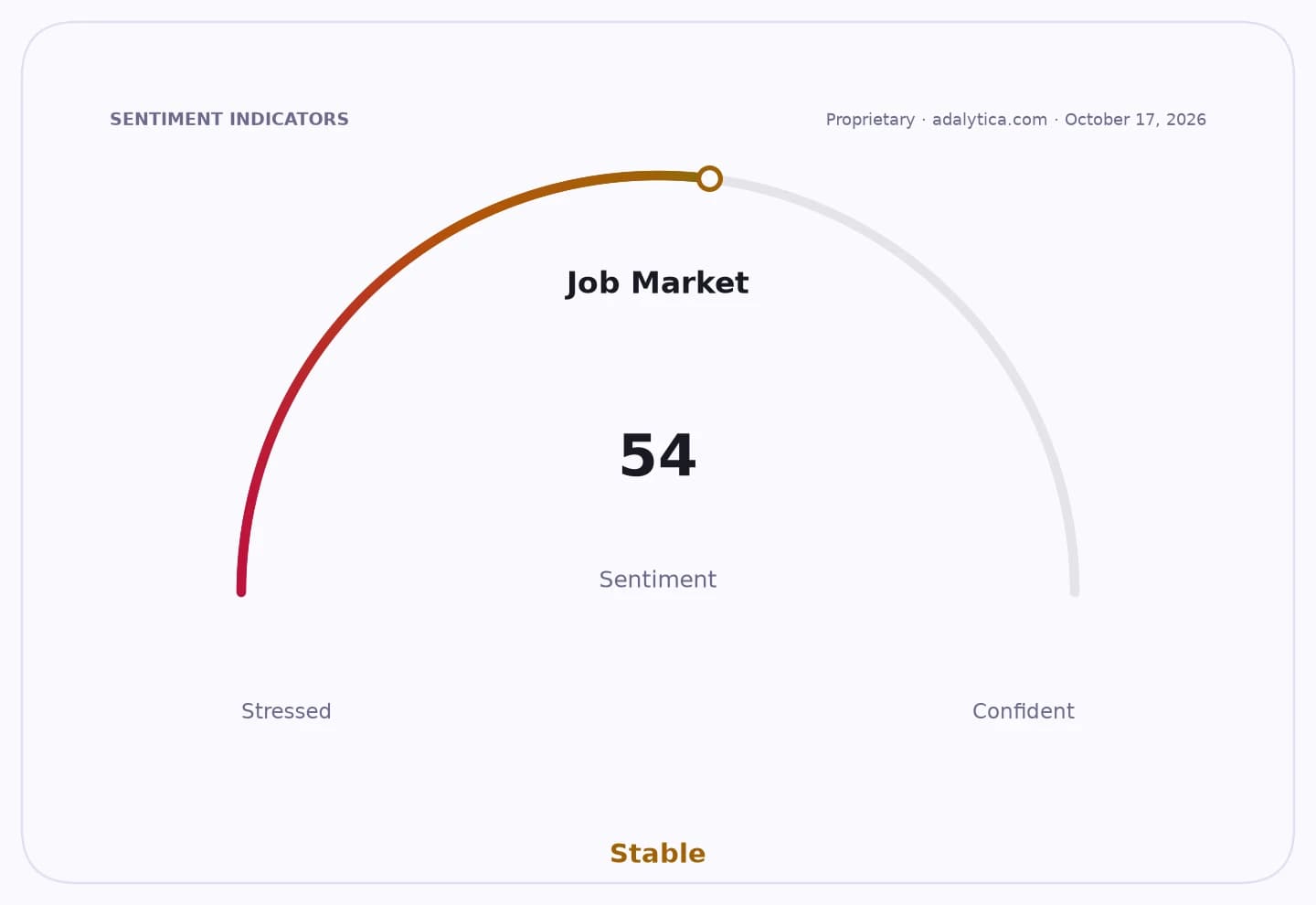
Sentiment IndicatorsⓘProprietary · adalytica.com · October 17, 2026
This is a snapshot — live sentiment, awareness and momentum for 130+ markets update continuously in the dashboard.Open AlphaPulse
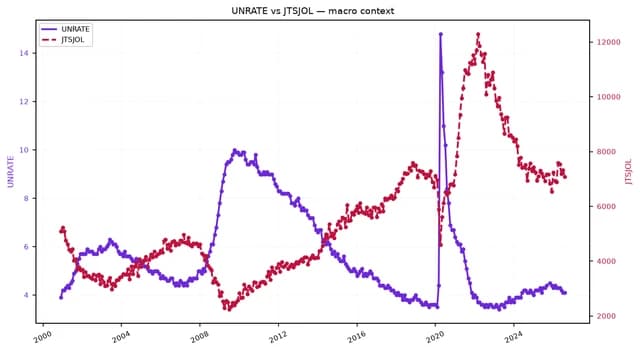
Achuthan, co-founder and chief operating officer of the Economic Cycle Research Institute, said the latest data do not point to an abrupt drop in employment. The unemployment rate was 4.2% in September, near levels that still suggest a historically resilient job market, while nonfarm payrolls were about 159.0 million and barely changed from August.
At the same time, job openings have been drifting lower. The Labor Department’s JOLTS data showed vacancies at 7.08 million in August, down from 7.34 million in July and well below the more than 12 million peak seen in 2022. That combination of steady unemployment and fewer openings fits a slower-hiring environment rather than an outright downturn.
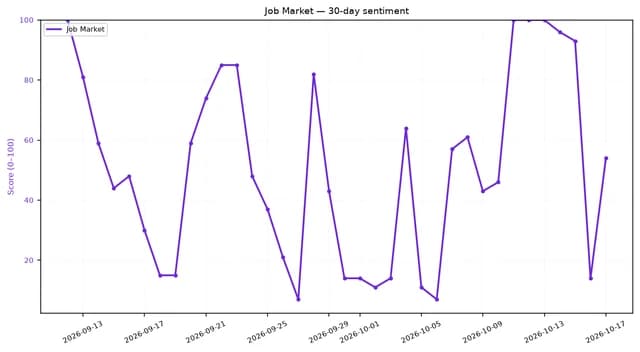
For markets, that is a mixed message. Investors who have been positioned for a rapid weakening in labor conditions may need to scale back recession bets, but the persistence of job-market softness still supports the case for rate cuts if inflation continues to cool. Adalytica’s job market sentiment gauge was at 54, or neutral, while its nonfarm payrolls sentiment reading was 99, indicating extreme greed around the payrolls outlook.
The broader narrative is one of labor-market normalization rather than collapse. Employers are hiring more cautiously, vacancies are easing and the pace of payroll growth has flattened, but the data do not yet show the kind of abrupt deterioration that would typically force the Fed into emergency mode.
The next test is whether upcoming employment and inflation reports confirm a soft landing or show that weaker hiring is starting to spill into layoffs and consumption.
| Entity | Gains | Losses |
|---|---|---|
| Fed | ▲More room for gradual easing | ▼Pressure to respond to soft growth |
| Workers | ▲Lower risk of mass layoffs | ▼Slower wage and job growth |
| Equities | ▲Less recession panic | ▼Less support from booming hiring |
| Rate-sensitive sectors | ▲Easier policy backdrop | ▼Weak demand if labor cools further |