Getting a job is getting harder for young people, even with a college degree, as New York’s youth unemployment rate climbs to 19% and the gap with older workers narrows sharply.
New York Youth Unemployment Rises to 19%
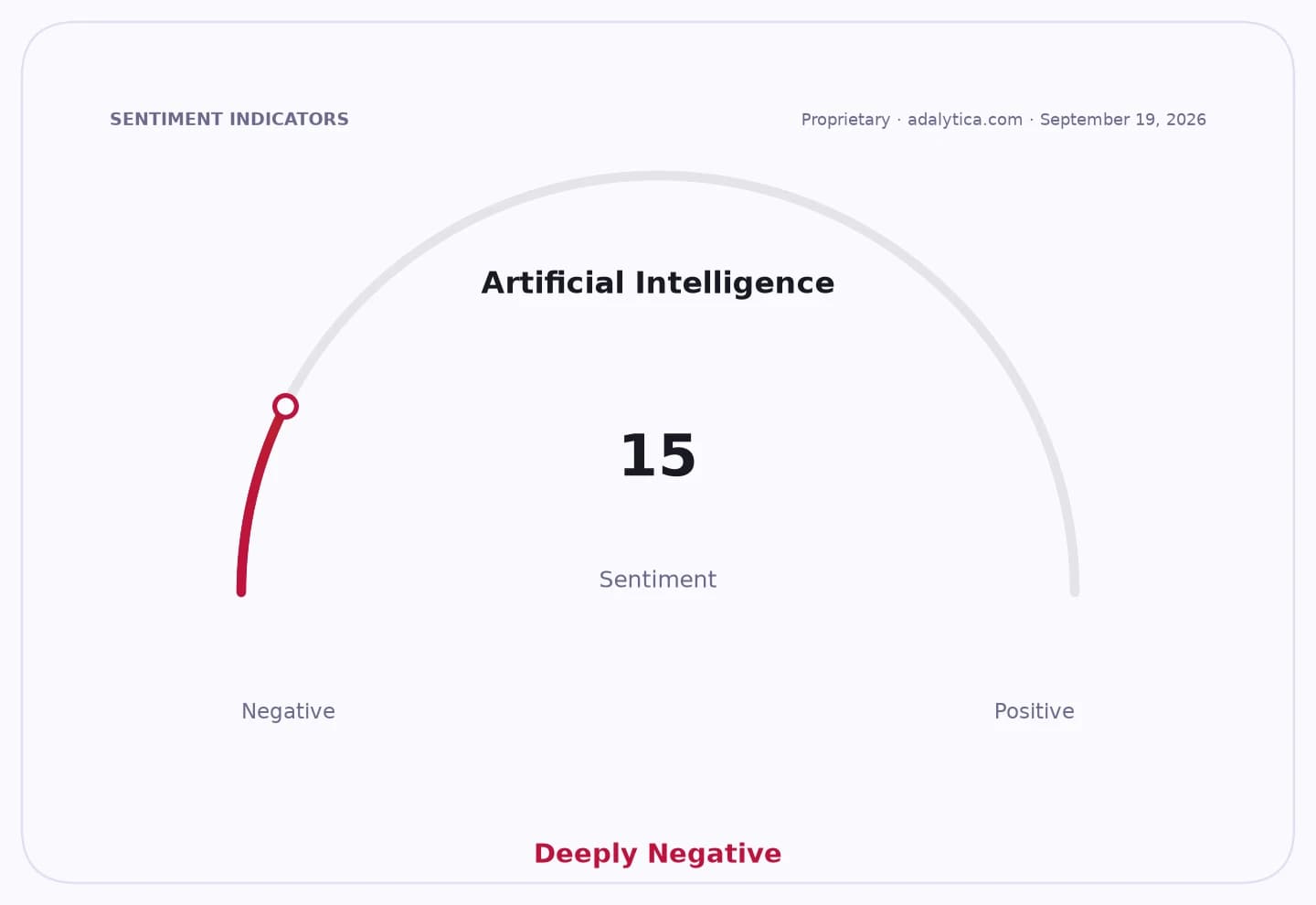
The shift matters economically because it points to a weaker pipeline into white-collar work at the same time artificial intelligence is taking on more routine office tasks. That can slow income growth for households just starting out, delay consumer spending, and leave employers with fewer junior workers to train into future managers and specialists.
Sentiment IndicatorsⓘProprietary · adalytica.com · October 19, 2026
This is a snapshot — live sentiment, awareness and momentum for 130+ markets update continuously in the dashboard.Open AlphaPulse
The squeeze is showing up in the data and in market signals. Urban youth unemployment has risen to 19% in September and 26.6% among young women, while the gap between degree holders and non-degree holders has narrowed, suggesting a college diploma is no longer a reliable shield against a soft labor market. Nationally, the labor backdrop is still steady — U.S. payrolls are at 159.044 million and the unemployment rate is forecast at 4.09% for October — but openings have cooled, with job vacancies at 7,079 in August, down from 11,520 at the end of 2021.
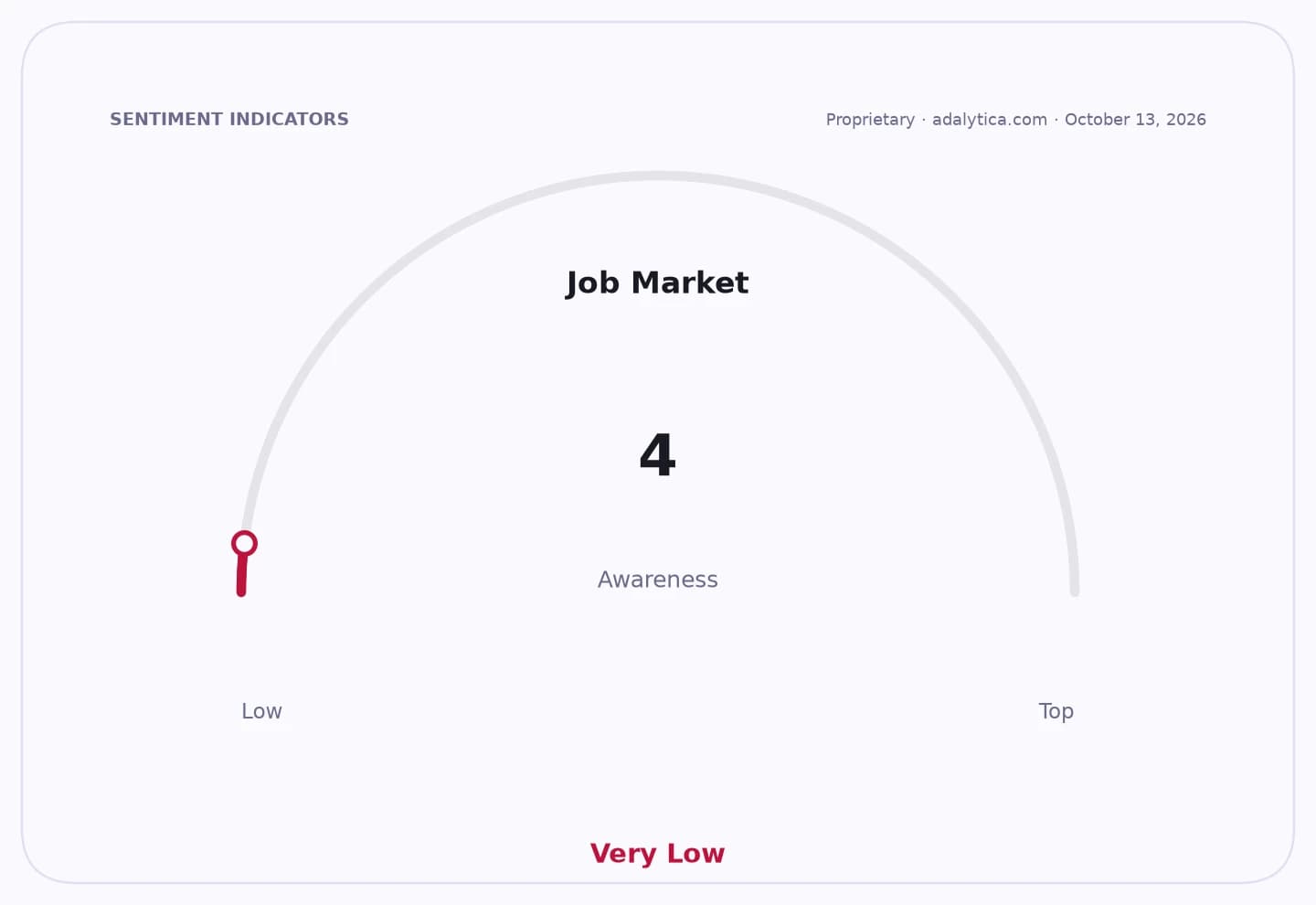
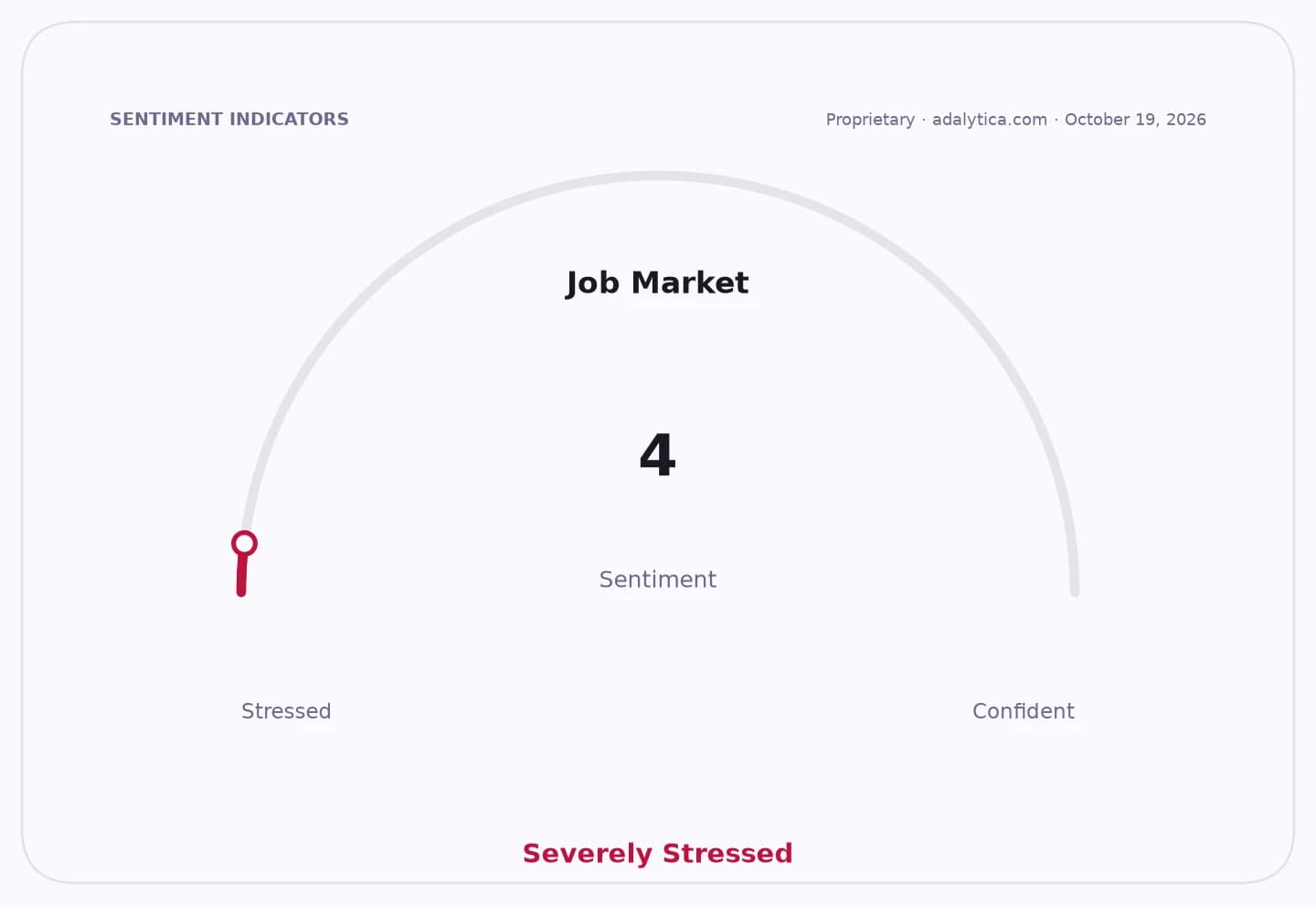
That matters for investors because a weaker entry-level jobs market can change spending patterns, pressure firms that rely on young consumers, and reinforce the case for more automation across corporate America. It also helps explain why labor-market sentiment in Adalytica’s Job Market Sentiment gauge has plunged to 4, an “Extreme Fear” reading, even as consumer confidence sentiment sits at 93, reflecting a split between households that still feel resilient and workers who increasingly do not.
The equity market is already treating the labor slowdown as part of a broader growth scare. The Russell 2000 ETF IWM has fallen to 270.44 from a recent high near 290.56, while the Nasdaq-100 tracking ETF QQQ has slipped to 709.8 from 728.95 in the last two sessions, with both trading below their 50-day moving averages and near weakened RSI readings. The S&P 500 ETF SPY is holding up better at 763.25, but its recent pullback from 771.79 underscores how sensitive the market is to any sign that hiring is cooling outside the largest companies.
For employers, the story is more complicated. Big tech and software groups including Microsoft and Salesforce still say competition for skilled workers remains intense, especially for AI talent, but fewer entry-level openings mean the labor market may be bifurcating between scarce high-end roles and shrinking starter jobs. That raises the risk of a longer-lasting skills gap if young workers struggle to get the first rung on the career ladder.
Governments are trying to respond with youth hubs and other support programs, but those measures will take time to filter through. The next test is whether the labor market can stabilize without a deeper slowdown in hiring, and whether AI-driven productivity gains start to offset the loss of first-job opportunities rather than amplify it.
| Entity | Gains | Losses |
|---|---|---|
| Employers using AI | ▲lower hiring costs | ▼junior talent pipeline |
| Young job seekers | ▲policy support programs | ▼entry-level openings |
| Large-cap tech | ▲productivity gains | ▼labor-market backlash |
| Small-cap stocks | ▲easier wage pressure | ▼growth slowdown fears |