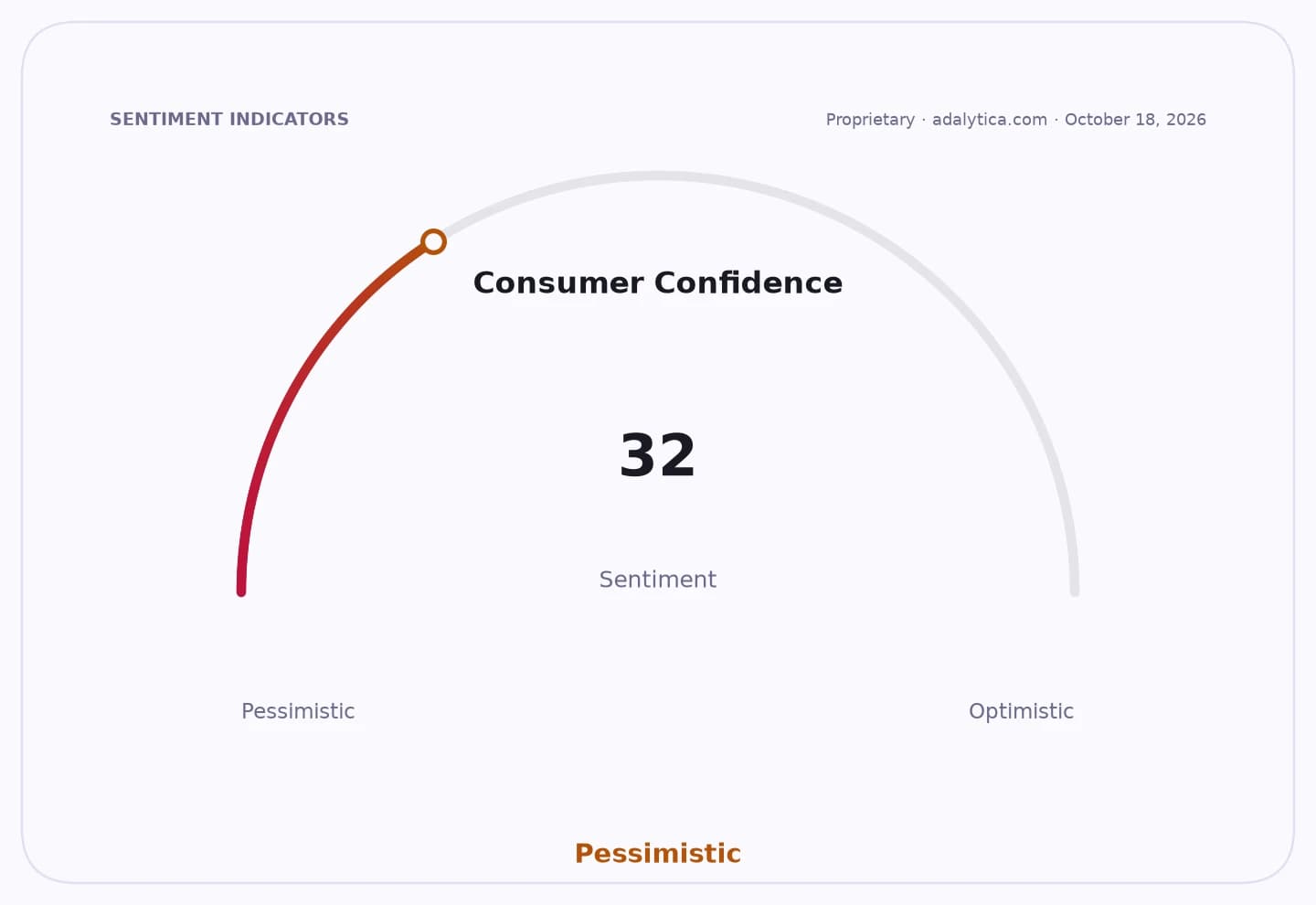
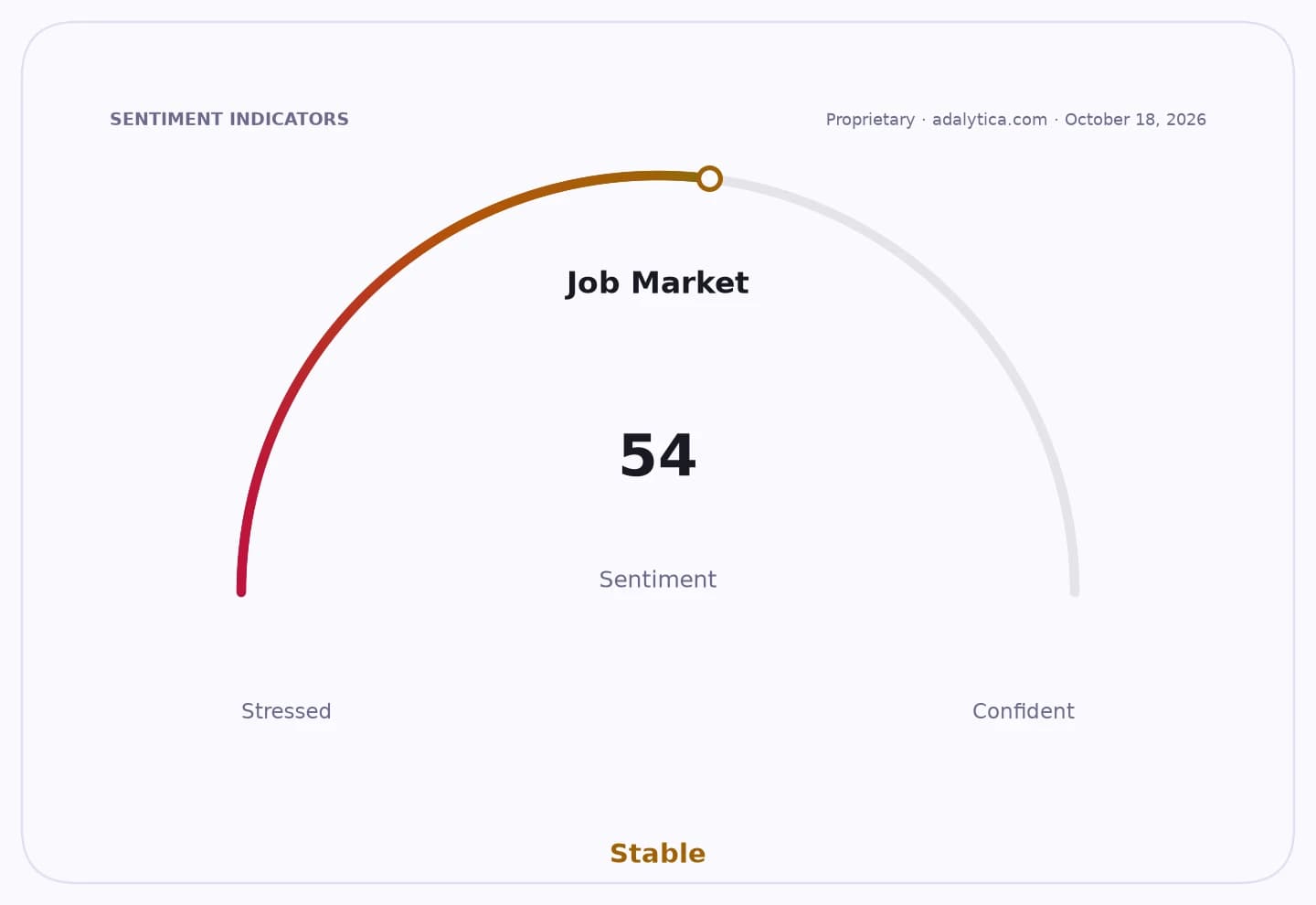
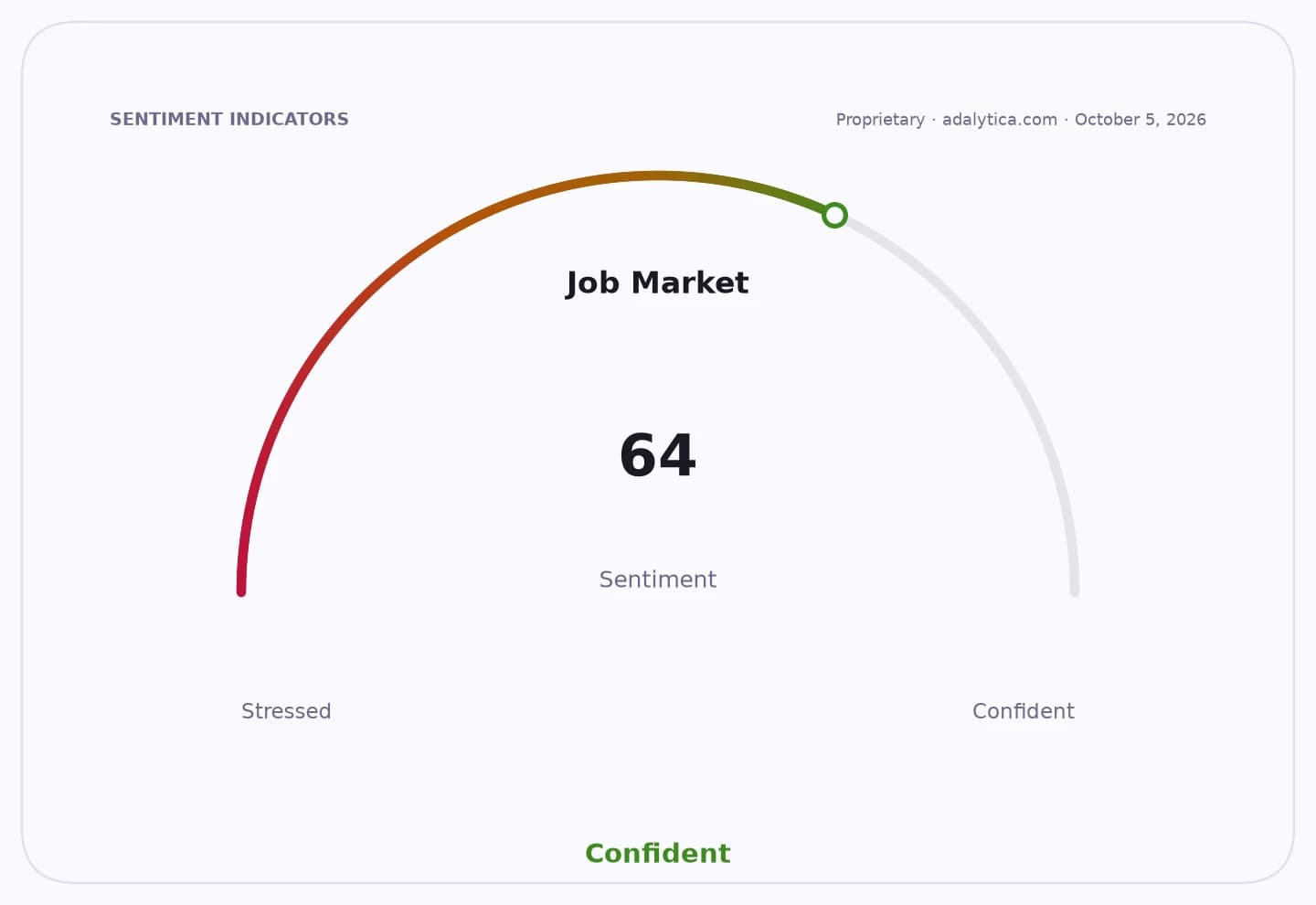
Chile’s labor market is showing a deeper structural problem: more people are looking for work, but not enough jobs are being created to absorb them. That gap matters because it weighs on wage growth, household spending and the broader pace of the economy even as the country’s participation rate reaches 71.2%.
Chile labor market shows weak job creation
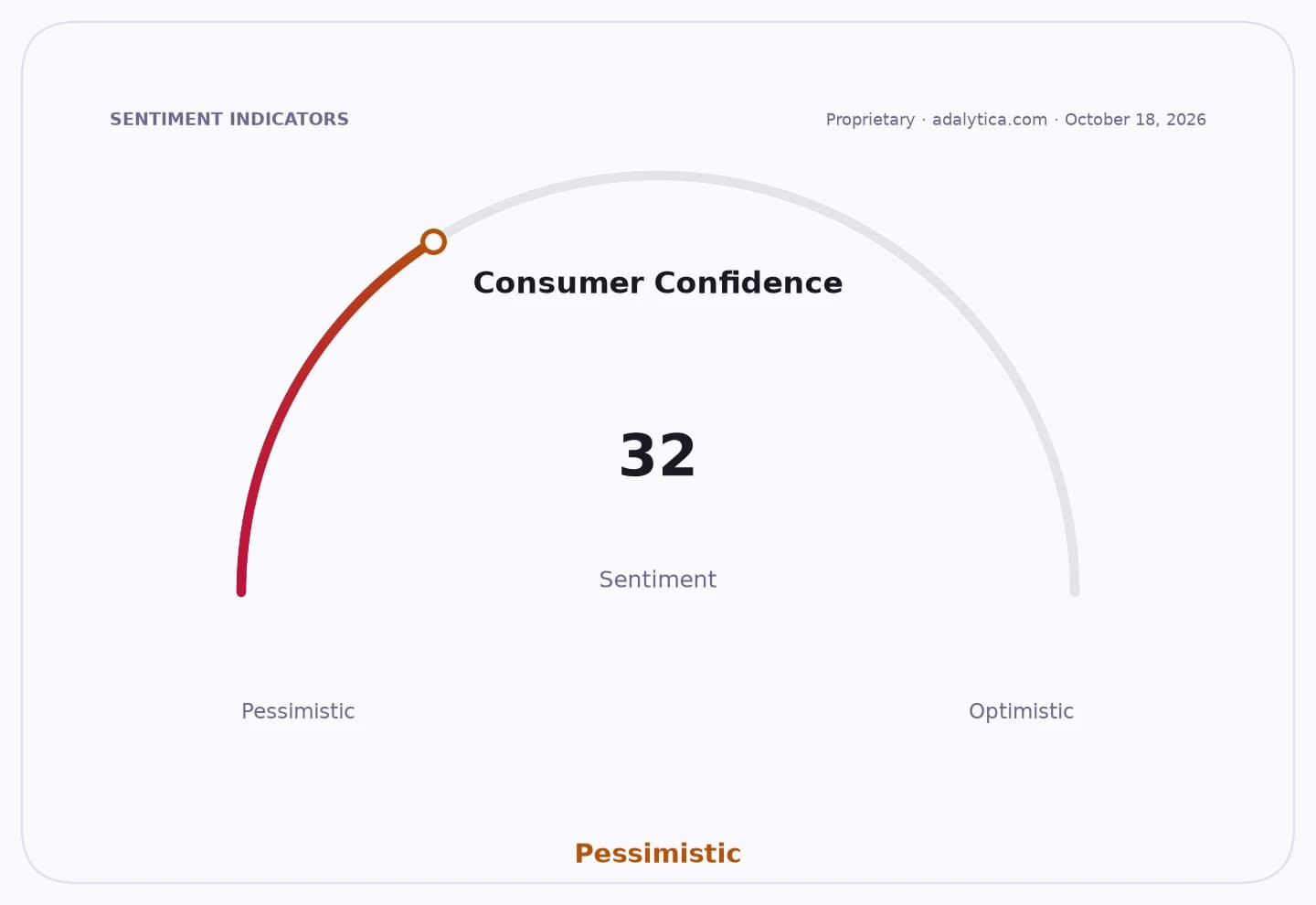
The story behind the data is not a cyclical collapse but a mismatch between labor supply and demand. Chile has one of the lowest employment rates in the OECD despite a relatively high participation rate, suggesting that the economy is failing to convert labor force engagement into actual payroll growth. For policymakers, that points to frictions in hiring, weak job creation in formal sectors and persistent barriers that keep unemployment elevated even when workers are available.
Sentiment IndicatorsⓘProprietary · adalytica.com · October 18, 2026
This is a snapshot — live sentiment, awareness and momentum for 130+ markets update continuously in the dashboard.Open AlphaPulse
The contrast with Libya and Spain underscores that labor outcomes are being driven by different forces across economies. Libya’s worsening unemployment reflects a more severe structural breakdown despite oil wealth, while Spain’s lower labor costs have helped industry weather economic stress better than many European peers. In Chile, by contrast, the challenge is less about extreme macro instability than about productivity, sectoral composition and labor-market institutions that have not generated enough durable employment.
Investors should care because weak employment tends to show up first in domestic demand. Slower job creation can restrain consumption, delay capex decisions tied to internal demand and keep pressure on the central bank to balance inflation against a softer growth backdrop. It also complicates the outlook for retailers, banks and consumer-facing companies that depend on payroll expansion and wage momentum.
The broader narrative is that labor force participation alone is no longer a sufficient sign of health. Chile can post a 71.2% participation rate and still struggle with one of the OECD’s weakest employment outcomes, a warning that the quality and availability of jobs matter more than headline labor force engagement. Unless reforms improve the conversion of workers into employment, unemployment risks staying stubbornly high and the economy risks underperforming its potential.
For markets, the key question is whether policymakers can unlock more hiring through reforms that reduce structural bottlenecks, or whether the labor market continues to deteriorate in a low-growth, low-employment equilibrium.
| Entity | Gains | Losses |
|---|---|---|
| Job seekers in Chile | ▲higher participation | ▼weak hiring |
| Retailers and consumer firms | ▲little immediate benefit | ▼softer household demand |
| Policymakers | ▲reform urgency | ▼credibility if joblessness persists |
| Employers with lower labor costs | ▲relative resilience | ▼pressure to expand payrolls |