Puebla added more than 6,700 formal jobs through September, but the state’s labor market remains dominated by informality, with more than 70% of workers still outside the formal system and lacking benefits, social security and stable pay.
Puebla Adds 6,700 Formal Jobs Through September
The mismatch matters because formal hiring is the clearest channel for stronger household income, tax collection and consumer spending. Even after the latest gains, officials say only about 600,000 workers are registered with the Mexican Social Security Institute, underscoring how little of Puebla’s employment base is captured by the formal economy.
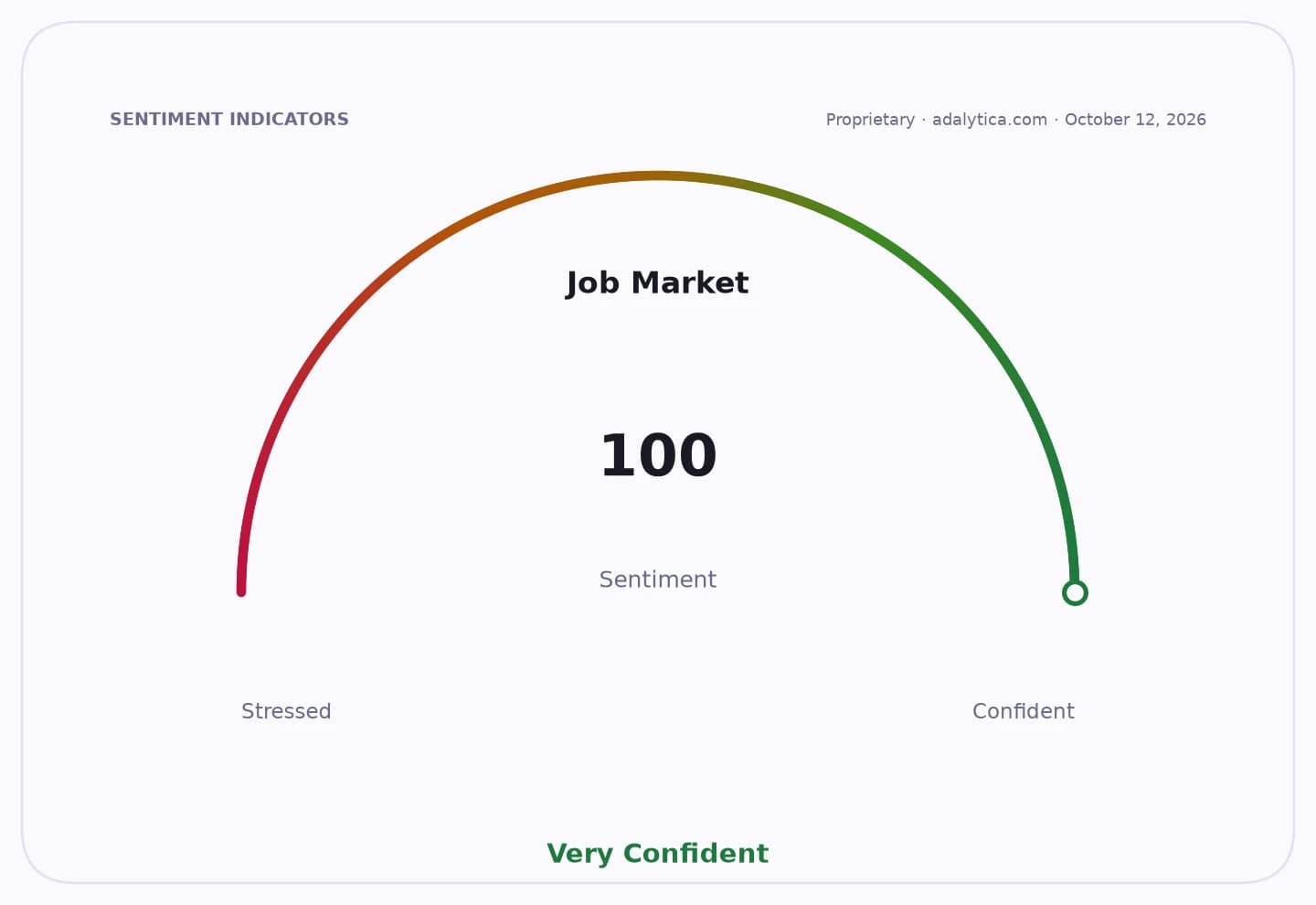
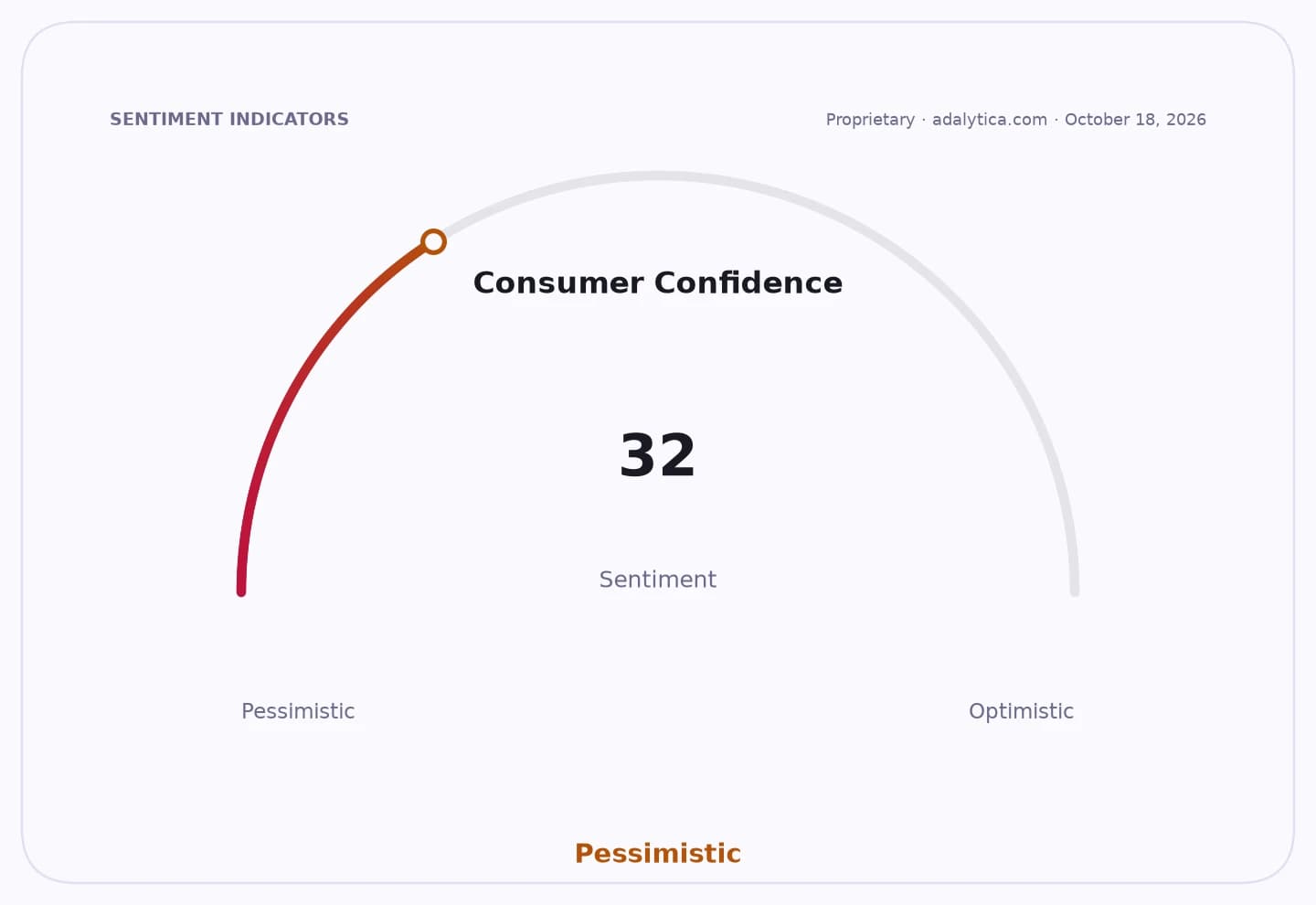
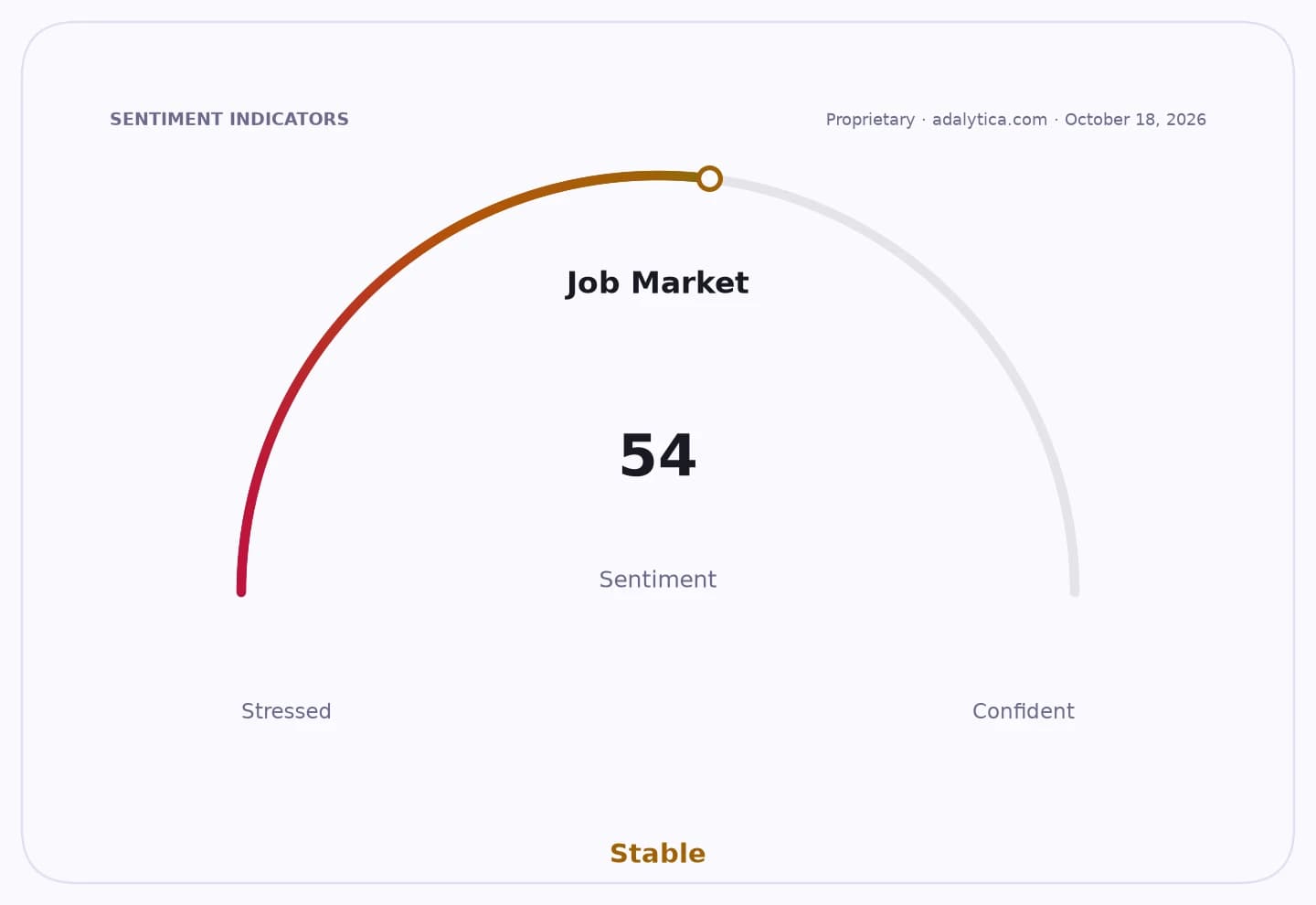
Sentiment IndicatorsⓘProprietary · adalytica.com · October 18, 2026
This is a snapshot — live sentiment, awareness and momentum for 130+ markets update continuously in the dashboard.Open AlphaPulse
September brought 3,134 jobs with social security, according to state records, offering some progress after months of weak job creation. But the numbers also show the pace is not yet strong enough to materially shrink informality, which remains one of the state’s biggest structural economic problems.
For investors and business owners, the labor mix points to a market where demand can be uneven and wage pressures remain contained. A workforce concentrated in informal commerce, restaurants and tourism-sensitive activities tends to spend less consistently, earn less predictably and churn more often, making it harder for companies to build stable staffing models or for smaller firms to expand with benefits.
State officials are leaning on training and entrepreneurship programs through the local labor and skills agency Icatep to push more workers into productive activity. But the strategy has limits: small businesses often cannot afford formal payrolls, while many self-employed workers remain outside social security even when they are economically active.
Economist Marcos Gutiérrez Barrón of UPAEP said low incomes are encouraging some young professionals to choose informal work, including app-based driving, when the pay can match formal jobs without the burden of fixed schedules. In sectors such as retail, restaurants and hotels, he said, weaker tourist traffic can quickly cut earnings and drive turnover as businesses rely more on tips than base wages.
The broader risk for Puebla is that job growth continues without enough formalization to lift productivity or household purchasing power. Unless hiring accelerates and more firms can sustain benefits-covered payrolls, the state’s economy may keep expanding through low-quality employment rather than durable, insured jobs.
| Entity | Gains | Losses |
|---|---|---|
| Formal workers in Puebla | ▲Social security, benefits | ▼Slower job creation |
| Informal workers | ▲Flexible entry into work | ▼No benefits, unstable income |
| State government | ▲Job growth optics | ▼Persistent informality gap |
| Small businesses | ▲Lower labor costs | ▼Harder to retain staff |