Foreign workers have become a structural pillar of Spain’s labor market, and the latest record underscores why investors should care: the country’s growth, tax base and service economy are increasingly being powered by overseas labor just as domestic demographic constraints tighten.
Spain Foreign Workers Reach Record 3.63 Million

Spain added 84,220 foreign affiliates in September, lifting the total to a record 3.63 million, the latest data from the labor ministry showed. That means foreigners now account for 16.2% of all Social Security contributors, up from a much smaller share before the pandemic. Over the past 12 months, foreign payrolls rose by 547,637, or 18%, and since the 2022 post-pandemic recovery the gain has exceeded 1.2 million.
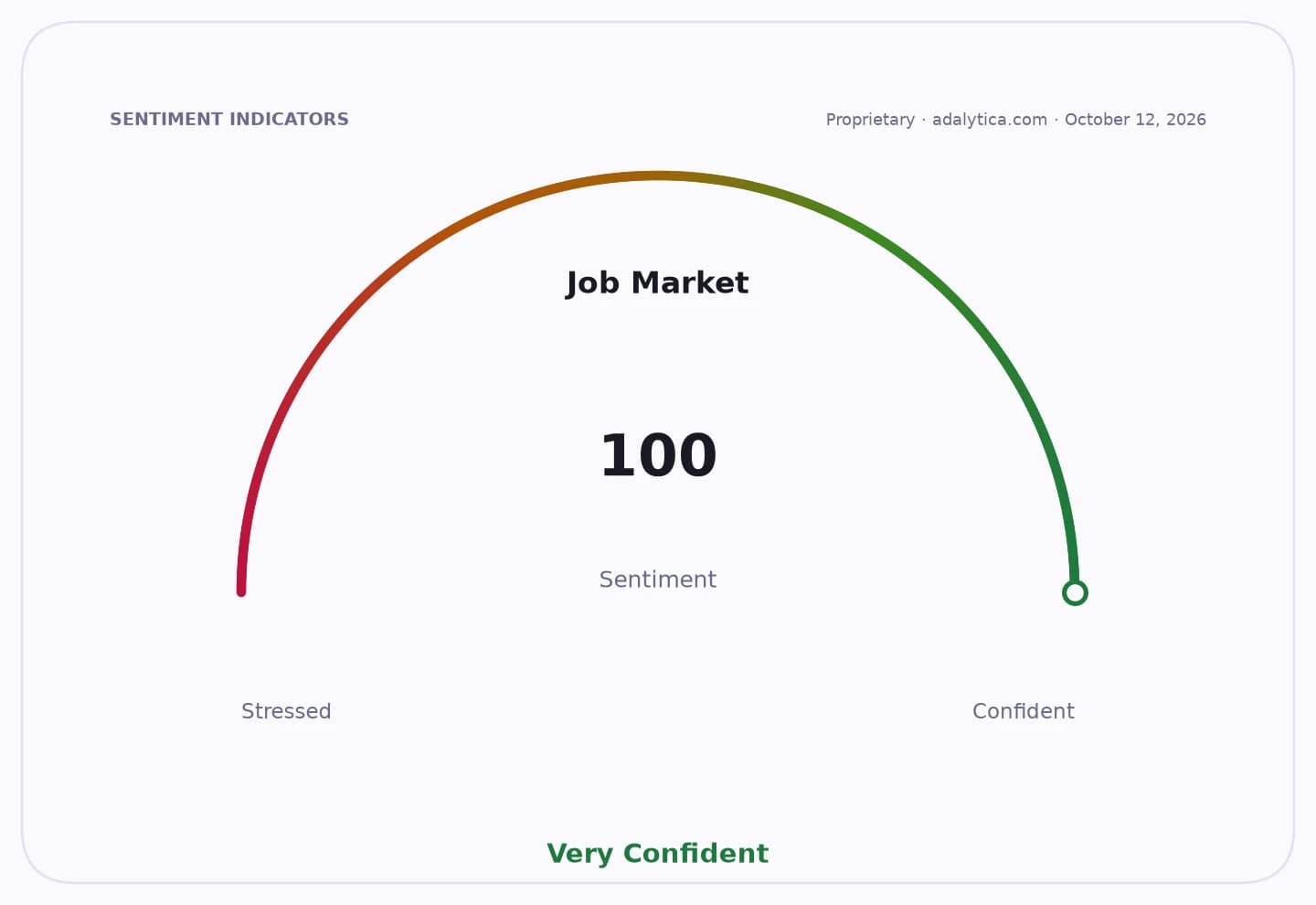
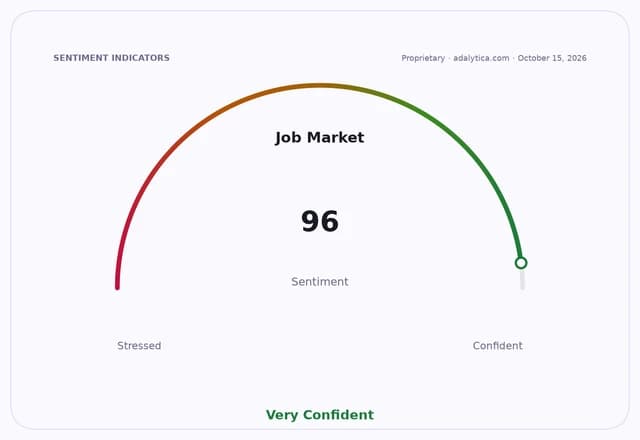
Sentiment IndicatorsⓘProprietary · adalytica.com · October 15, 2026
This is a snapshot — live sentiment, awareness and momentum for 130+ markets update continuously in the dashboard.Open AlphaPulse
The key economic point is that Spain is not just filling vacancies; it is expanding the effective size of its workforce. More than half of the jobs created since the labor reform came into force have gone to foreign workers, according to the ministry. That matters for a country where unemployment has long been structurally high and where labor supply, not demand alone, has become the binding constraint on growth. A bigger workforce supports output, consumer spending and government revenues, while helping offset the drag from an aging population and persistent skills shortages.
The distribution of foreign labor also reveals where the Spanish economy is most dependent on migrant workers. Foreigners make up 33.7% of employment in hospitality, 30.7% in agriculture, 27.9% in construction, 20.4% in administrative services and 18.8% in transport. Those are the sectors that keep Spain’s tourism machine, food supply chain, housing activity and logistics network running. In other words, migrant labor is no longer peripheral — it is the operating system for some of Spain’s most important industries.
That has investable implications. Hotels, restaurants, builders, logistics operators and agricultural exporters all benefit when labor supply is available and churn is reduced. So do Spanish consumer and infrastructure names that depend on a steady flow of workers to sustain volumes and project execution. The broader macro effect is equally important: stronger employment means more household income, more consumption and a more resilient fiscal position, even if it also increases pressure on housing, public services and wage negotiations in lower-paid sectors.
The nationality breakdown shows the momentum is broadening rather than relying on one origin country. Morocco remains the largest source of foreign contributors at 425,064, followed by Colombia at 387,371, Romania at 338,810 and Venezuela at 250,468. Colombians posted the fastest growth, jumping 53.1% year on year to 134,332 more affiliates, while Venezuelans rose 20.9%.
For investors, the message is simple: Spain’s labor market is being remade by migration at a pace the market may be underestimating. That is a tailwind for nominal growth and a support for domestic demand, but it also deepens exposure to policy on regularization, housing, wages and integration. The winners are sectors that need bodies; the losers are those betting on labor scarcity to persist.
| Entity | Gains | Losses |
|---|---|---|
| Spain employers | ▲Easier hiring, faster growth | ▼Wage pressure in tight markets |
| Hospitality, construction, agriculture | ▲More labor supply | ▼Less pricing power on wages |
| Migrant workers | ▲Access to formal jobs | ▼Exposure to policy shifts |
| Labor-scarce domestic workers | ▲Higher bargaining power | ▼More competition for entry-level roles |