Tyumen region’s labor market remains tight, with more than 27,800 people finding jobs since the start of the year even as employers still list nearly 19,600 vacancies, underscoring continued demand for workers in one of Russia’s more resilient regional economies.
Tyumen Region Labor Market Stays Tight
The figures point to a market that is absorbing labor rather than shedding it. By Oct. 1, the number of registered unemployed stood at 2,600, or 0.34% of the workforce, while more than 39,200 residents had sought help from employment centers. For employers, the imbalance between hires and open positions suggests that labor scarcity, not weak demand, remains the key constraint.
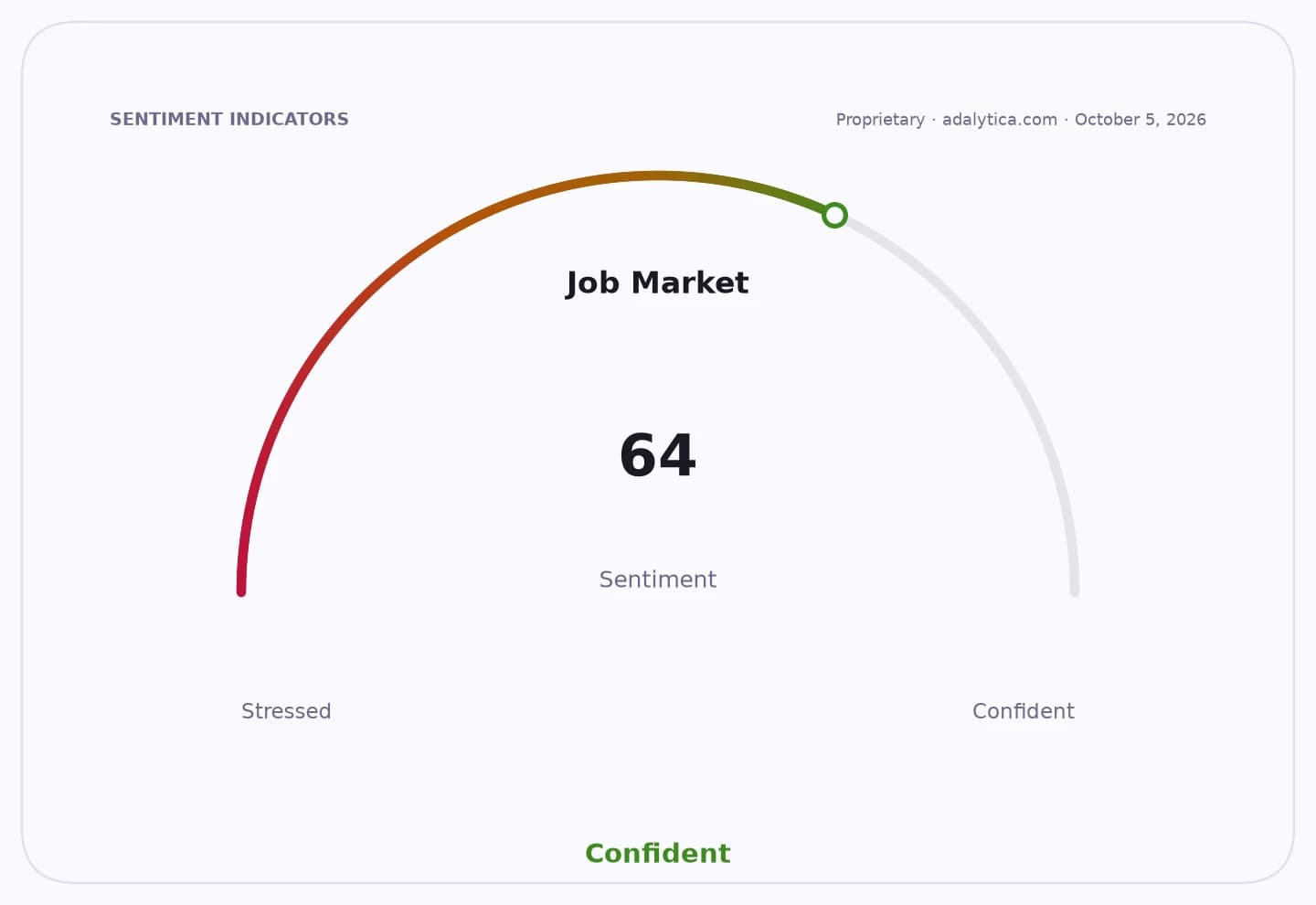
Sentiment IndicatorsⓘProprietary · adalytica.com · October 5, 2026
This is a snapshot — live sentiment, awareness and momentum for 130+ markets update continuously in the dashboard.Open AlphaPulse
That matters economically because a low jobless rate supports household incomes, consumer spending and local tax receipts, while also signaling that regional businesses are still operating at a level that requires continued recruitment. In practical terms, the data suggest Tyumen is not facing the kind of broad-based labor retrenchment seen in weaker economies; instead, the issue is matching workers to available jobs, likely across industries where skills, geography and wages do not align neatly.
For investors, the report is a read on the health of a major oil-and-industrial region whose labor market can be a proxy for activity in upstream energy, construction and services. A sustained hiring pace can support demand for housing, retail and transport, but it can also keep wage pressure elevated for employers already navigating cost inflation and tight staffing. The large number of vacancies indicates firms may need to raise pay, improve conditions or invest in training to secure workers.
The broader narrative is one of resilience rather than acceleration: Tyumen’s employment gains and ultra-low unemployment suggest the region is still expanding, but the size of the vacancy pool shows the labor market is tight enough to cap how quickly that expansion can be converted into output. The next test will be whether employers can fill open roles without bidding up labor costs, or whether persistent shortages start to restrain growth.
| Entity | Gains | Losses |
|---|---|---|
| Job seekers in Tyumen | ▲More hiring opportunities | ▼Limited bargaining power |
| Employers in Tyumen | ▲Access to a still-active labor pool | ▼Ongoing labor shortages |
| Local economy | ▲Higher incomes and consumption | ▼Margin pressure from wage competition |
| Workers in rival regions | ▲Potential spillover demand | ▼Fewer local labor shortages to ease pressure |