Chile’s consumers are still feeling the squeeze, and that matters because household confidence is one of the first places an economy shows strain before it hits spending, retail sales and growth. In the latest Data Influye survey, 45% of respondents said their current financial situation was bad or very bad, while only 13% called it good or very good.
Chile consumer confidence stays weak in Data Influye survey

That gap tells investors more than a mood check. It points to a public that still sees little relief from the cost of living, even if the situation has stopped deteriorating as quickly as it did earlier in the year. The share describing their finances as good or very good rose only modestly from 10% in August, while the “bad or very bad” reading eased just one point from 46%. In other words, sentiment remains deeply negative, with improvement too small to suggest a real turn in household demand.
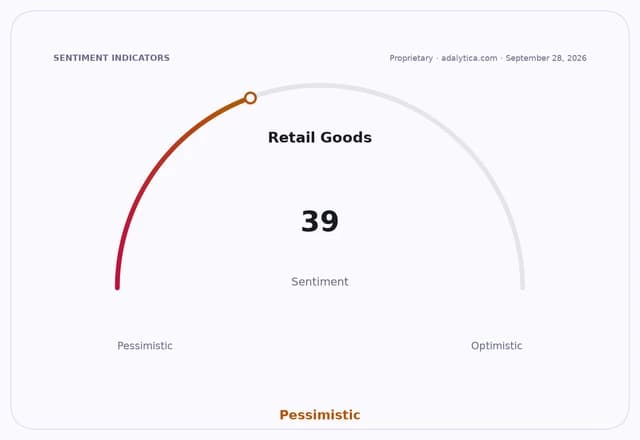
Sentiment IndicatorsⓘProprietary · adalytica.com · September 28, 2026
This is a snapshot — live sentiment, awareness and momentum for 130+ markets update continuously in the dashboard.Open AlphaPulse
The broader economic outlook is just as subdued. Nearly seven in 10 respondents expect Chile’s economy to take more than two years to recover, unchanged from August, and 43% think the economy will weaken during 2026. Another 36% see stagnation, leaving just 21% expecting growth. That is a classic recipe for caution: when households assume recovery is distant, they delay big purchases, protect savings and spend more selectively.
For investors, that has direct implications for retailers, lenders, consumer discretionary names and any company dependent on Chilean domestic demand. Weak confidence can keep a lid on pricing power and volume growth, even when inflation is no longer the dominant shock. It also helps explain why consumer-facing businesses often lag in periods when macro data looks stable but sentiment does not.
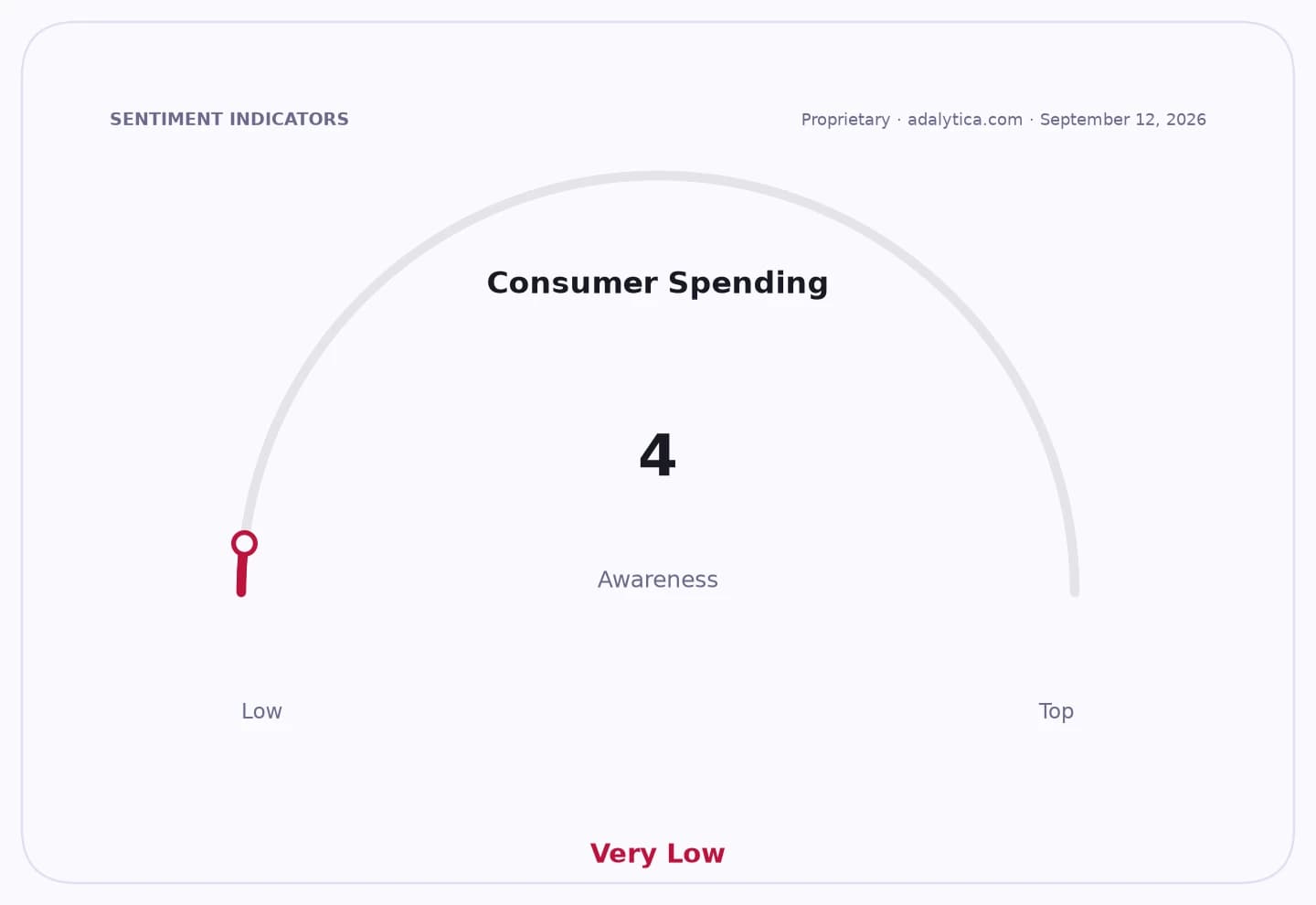
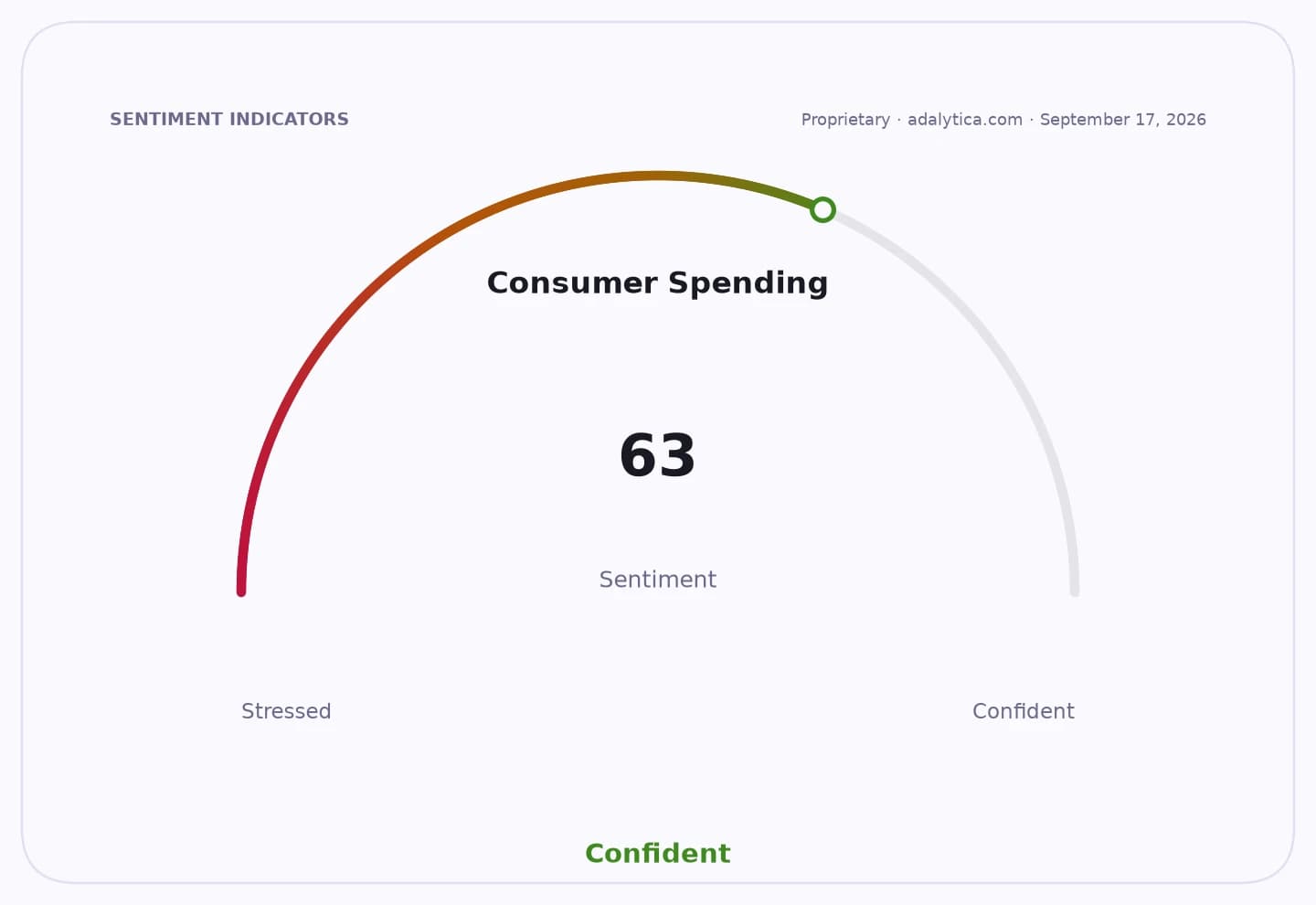
Consumer Spending — 30-day sentimentadalytica.com
Explore this data interactively — full history, time series and cross-market comparisons.Open AlphaPulse

The good news is that the underlying labor backdrop is not collapsing. The same data context points to a 4.1% unemployment rate in August, with a forecast near 4.0% for September, and inflation appears far lower than in the recent past. That combination suggests Chile is not facing a classic crisis-level downturn. But it also shows why sentiment can stay depressed: households may have jobs, yet still feel poorer after years of higher prices and slower growth.
That is the story investors should keep in mind. Chile does not need a recession for consumer stocks to struggle; it only needs a prolonged confidence slump. If wages, inflation and credit conditions keep moving in the right direction, sentiment can heal gradually. Until then, the safest approach for long-term investors is to stay selective, favor companies with pricing power and resilient cash flow, and treat a weak consumer backdrop as a reason to be patient rather than panicked.
| Entity | Gains | Losses |
|---|---|---|
| Chilean households | ▲lower inflation pressure | ▼weak confidence |
| Consumer staples | ▲defensive demand | ▼muted volume growth |
| Retailers and lenders | ▲eventual recovery upside | ▼slower discretionary spending |