More than eight in 10 Romanians expect prices to rise again over the next six months, underscoring how deeply inflation has embedded itself in consumer behavior and why household demand may stay fragile even as the economy heads into a weak finish to the year.
Romania inflation expectations rise to 86.1%

The share of respondents expecting new price increases climbed to 86.1% in September from 84.5% in June, according to the second edition of the New Money Economic Sentiment Index compiled by INSCOP Research. Just 7.9% expect prices to hold steady, while 4.3% see a decline, suggesting little sign of relief in public expectations after a stretch of elevated inflation.
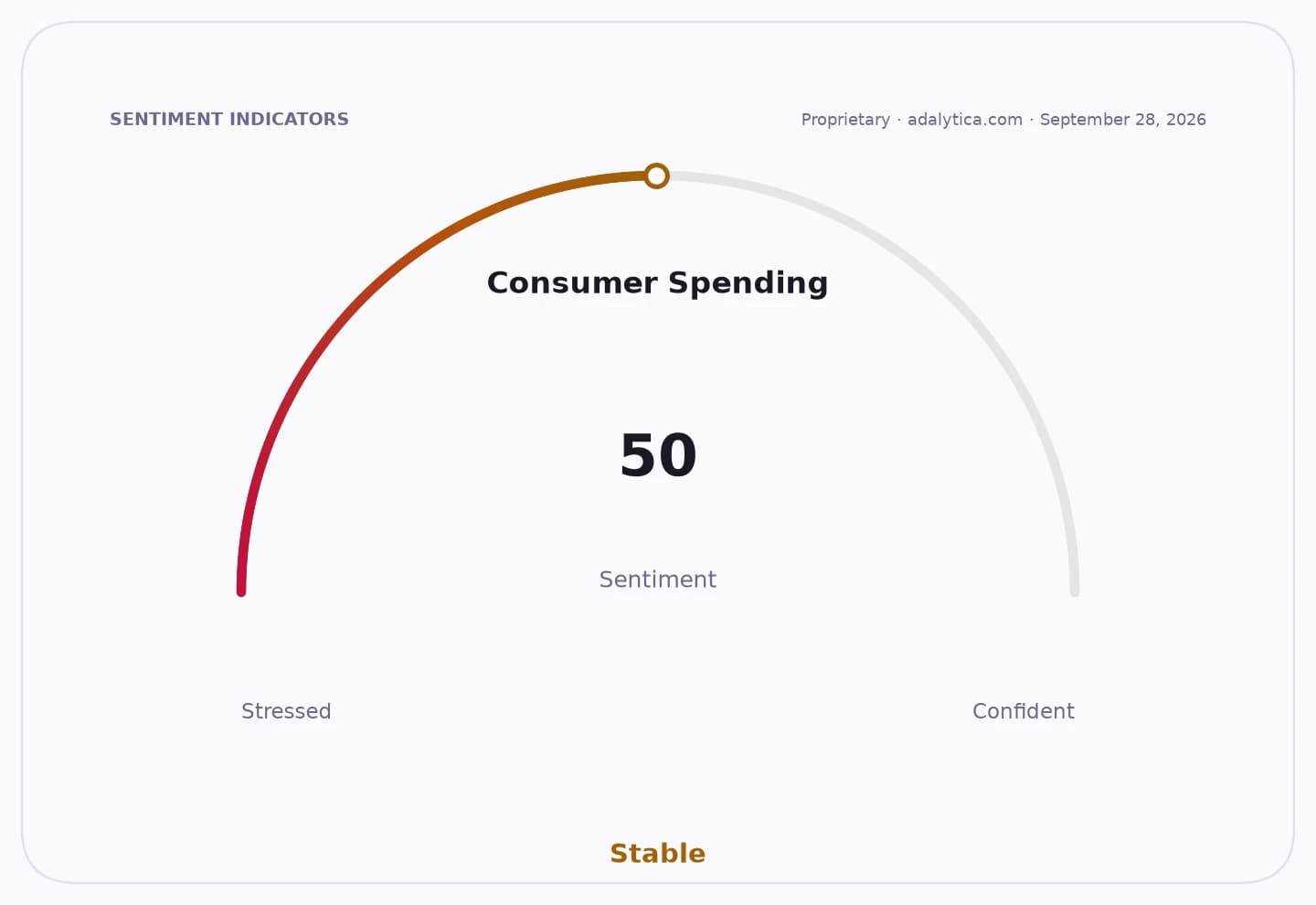
Sentiment IndicatorsⓘProprietary · adalytica.com · September 26, 2026
This is a snapshot — live sentiment, awareness and momentum for 130+ markets update continuously in the dashboard.Open AlphaPulse
That matters because inflation expectations can shape spending, saving and wage demands, feeding into the real economy even before official price data move. When consumers assume groceries, utilities and services will cost more in coming months, they often pull forward purchases, cut discretionary spending or press for higher pay, all of which can keep price pressure sticky.
Romania remains one of the European Union’s most inflation-prone economies, with August consumer prices running at 6.3%, far above the bloc average. The European Bank for Reconstruction and Development has already warned that Romania’s economy is set to contract in 2026 before recovering in 2027, citing persistent inflation and weaker purchasing power as key drags.
INSCOP said the September survey shows less a change in mood than a “normalization of economic uncertainty,” with households adapting to the idea that hardship will persist. That is a warning sign for policymakers because entrenched pessimism can slow consumption, a major driver of Romanian growth, even if headline inflation eventually eases.
For investors, the message is that domestic demand may stay under pressure, limiting upside for retailers, consumer lenders and other cyclical names tied to household spending. It also keeps the spotlight on the central bank and fiscal authorities, who face a difficult balance between supporting growth and containing prices.
The survey was conducted between Sept. 1 and Sept. 7 on a sample of 1,100 people, with a maximum margin of error of 2.95 percentage points. The full results are due to be presented on Wednesday in Bucharest.
| Entity | Gains | Losses |
|---|---|---|
| Romanian households | ▲More caution in budgeting | ▼Lower real purchasing power |
| Inflation-linked assets | ▲Stronger pricing power | ▼Policy tightening risk |
| Retailers/consumer lenders | ▲Possible short-term demand pull-forward | ▼Softer discretionary spending |
| BNR/fiscal policymakers | ▲Stronger case for vigilance | ▼Less room to support growth |