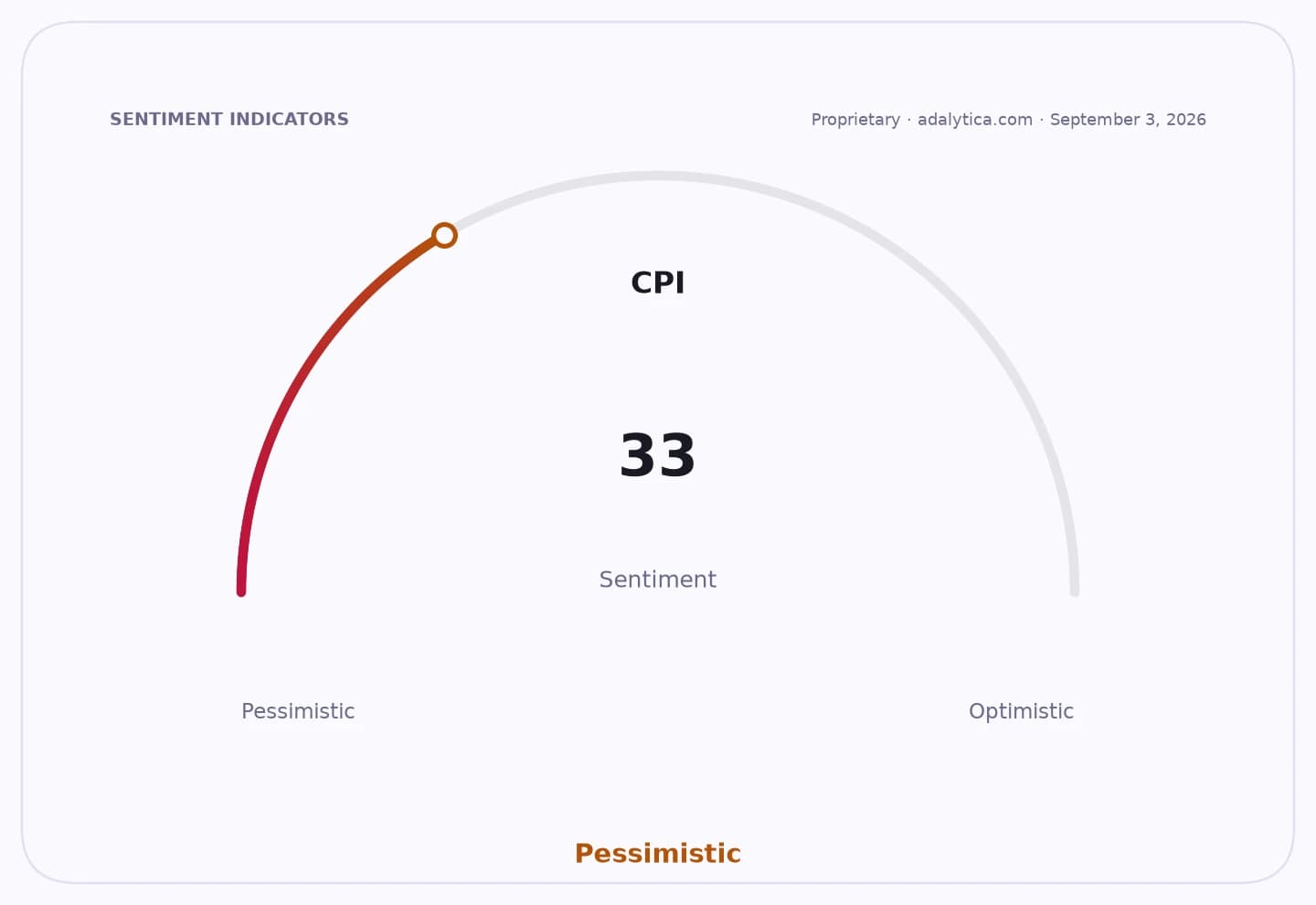
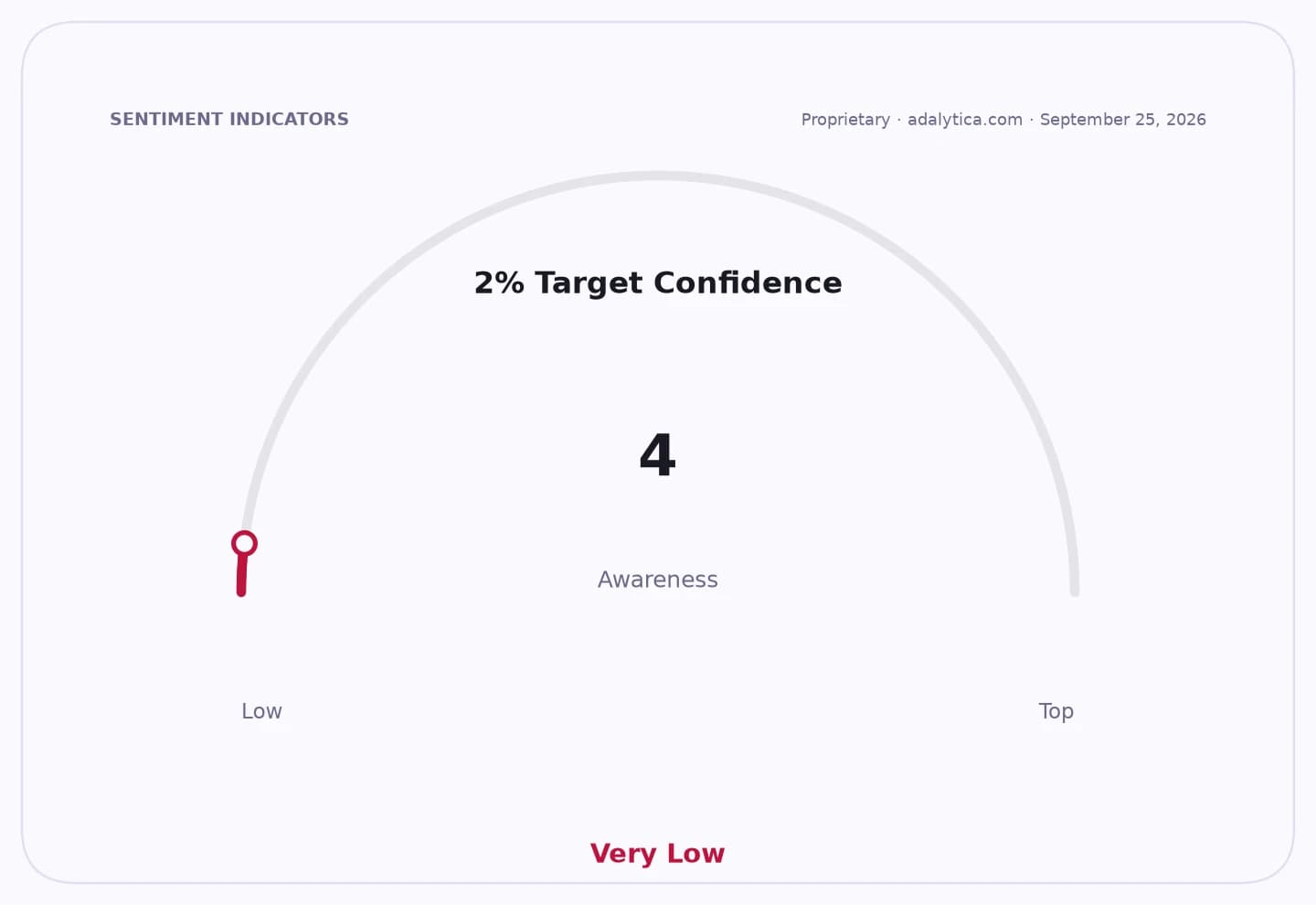
Turkey’s September inflation expectations show households bracing for much higher price increases than businesses or market participants, a split that matters because it suggests inflation psychology is still far from anchored even as policymakers try to regain credibility.
Turkey inflation expectations rise among households
The central bank’s survey found 12-month-ahead inflation expectations rose to 45.6% for households, up 0.02 percentage point from the previous month, while expectations for market participants ticked up to 23.7%. The real sector, which matters for wages, pricing and investment plans, saw expectations ease to 32.5% from 32.8%. That gap is important: when households expect inflation to remain elevated, it tends to feed into wage demands, rent negotiations and spending behavior, making it harder for disinflation to take hold.
Sentiment IndicatorsⓘProprietary · adalytica.com · September 28, 2026
This is a snapshot — live sentiment, awareness and momentum for 130+ markets update continuously in the dashboard.Open AlphaPulse
For investors, the message is that Turkey’s inflation fight is still vulnerable to persistence. Even if firms are becoming slightly more optimistic, consumer expectations remain extremely high by any normal standard, which can keep pressure on domestic demand, the lira and local bond yields. In economies with entrenched inflation, expectations are often as important as the latest monthly print, because they shape how quickly prices reset across the whole economy.
The timing also matters. Turkey’s official September CPI data are due in the first week of October, and the expectations survey lands just ahead of that release. A forecasted monthly decline in headline CPI would normally be encouraging, but the survey suggests the market is not ready to declare victory. The challenge for the central bank is not only slowing actual inflation, but convincing households that the worst is behind them.
CPI — 30-day sentimentadalytica.com
Explore this data interactively — full history, time series and cross-market comparisons.Open AlphaPulse
That is why the next few months are likely to be decisive. If inflation continues to moderate and the central bank holds its line, expectations could slowly drift lower. If price pressures linger, households may keep pricing in much higher inflation than policymakers want, forcing a longer period of tight financial conditions. For long-term investors, Turkey remains a market where inflation credibility is the main story — and one worth watching closely.
| Entity | Gains | Losses |
|---|---|---|
| Turkish central bank | ▲Credibility if inflation cools | ▼Confidence if expectations stay high |
| Households | ▲Inflation protection on wages/prices | ▼Real purchasing power |
| Businesses | ▲Slightly lower input-pressure expectations | ▼Planning certainty if inflation persists |
| Long-term investors | ▲Entry points if disinflation holds | ▼Bond and currency risk if inflation re-accelerates |